

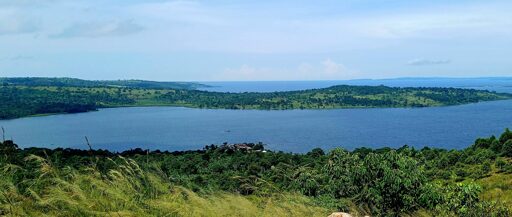
Water covers most of our planet, yet less than 3% of it is freshwater and most of it is contained in glaciers, making it not readily usable. Contamination and overuse threaten the valuable supplies of freshwater that humans and other animals, especially aquatic organisms, depend on to live. On World Water Day, a United Nations day observed every March 22, Mongabay highlights three recent stories showcasing recent wins and losses for freshwater ecosystems. Nearly one freshwater fish described a day in 2025 More than 300 new-to-science freshwater fish species were described in 2025. It was the third-highest tally year since 1758, when scientists began keeping records. Among the species are two cave-dwelling fish in China, both adapted to life in permanent darkness: the Yang’s plateau loach (Triplophysa yangi) and the Sichuan mountain cave loach (Claea scet). In the U.S. Appalachian Mountains, scientists described the 60-centimeter (24-inch) sicklefin redhorse (Moxostoma ugidatli), believed to be the largest fish described in North America in the last century. “Our planet’s rivers and wetlands are still full of surprises,” Michael Edmondstone, a spokesperson at SHOAL Conservation, told Mongabay wildlife reporter Spoorthy Raman. Potential nuclear power plant overlaps Africa’s largest freshwater lake Lake Victoria, the largest freshwater lake in Africa and roughly the size of Ireland, has been shortlisted as one of three potential sites for a planned 1,000-megawatt nuclear power plant in Kenya. Lake Victoria, known as Lake Nalubaale in the local Luganda language, feeds into the Nile River. According to a WWF report, the…This article was originally published on Mongabay
From Conservation news via This RSS Feed.