

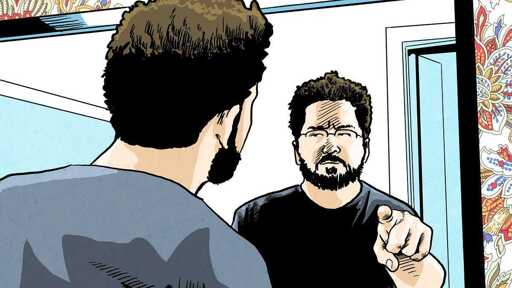
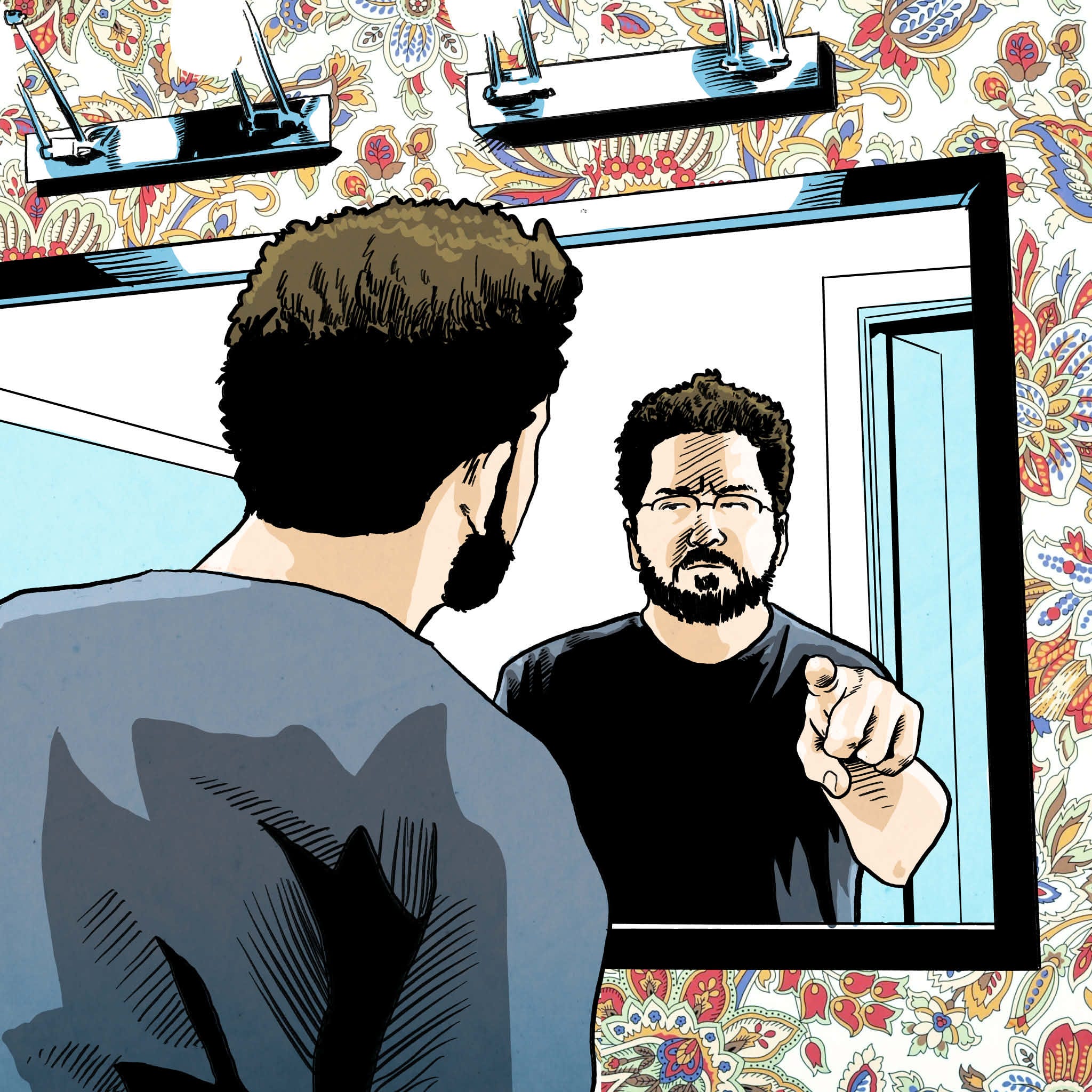
Last December, I was asked to speak at an event for Catherine Liu in LA. I wrote down a version of what I wanted to say in advance, although what I actually said was probably substantially different, since (a) I was doing it from memory, (b) I’d originally been asked to introduce her but the order ended up getting shuffled around a bit so parts of what I’d initially planned to say no longer made sense, and © Catherine herself did a bit of good-natured heckling.
This, at any rate, is what I had written in advance (and I think I ended up saying most of it in some form):
Hi. My name is Ben, and I have a problem. I’m a recovering academic.
I went to grad school and spent a few years as a full-time prof, but several years back I realized something important, which is that I actually kind of can’t stand most academics. Which is a bit of an issue in itself, the same way it’s a bit of an issue if you’re a fish who starts to hate the taste of water. But, that in itself isn’t the problem.
My distaste for most academics very much extends to most Marxist academics (although anyone who’s here tonight can rest assured that they’re one of the good ones). But Marxism itself is absolutely the best analytical tool for understanding the world around us, why and how some people have to spend all day at work following orders and other people get to give the orders and reap the profits, and what we might do to rectify that situation. How it is that we live in a world that’s materially wealthier than any society that’s existed in human history, but also so profoundly unequal that you can’t psychologically function in a city like Los Angeles without training yourself to not make eye contact with homeless people as you walk down the street.
Karl Marx didn’t figure quite everything there was to say about this situation out in the 1860s, though. Because when you think about those straightforward relationships of exploited and exploiter, dominated and dominated, you’ve definitely described the core relationship that keeps our form of society humming along in all its injustice, but the range of positions different individuals can have in those structures is a hell of a lot more complicated than that. Some people, some professions, however exactly you want to classify them in terms of finicky Marxist analysis, have a more ambiguous relationship to the system, and at traditionally at least—though precarity comes for us all—those guys have gotten relatively cushy gigs, and they’ve learned to think of themselves in a slightly different way than regular people with regular jobs. And that gets us back to why in these last several years I’ve started to kind of hate most academics.
There’s a worldview, a way of being in the world, that you get in this group that can just be insufferable. They take their own moral virtue as an axiom and they cannot comprehend how it could be that everyone else, both the wealthy boorish capitalist plutocrats and the pitiable but dangerously ignorant plebs, don’t just step back and defer to the wisdom of credentialed professionals like them. And they certainly can’t wrap their minds around why many people find them very deeply annoying.
One of the best things I’ve read on this whole cluster of topics is a white hot little book called Virtue Hoarders, written by Catherine Liu. I reread that back in January, during the first week of the second Trump administration, because it seems to me that if we want to understand the danger of that administration, with all its unhinged authoritarianism and xenophobia, we need to understand how and why we got to the place where Trump could win again and we absolutely cannot understand that without understanding the profound failure of the kind of professional-class liberalism so ably eviscerated in Catherine’s book.
I said I had a problem. So let me just close by explaining what that problem is, since becoming disgusted with the culture of academia isn’t the problem in and of itself. If that were, that would be a very solvable problem. Just leave academia. Do something else with your life. Become a podcaster or a Jacobin columnist, maybe. But the problem is that as much as I hate so much about the culture of academia, I absolutely love reading and listening to smart academics, people who are intellectuals in the best and truest sense, especially ones who actually have a sense of fucking humor and a knack for cutting through nonsense. And on that note, I’m going to stop talking so we can all listen to an academic who matches that description to a tee—my friend Catherine Liu.
The event was at someone’s house, and there was a fire pit in the backyard. After everyone was done speaking, I was standing around with some friends by the fire when a bright-eyed young person (maybe a grad student?) came up and told me that they’d liked my stuff for a long time. I thanked them and then, so gently that the critique was mostly implicit, they pushed back against what I’d said about academia. They knew so many academics who are great! And they seemed a little sad to hear that I “wasn’t a professor anymore.”
I suppose I could have clarified that I never exactly stopped being a professor. When I gave up my full-time gig in 2021 so I could mostly focus on writing and podcasting, I couldn’t bring myself to give up academia cold turkey, so I kept a toe in as an adjunct. I also could have (truthfully!) added a “some of my best friends…” carveout.
In the moment, though, I think I mostly just nodded and grunted in a way that I really hope came off as thoughtful and receptive rather than dismissive. Since then, I’ve spent a lot of time thinking about that conversation. In what follows, I’m going to do my best to unpack my love/hate relationship with academia in general and academic philosophy in particular, as it’s developed over the decades that I’ve spent around both.
Let’s start with the “love” element, because there would be no “love/hate relationship” in the first place if I didn’t love philosophy enough to spend 25 years as first an undergraduate philosophy major, then a philosophy graduate student, and then as various versions of an adjunct or full-time philosophy prof.
I didn’t excel in high school. Bluntly, I was enjoying the “skipping class and getting high” parts of life too much for that. When I enrolled at Lansing Community College in the fall of 1998, my declared major was Numerical Control. My plan was to get a two-year technical degree and try to get a skilled-trades job at an auto plant. While I was there, though, I figured I might as well sign up for some random electives that sounded interesting, and I surprised myself by discovering that, now that I could take whatever classes I felt like, I really liked school.
My favorite class was taught by an Episcopal priest and adjunct Religious Studies professor named Les Murray. He had written a book about “process theology” (an offshoot of the process metaphysics of Alfred North Whitehead, the co-author with Bertrand Russell of the Principia Mathematica), and he was deeply excited about talking about ideas. He was the kind of prof who would stand around chatting about religion and philosophy and history and the rest with students as they smoked cigarettes during the ten-minute break in the middle of class, or head down to the cafeteria to continue the conversation with a cluster of students over coffee in the cafeteria in the basement.
A lot of my interest in philosophy came out of those conversations with Dr. Murray, but it took a while to gestate. After transferring to a four-year college and then dropping out for a while, I spent a year working various miscellaneous jobs (I washed dishes at a restaurant, I stocked shelves at a kosher grocery store, I knocked some doors for Clean Water Action) and thinking about what I wanted out of college (and, y’know, life). One of the books I read that year that had the biggest impact on me was Walter Kaufmann’s anthology Existentialism from Dostoyevsky to Sartre. More than anything, that convinced me to major in philosophy when I transferred a second time to finish up at a small liberal arts college in Grand Rapids.
Technically I was a double major in history and philosophy but I already had a lot of my history credits, so I was taking one history class a semester and binging philosophy. There were only two full-time professors in the Philosophy Department, and one of them retired halfway through my time there, so I ended up having to take about half my philosophy classes as independent studies to get it all done in time. I remember taking a whole series of historical classes (Ancient Philosophy, Medieval Philosophy, Early Modern Philosophy) that way, doing weekly meetings with my professor and meanwhile just logging God knows how many hours sitting at the desk in my dorm room or sitting at a table in the little coffee shop on campus, totally absorbed in Plato or Thomas Aquinas or Descartes or Berkeley or whoever it was that week, only emerging to go to my remaining non-independent study classes or go to the philosophy club at the same coffee shop on Friday afternoons. Later, my RA told me he thought I’d moved out.
Several of my non-independent study philosophy classes were from feminist philosopher Michaeleen Kelly, and one of the papers I wrote for her (on the relationship between Marxism and John Rawls’s theory of justice) was the one I used as a writing sample when I applied to my M.A. program at Western Michigan University. Even so, it never really occurred to me to try to pursue political philosophy in grad school.
I was already long since a convinced radical leftist. One of the few things that consistently got me to break my absorption in philosophical reading and paper-writing was going to protests and planning meetings for protests against the impending war in Iraq. By the time I started grad school at WMU, I was regularly driving a couple hours each way to go to Socialist Party meetings in Ann Arbor. So, why didn’t I think to cross the streams of my Marxism and my academic philosophizing?
As far as I can reconstruct what I was thinking back then, there were two things going on there. One is that, especially after the anti-war movement failed to so much as slow down Bush and Cheney and then mostly collapsed, I was pretty demoralized about the prospects for my kind of politics. Under the circumstances, I wanted to throw myself into thinking about totally non-political subjects. The other is that, even though my interest in philosophy was initially fueled by reading thinkers like Sartre, the deeper I got into philosophy, the more I was drawn to the clarity and rigor of the analytic tradition. I went to overwhelmingly analytic programs for both my M.A. and my Ph.D. And the whole time I was at those places, I never even once so much as heard the combination of words “analytical Marxism.” That’s something I ran into later, on my own. To the extent that I sat around thinking about how my pre-existing socialist and Marxist commitments intersected with various things I was learning and various views I was adopting on other philosophical subjects, that was strictly extracurricular.
Last Monday, I visited a class at a mid-sized university in Southern California, and one of the students I talked to told me about an undergrad senior thesis she’d written on the functional explanations in G.A. Cohen’s Karl Marx’s Theory of History. A couple of the brightest students there were also involved in union organizing, and one of them had nuanced things to say about income inequality in a future socialist society. The whole experience made me feel a stab of jealousy about the intellectual/political environment they were being exposed to while they were still in college. (In my generation, we had to pick up our Marxism on the street!) Academic political philosophy as I encountered it in those years was a terrain defined by arguments between various kinds of liberals, with the occasional right-libertarian to keep things interesting. I just sort of took it for granted that it wasn’t for me.
So, when I got to Western Michigan, I ended up doing things like taking classes from Quentin Smith where we read about theories of personal identity, or the Kalām cosmological argument, or the debate about the A- and B-theories of time. (See the tribute to Smith I wrote when he passed away in 2020.) When I got to the University of Miami for my Ph.D., my dissertation was on the Liar Paradox and the philosophy of logic. And the thing I want to emphasize here is that I still enjoy the hell out of all of that stuff. My complicated feelings about academia in general and philosophical academia in particular co-exist with uncomplicated love for philosophy itself.
In 2010, I moved to South Korea for a one-year visiting professor job at the University of Ulsan. then I moves back to Miami for a couple of years, and in that time I started dating the woman I ended up being married to for a decade, and the two of us went (in my case, back) to Korea, where I did a two-year stint teaching at Yonsei University in suburban Seoul. When we got back to the United States, and Jennifer and I both got (adjunct) jobs at Rutgers, things were changing. Bernie Sanders had started his first run for president, and I got so excited about it that I actually started to feel some hope for American politics. At the end of 2015, I joined DSA and threw myself into various kinds of real-world activism and organizing. For a while there, I was on the executive boards of both Central New Jersey DSA and my union at Rutgers. After one last break to do deep immersion in academic philosophy (while I was writing this book in 2017 and 2018), I switched to trying to find ways to make my philosophical training politically useful for the burgeoning movement, writing a book called Give Them An Argument: Logic for the Left, and that book led to doing a weekly segment on Michael Brooks’s podcast and getting a columnist gig at Jacobin and everything else I’ve been doing since.
By the time I got the reviewer comments back for the academic book I’d spent two years writing, I was so preoccupied with political writing and podcasting that it took a world-wide pandemic shutting everything down for me to make time to go back and do the revisions, and the book didn’t come out until 2022. It will always be a little funny to me that it ended up being published the same week that I went on Rogan—the three hours of my life that the most people probably watched coinciding with the book of mine that I’m absolutely sure the fewest people will ever read.
In 2019, I got a job at Georgia State University Perimeter College. It wasn’t tenure-track, but it was a full-time teaching gig with benefits, and theoretically I could have kept renewing my contract there forever. So, why didn’t I?
There were at least two reasons. First and more prosaically, the teaching load was very high (5-5-2) and there wasn’t really any long-term job security. If I’d been ensconced in a cushy job at Oxford like the patron saint of this Substack, G.A. Cohen, I might well have stuck around forever. With my considerably less cushy gig, though, trying to juggle five classes a semester with everything else I was doing made me feel like I had more than two full-time jobs, and something had to give. That alone might have been enough to push me out the door.
That said, I do think there was more to it. I was also beginning to feel much less at home in academia for ideological reasons. At the same time as I was throwing myself into radical politics with renewed fervor, a lot of people I’d known in academic philosophy over the years were becoming very political in their own way. And I wasn’t a fan.
It’s one thing to know that someone whose overwhelming passion is metaphysics or epistemology or even abstract moral philosophy is a huge lib, and another to see them become more and more politically engaged in ways you find insufferable. Part of this story is about the prevalence of identity politics and scolding moralism on the academic left. Another element has to do with annoying micro-trends like epistemologists telling themselves that they’re making some sort of contribution to emancipatory politics if they do abstract epistemology that centers around stuff like worrying about whether they’re committing a special epistemic sin if they think that the black guy at the country club is a waiter. (I’m not making up that example, by the way. I’ll leave the question of what it says about these people’s attitude toward waiters, black or white, as an exercise for the reader.) But probably the single thing that did the most to bring my growing distaste with the left wing of academic philosophy into focus was my bone-deep disgust during the 2020 primaries at all the philosophers I knew who claimed to care about about all the left-wing policy priorities championed by Bernie Sanders but who spurned the Bernie campaign to throw their support behind Elizabeth Warren.
Bernie was a candidate who actually appealed to normal people, and who without a doubt would have won the presidency if he’d gotten past the primaries. Warren, who was running on a watered-down version of the Bernie platform, mostly appealed to professional-class liberals who loved that she made a big production of calling her 5-page Medium posts about policy ideas “plans.” (This showed that she was Serious. A doer of homework!) As Warren went down in the polls, she got desperate and resorted to a Nixon-level dirty trick, instructing a couple of cronies to anonymously leak the claim that, years earlier, Bernie had told her in a private conversation that he didn’t believe a woman could win.
As he tried to point out with increasing frustration, a woman had won the national popular vote years before this conversation supposedly took place. And you can find decades-old footage of him telling little girls in Vermont that they could be president one day! But he said the opposite when no one but Elizabeth Warren was around to hear it, and it just happened to "come out” in the lead-up to the Iowa Caucus? If you honestly believe that, I have a whole series of bridges to sell you. Even so, the media accepted the story as gospel, to the point that debate moderators would ask questions like, “Senator Warren, how does it feel to hear Bernie deny that when you know he really said it?”
The most generous thing you could say about Warren’s role as a wrecker in the 2020 primaries is that she didn’t have enough support for it to matter much. Philosophy professors, journalists, and other credentialed professional types loved Warren because they saw themselves in her. It never seemed to occur to them, though, that everyone else saw them in her too, and that this made it deeply unlikely that she’d ever win a national election.
If I ever completely stopped teaching philosophy classes, that would make me sad. I dislike grading (at least) as much as the next prof, but leading a class discussion of the Trolley Problem or the Ship of Theseus or Newcomb’s Puzzle with a group of interested and engaged students is still one of my all-time favorite things. So, even if academia is a world that I identify with far less deeply than I once did, I’ll probably keep a toe in it as an adjunct for as long as I can. And the list of academics who get a “one of the good ones” pass from me would, let’s be honest, be a very long one. It’s not like several of the people I got to know in grad school, for example, aren’t still on my short list of favorite human beings on the planet.
But, the “hate” side of my love/hate relationship with academia is real too. I agree with a lot of the reservations Vivek Chibber expresses here about the idea of a Professional-Managerial Class as a strictly defined category of Marxist class analysis, but as he also says in that interview, when we hear someone like Catherine Liu (or the late great Barbara Ehrenreich) talking about the PMC, it’s not like we don’t know what they mean. Even if you think something more like Erik Olin Wright’s map of “contradictory class locations” is ultimately correct, “the PMC” is a term with real utility for talking about a certain region of that map. And I do think, I’m sorry, but I do, that when the worst parts of PMC liberalism interact with the worst features of analytic philosophy, the result is just monumentally unappetizing.
Then again, what about those students in California, or others like them? As socialism reasserts itself in real-world politics, could some of them grow into the next G.A. Cohen or the next Erik Olin Wright, and make exciting contributions to a renewed form of analytical Marxism? If so, that would make me very happy.
Nor, if I’m really honest with myself, can I rule out the possibility that, at some point in the future, things might change for me such that I would actually want to go back to full-time teaching. It’s not what I want to do right now, but stranger things have happened.
Here’s what I know for sure, though:
The political movement we need is one where academics are playing a largely supporting role. The more the movement is defined by academics and related kinds of PMC knowledge workers and our concerns, the less likely it is to have the broad appeal and social weight it needs to actually change the world. And as a couple of very smart German guys (one of whom had a Ph.D. in philosophy) memorably put it, “the point is to change it.”
Thanks for reading Philosophy for the People w/Ben Burgis! This post is public so feel free to share it.
From Philosophy for the People w/Ben Burgis via This RSS Feed.