

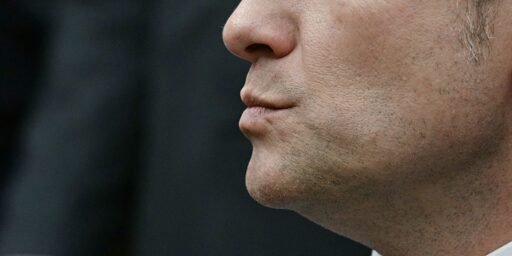
The latest edict from beard-obsessed Secretary of War Pete Hegseth adds strict new regulations to his crusade on facial hair, which rights groups have characterized as an attack on troops’ civil liberties.
In a March 11 memo, Hegseth, who has made grooming and appearances a central focus in his time at the helm of the U.S. military, raised the bar to qualify for a religious exemption to his blanket ban on beards. The guidelines lay out a strict new process by which service members may apply for a religious exemption and subject those who’ve already received one to a reevaluation, arguing they need to ensure their religious beliefs are “sincerely held” and have a genuine conflict with the grooming standards.
Service members who have spoken against Hegseth’s focus on grooming standards say his restrictions on beards are exclusionary to people from religious communities that require adherents to follow specific tenets of faith around beards, hair, and other grooming matters.
Sikhs, for example, who have served in the U.S. military since at least World War I, are required by their faith not to cut the hair on their head, to keep a beard, and to wrap their long hair in a turban. Members of many schools of Muslim tradition likewise have rules around beards and hair length.
A Sikh advocacy group derided the new requirements as “completely unnecessary.”
“Sikhs and other service members of faith already earned their accommodations, under policies and processes established under both the Obama and first Trump Administrations,” the Sikh Coalition said in a statement. “If there are accommodations that the Department of Defense feels are not sincere, they could have chosen to pursue those cases with a process that doesn’t force every single soldier, sailor, airman, guardian, and Marine with an accommodation through more paperwork and bureaucracy.”
The Department of War did not respond to a request for comment.
[
Related
Military Leaders See Iran War as “God’s Divine Plan” — a Chilling Turn for Trump’s Fascism](https://theintercept.com/2026/03/05/iran-war-end-times-christian/)
Hegseth introduced the new guidelines as the military increasingly embraces overt Christianity and Christian nationalism, including an ideological turn on the Air Force Academy’s oversight board and the presentation of the war on Iran as part of “God’s divine plan.”
The changes come months after Hegseth declared war on “beardos” in a combative speech in September.
“If you want a beard, you can join Special Forces. If not, then shave,” Hegseth said at the time.
In a November letter to Hegseth, four senators — Gary Peters, D-Mich.; Elizabeth Warren, D-Mass.; Tim Kaine, D-Va.; and Kirsten Gillibrand, D-N.Y. — warned that an overly strict grooming standard could force religious service members from the ranks and ultimately harm the military’s primary mission of national security.
“This will happen either by forcing out servicemembers with accommodations earned through carefully following their branch’s established processes or signaling to members of these religious communities that their contributions are not needed in the world’s greatest fighting force,” the senators wrote. “At a time when readiness and retention remain urgent concerns, such a move would be ill-advised.”
Federal courts have repeatedly ruled in favor of service members’ rights to observe tenets of faith while in the military, limiting Hegseth’s ability to put in place an outright ban on any facial hair. He has opted instead to tighten the screws on anyone wishing to get an exemption.
Courts have generally required the military to accommodate sincerely held religious beliefs unless it can demonstrate a compelling operational need.
Under the new rules, anyone applying for an exemption — or facing reevaluation under the new guidelines — must submit a sworn statement affirming their religious beliefs, a statement detailing those beliefs, a statement explaining how the grooming standard would conflict with those beliefs, and supporting evidence backing up their “sincerely held” beliefs. Additionally, anyone applying for an exemption must receive from their unit commander a written assessment of the applicant’s sincerity of belief.
The policy also places commanders in the position of evaluating the sincerity of a service member’s religious beliefs. False statements could expose service members to disciplinary action under the Uniform Code of Military Justice.
The post Hegseth Makes Troops Prove “Sincerely Held” Faith in Latest Beard Crackdown appeared first on The Intercept.
From The Intercept via This RSS Feed.