

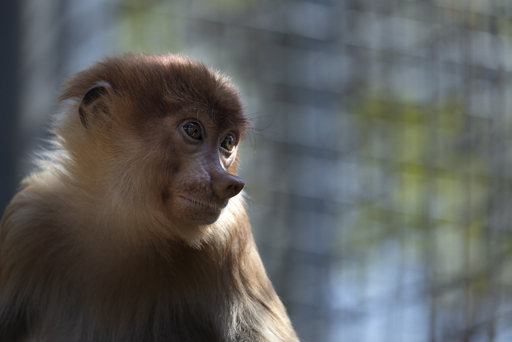
RATCHABURI, Thailand — On Jan. 6, residents of Samut Sakhon province, central Thailand, found an injured monkey near a railway track. Pot-bellied with reddish-brown fur and a prominent, upturned nose, it was unlike other monkeys typically seen in the area. After calling a wildlife hotline, they took the animal to a nearby clinic. “That’s when they realized that this was a foreign monkey,” says Kanpicha Han-Asa, a veterinarian with Thailand’s Department of National Parks, Wildlife and Plant Conservation (DNP) at the Ban Pong wildlife rescue center, where the monkey was later transferred for rehabilitation. The rescued proboscis monkey at Thailand’s Ban Pong wildlife rescue center, where it is recovering from its injuries. Image by Ana Norman Bermúdez for Mongabay. Proboscis monkeys (Nasalis larvatus), also known as long-nosed monkeys for their distinctive large noses, are an endangered species endemic to Borneo. The wildlife center in Ban Pong regularly receives animals intercepted from the illegal trade, including nonnative species, but this is the first proboscis monkey the team has handled. “We haven’t seen or heard about cases involving this species before,” says Krishnapong Oncharoen, head of the wildlife protection unit at the center. After receiving the monkey, officers checked for any permits linked to the species. Proboscis monkeys are listed under Appendix I of the Convention on International Trade in Endangered Species (CITES), meaning international trade is banned, except for very specific noncommercial purposes, such as conservation breeding or research. “If you want to bring them into the country, you must have…This article was originally published on Mongabay
From Conservation news via This RSS Feed.