

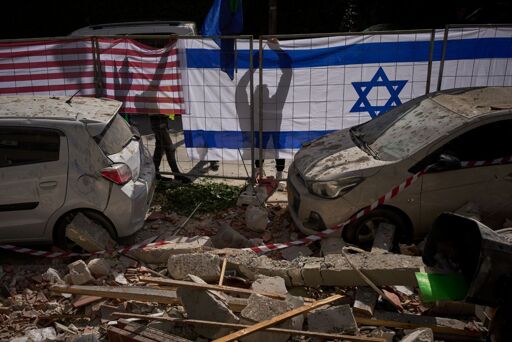
The ongoing conflict between the United States, Israel, and Iran is entering a phase that can no longer be interpreted solely in terms of operational successes. Recent attacks — including the Israeli bombing of the South Pars gas field and the subsequent Iranian retaliation against energy infrastructure in Qatar, the UAE, and Saudi Arabia — clearly illustrate a central paradox: the accumulation of tactical victories is not yielding a decisive strategic advantage for the U.S. and Israel.
On the contrary, everything indicates that the conflict is evolving into a prolonged war of attrition, with potentially serious systemic implications for the regional order and the global economy.
Tactical Success, Strategic Ambiguity
On the ground, both the United States and Israel have succeeded in degrading key Iranian capabilities. However, these advances have not altered a fundamental fact: the Iranian regime continues to function. Far from collapsing, it has demonstrated remarkable resilience, absorbing significant damage while maintaining its internal cohesion and responsiveness.
This mismatch between immediate military achievements and long-term political objectives reveals a weakness in the conduct of the war that has persisted from the beginning: is the aim to force a negotiation, structurally weaken the regime, or provoke its collapse?
Each of these objectives requires different strategies. What we currently see is an inconsistent combination of all of them.
The Climbing Trap
Herein lies the central dilemma. To decisively alter the balance — whether through regime change or an irreversible erosion of Iranian power — a significant escalation would be necessary. However, such an escalation carries extraordinary risks.
Iran is not a conventional adversary. Its strength lies not in military symmetry, but in its ability to exploit structural vulnerabilities in the global system, particularly its geographic position around the Strait of Hormuz.
At this point, U.S. military power reaches its limits. Air or naval superiority does not guarantee control of an area where mines, drones, or low-cost missiles are sufficient to disrupt maritime traffic. Geography, in this case, favors Iran.
Energy as a Battlefield
The recent wave of attacks confirms that the war is shifting toward the energy sector. The Israeli bombing of the South Pars field — part of the world’s largest natural gas field, shared by Iran and Qatar and located in the Persian Gulf — marks a turning point. This field is estimated to contain around 1.8 trillion cubic feet of usable gas, enough to meet global demand for more than a decade.
The Iranian response was swift. Saudi Arabia was one of the first targets, with ballistic missiles striking facilities in Jubail, the world’s largest petrochemical complex. Subsequently, the Al Hosn and Bab fields in the United Arab Emirates were attacked, as well as Qatar’s Ras Laffan refinery, the largest operating liquefied natural gas (LNG) production facility in the world. Later, Iran struck facilities at the SAMREF refinery in Yanbu, on the Red Sea — a key hub for Saudi exports and part of the infrastructure used to reduce reliance on the Strait of Hormuz.
This sequence is not random. It follows a clear strategy: to internationalize the cost of the conflict. By threatening critical energy hubs throughout the Gulf, Tehran seeks to pressure global actors dependent on those flows, indirectly forcing political concessions.
In this context, the idea of quick fixes — such as capturing Kharg Island, through which most Iranian oil transits — is illusory. Even if such an operation were militarily feasible, it would hardly lead to an Iranian surrender. Rather, it would likely trigger a further escalation.
Radicalization and the Closure of Diplomatic Options
Another critical effect of the campaign is the internal transformation of the Iranian system. Far from weakening it politically, external pressure is strengthening its hardliners.
The potential consolidation of figures like Mojtaba Khamenei, backed by the security apparatus, suggests that the result could be a more radicalized regime, less open to negotiation and more confrontation-oriented.
In this context, actions such as the elimination of actors considered pragmatic further reduce the diplomatic margin, creating a vicious circle: the more the pressure intensifies, the more difficult it becomes to reach an agreement.
A War with no Clear Outcome
The evolution of the conflict points to a disturbing conclusion: the United States and Israel may be entering a prolonged war without a defined exit strategy.
The options are limited, and all involve high costs. On the one hand, there is the possibility of significant escalation, with the risk of open regional war and severe global economic consequences — including rising food prices, with particularly serious effects on semi-colonial and dependent countries. This scenario could also shake US domestic politics to its core.
At the other extreme, accepting some form of accommodation with Iran would effectively recognize its capacity to influence energy flows in the Gulf. Finally, maintaining the current status quo amounts to prolonging a war of attrition with uncertain outcomes.
In short, we are seeing a campaign driven by urgency rather than a coherent strategy: an attempt to force results without fully assuming the means, risks, and time that these would require.
Perhaps, as British journalist Larry Elliott of The Guardian warns: “Iran could be America’s Boer War: an empty victory that marks the beginning of the end of an empire.” The analogy is not insignificant. The Second Boer War was, in strictly military terms, a British victory, but also a long, costly, and deeply exhausting war that exposed the limits of imperial power at a time when its hegemony was beginning to be challenged by emerging powers like the United States.
Rather than consolidating its dominance, that conflict eroded its prestige and revealed an uncomfortable truth: military superiority does not always translate into political control or strategic stability.
That is precisely the risk Washington faces today. Even in the event of a series of operational successes, the absence of a clear and achievable political objective could transform the campaign against Iran into a victory that is as costly as it is fruitless.
Originally Published March 19 in Spanish on La Izquierda Diario
The post The U.S. and Israel Are Winning Battles but Losing the War appeared first on Left Voice.
From Left Voice via This RSS Feed.