

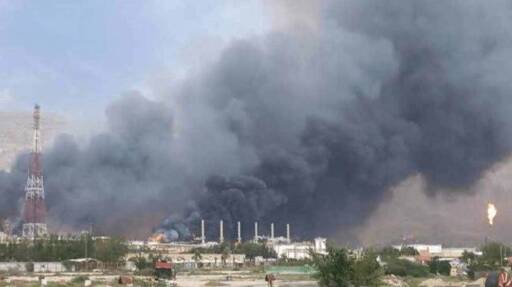
Iran carried out large-scale attacks on various oil and gas producing centers in the Persian Gulf region and in Israel on Wednesday, March 18, in retaliation to US-Israeli bombings of its South Pars gas field earlier that day.
Iran targeted Qatar’s Ras Laffan gas facility, Mina al-Ahmadi oil refinery in Kuwait, Habsan gas facility and Bab oil fields in the UAE in the late night responses calling them “America linked energy facilities” and after issuing warnings to people living near the oil and gas facilities in these and other countries in the region.
“With the enemy’s aggression against energy infrastructure, Iran has effectively entered a new stage of the conflict, and the necessity to defend the country’s infrastructure compelled a retaliatory strike, Islamic Revolutionary Guards’ Corp (IRGC) said in its statement.
South Pars gas field is the world’s largest gas field and Iran’s main source of energy. Iran shares the gas field with Qatar.
Qatar, which had called the US-Israeli attacks on the Iranian gas field “irresponsible”, condemned Iranian retaliations and ordered the expulsion of its diplomats from the country in protest on Thursday.
Several countries in the region, including Saudi Arabia, Egypt, Syria, Pakistan and Turkey issued a joint statement on Thursday, asking Iran to cease all attacks and not to block navigation through the Strait of Hormuz or Bab al-Mandab in the Red Sea.
The statement did not mention US-Israeli aggressions on Iran but threatened retaliation if the attacks against their energy facilities continue.
Iran has claimed it has never targeted the countries in the region but retaliated against the American military bases located in most of these countries which have been used to launch attacks against Iran.
On Wednesday, in a statement issued by the Islamic Revolutionary Guards Corp (IRGC) after Iran’s gas facilities were hit, it claimed the attack became necessary despite the country’s previous intention to “wish no harm to the economies of friendly and neighboring countries.”
More than 1,500 Iranians have been killed, including Supreme Leader Ayatollah Khamenei and head of its Supreme National Security Council Ali Larijani in the joint US-Israeli attacks since February 28.
Thousands of other Iranians have been injured and displaced as indiscriminate bombings on civilian and political infrastructure have continued for 20 days now.
Scores of Israelis, US service members, and residents of some Gulf countries have been killed and over 4,000 others have been injured in Iranian retaliations.
Iran warns not to repeat such attacks on energy infrastructure
On Wednesday, Iran also issued warnings to the US-Israeli combination not to repeat the attacks on its energy infrastructure. It claimed any such move will lead to the “total destruction” of the enemy’s energy sources.
The US and Israel already bombed Iran’s oil depots in Tehran in the first week of their attack, leading to open burning of the oil and toxic air surrounding the city for days.
They had also attacked Iran’s Kharg Island last week, which is the central point of the country’s oil export.
Iran had previously warned against repeated attacks on its energy infrastructure, asking the countries in the Persian Gulf to desist from assisting in such attacks.
Iranian President Masoud Pezeshkian repeated the warnings, claiming such attacks would further complicate matters and could lead to consequences beyond anyone’s control. He also claimed that Iranian retaliations can cripple global energy supplies.
Questions about US involvement in the attack
Immediately after the news of attacks on the South Pars gas field broke out, US President Donald Trump took to social media to deny his country’s involvement, claiming Israel did it alone and without informing anyone else.
He also tried to assure that no such attack will be carried out by Israel in the future warning Iran to not retaliate.
“The US knew nothing about this particular attack, and the country of Qatar was in no way, shape, or form, involved with it, nor did it have any idea that it was going to happen,” Trump wrote on Truth Social.
However, several US media organizations, including Wall Street Journal and Axios, claimed that the US knew and had approved the attack on the South Pars gas field.
Following Iranian retaliation on Qatari gas fields, Trump called it “unjustifiable and unfair.”
Qatar alone produces 20% of the world’s global gas needs and is the second largest producer after the US. The export of gas from the region has already been affected since Iran announced a blockade of the Strait of Hormuz earlier this month.
The attack on Iranian gas fields and its retaliation has since led to further increases in global energy prices as fear of further disruption in their supply intensifies.
The international prices have already more than doubled since February 28 and it is speculated that it could cross USD 150 per barrel if the war continues for a few more days.
The post Iran hits major energy production units in the Persian Gulf in retaliation to US-Israel strikes on its South Pars gas field appeared first on Peoples Dispatch.
From Peoples Dispatch via This RSS Feed.