

This article by Zósimo Camacho Ibarra originally appeared at Luces del Siglo on March 19th, 2026. We thank Zosimo for the permission to translate and re-publish the article here, and encourage you to visitLuces Del Siglo: Periodismo Verdad.
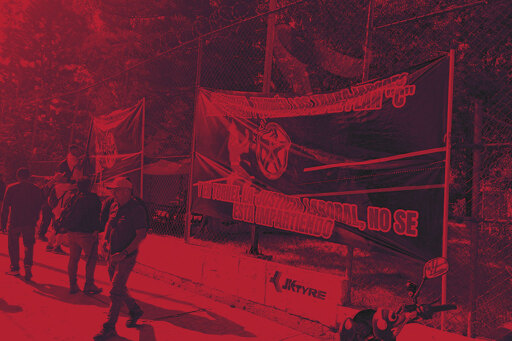
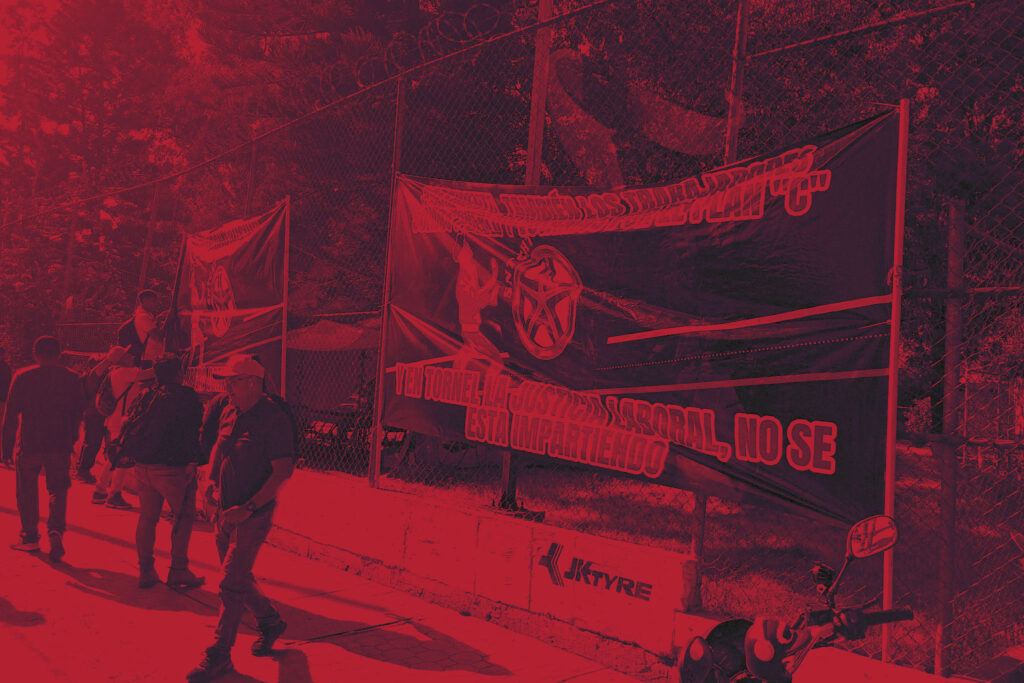
The early morning of March 18 will be remembered as a dark episode in the recent history of the labor movement in Mexico. Workers from the Tornel Rubber Company (since 2008, JK Tornel), who were engaged in a legitimate strike demanding compliance with their Collective Bargaining Agreement, were attacked with gunfire while standing guard outside the plant in Tultitlán.
They weren’t carrying weapons. They posed no threat to anyone. They only carried the dignity of demanding what was rightfully theirs: respect for eight contractual clauses violated by the employer, including the 7 and 5 percent salary increases corresponding to 2025 and 2026.
The attack, which took place at approximately 4:30 AM this Wednesday, cannot be interpreted as an isolated incident or a simple criminal act. When armed men, dressed in company uniforms, storm in against workers defending their jobs, the message is clear: there are vested interests willing to do anything to break a union struggle.
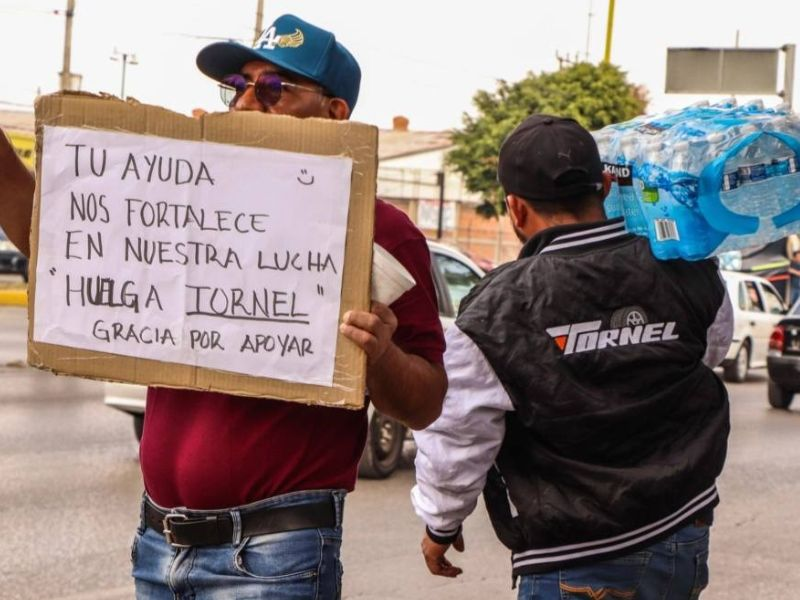
Three workers—between 40 and 45 years old—were wounded by gunfire. They were taken to the emergency room of the Traumatology Hospital of the Mexican Social Security Institute (IMSS), located in Lomas Verdes, Naucalpan.
The fact that the workers managed to detain two of the attackers and hand them over to the authorities is an act of courage, but it is also a denunciation in itself. How is it possible that, in 2026, workers still have to physically defend themselves against armed groups while simultaneously fighting for their rights and class interests?
It cannot be forgotten that the first strike notice was suspiciously dismissed by labour judge Arturo Arellano Lastra just hours before the movement began on January 31. The Sindicato Nacional de Trabajadores de la Compañía Hulera Tornel (National Union of Tornel Workers), led by Gerardo Meneses, denounced this as a maneuver to favor management. A second notice, which was accepted by the labour court, set a deadline of February 23 at 3:00 p.m. When no agreement was reached with management, the union launched the strike at all four work centers: two in Azcapotzalco and one in Miguel Hidalgo—all located in Mexico City—and one in Tultitlán, State of Mexico. With the time gained, the company has been able to hold out, while the workers maintain their position outside the factories, exposed to the sun, rain, cold, and now, bullets.
What’s at stake in Tornel is significant. We’re talking about 1,051 workers organized in the National Union of Workers of the Tornel Rubber Company and their right to a wage increase. We’re also talking about a Collective Bargaining Agreement that, for 40 years, has established a 40-hour workweek, but which the company refuses to comply with, and about a rapid response mechanism under the USMCA that, in 2025, had already ruled in favour of the workers, but which management ignored. In short, we’re talking about the systematic violation of the most basic labor rights.
The demands are entirely legitimate. These include the payment of a 44-day Christmas bonus and a vacation bonus of 25 to 32 days, depending on seniority. These are acquired rights established in the Collective Bargaining Agreement and the Industry-Wide Agreement.
That the workers managed to detain two of the attackers and hand them over to the authorities is an act of courage, but it is also a denunciation in itself. How is it possible that, in 2026, workers still have to physically defend themselves against armed groups while simultaneously fighting for their rights and class interests?
Other basic demands are that the employer pay their share to Social Security and not the employees with their wages; that Sundays be recognized as mandatory rest days; and compliance with the 13 percent remuneration of the savings fund, as now they are only paid 12.5 percent.
In contrast, this is no ordinary company. JK Tornel, SA de CV, is a subsidiary of the multinational JK Tyre, headquartered in India, a giant operating in 105 countries. Its president, Raghupati Singhania, was awarded the Mexican Order of the Aztec Eagle in 2018 by then-President Enrique Peña Nieto, the highest distinction the country bestows upon foreigners. The reasons why the former Mexican head of state awarded this medal were never made clear.
Today, that same company that was honored by the Mexican government allows its factories in Mexico to bargain away workers’ rights and expose them to being shot for defending their wages.
JK Tyre, in turn, is part of JK Organisation, a multinational group headquartered in India and owned by the Singhania family. The Group has multi-company and multi-product operations worldwide. In addition to India and Mexico, it has factories in Indonesia, Romania, Belgium, Portugal, and the United Arab Emirates. It has an annual revenue of $6 billion. Its chairman is Bharat Hari Singhania.

JK Tyre President Raghupati Singhania was awarded the Mexican Order of the Aztec Eagle in 2018 by then-President Enrique Peña Nieto, the highest distinction the country bestows upon foreigners: the reasons why the former Mexican head of state awarded this medal were never made clear.
It is worth noting the company’s silence regarding these events. As of press time, there had been no statement condemning or expressing concern. Much less had there been any announcement of an investigation into why the attackers were wearing company uniforms.
With the strike in Mexico, 20,000 tires a day are no longer being produced; not because of a union whim, but because of the company’s intransigence.
It is urgent that federal labour authorities and the Attorney General’s Office of the State of Mexico—where the workers filed the complaint—act swiftly. Arresting two hitmen is not enough. It is necessary to investigate the chain of command, the connections, and, above all, guarantee the safety of the striking workers. Because if anything has become clear in this conflict, it is that the violence must be investigated as a response from management.
The struggle of the Tornel workers is just. Their demands are legal. Their resistance is exemplary. The Mexican government is obligated to act to protect them from transnational capital.
May the voice of the workers of Tornel continue to resound louder than the interests that try to silence it.
Zósimo Camacho Ibarra is a journalist documenting social and armed movements, Indigenous peoples, corruption, national security, drug trafficking and human rights violations. Follow him at @ZosimoCamacho
-
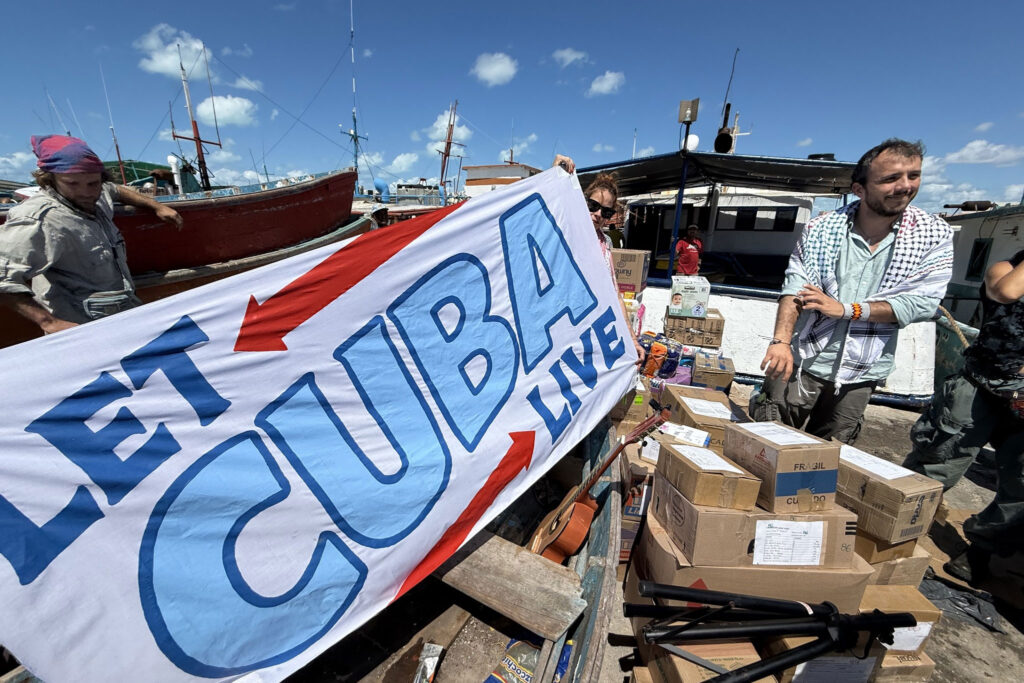
30 Tons of Aid Departs for Cuba from Puerto Progreso, Yucatán
March 19, 2026March 19, 2026
Mexican and foreign activists worked together to load the Granma 2.0 vessel, which should arrive on the island in two days.
-
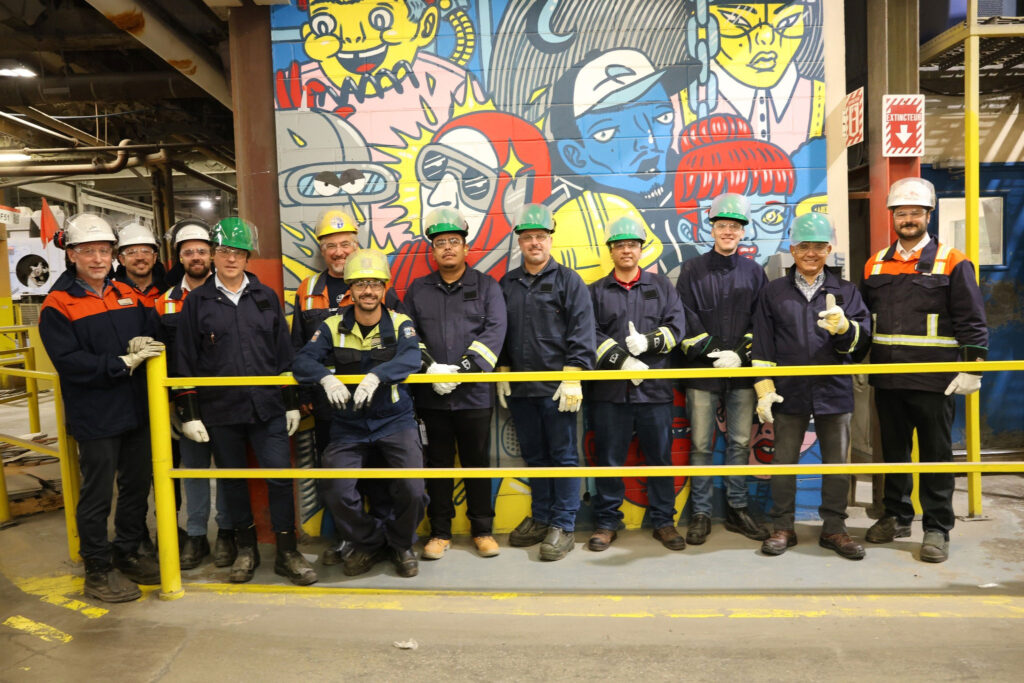
Quebec Labour Group CISO Denounces Shooting of Striking Tornel Workers
March 19, 2026March 19, 2026
An armed shock group assaulted striking workers at the Tornel Rubber plant in Tultitlán, Mexico state, shooting four workers and injuring many more, provoking condemnation from Centre International de Solidarité Ouvrière.
-
Workers’ Struggle at Transnational JK Tyre Turns Bloody
March 19, 2026
How is it possible that, in 2026, Mexican workers still have to physically defend themselves against armed groups while simultaneously fighting for their rights and class interests?
The post Workers’ Struggle at Transnational JK Tyre Turns Bloody appeared first on Mexico Solidarity Media.
From Mexico Solidarity Media via This RSS Feed.