

Driving from the José Martí International Airport to the Cuban capital, Havana, you are immediately struck by the emptiness of the major road. A few cars here and there, some refashioned motorcycles, resembling the Tuk-Tuks of Asia, but overall, there is a notable calm, an absence of movement.
This is not surprising given that over three months have passed since the last shipment of fuel reached the island. According to Cuban authorities, even before Trump announced the executive order declaring Cuba an “unusual and extraordinary threat” to US national security on January 31, fuel shipments were already being blocked.
But what does it mean for no fuel to enter an island nation with very limited oil resources of its own and whose electrical grid runs on fuel? This means the limiting of essential services like transportation, education, and healthcare to millions of people. It means that Cuba has had to launch emergency plans in all sectors of life to ration the little fuel and energy they have.
In a public address last week, Cuban President Miguel Díaz-Canel denounced that there are over 100,000 patients awaiting surgeries due to the fuel shortage, including children.
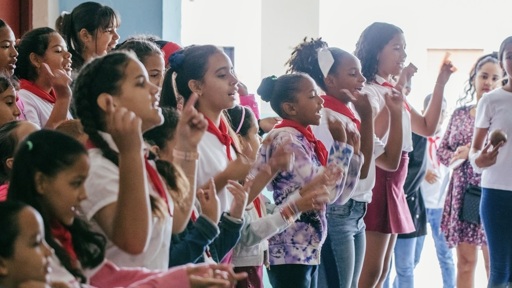
Let Cuba Live Youth Brigade arrives in Havana
“What do you call a policy that specifically targets civilians and their ability to survive? What is that if not genocide?” Manolo De Los Santos, executive director of The People’s Forum, asked participants of the Let Cuba Live Youth Brigade. “30,000 pregnant women are being denied their right to comprehensive pre-natal care because of this blockade,” he added.
40 young organizers from across North America traveled to the island as part of the Let Cuba Live Youth Brigade. Hailing from organizations such as the Palestinian Youth Movement, Nodutdol: Korean Community Development, the Party for Socialism and Liberation, Feminist Collective in Construction, Artists Against Apartheid, and others, young activists have declared they are rejecting the “Trump administration’s genocidal siege against the Cuban people” and demonstrating their “solidarity and friendship against the growing threats of war.” Their brigade is part of the international solidarity mission called the Nuestra América Convoy. Hundreds of activists from across the globe traveled to Cuba from Italy, Colombia, Britain, Brazil, and several other countries, bringing with them several tons of urgently needed humanitarian aid.
In addition to the delivery of humanitarian aid, the international effort seeks to send a message of political solidarity, to affirm that the peoples of the world stand with Cuba, when many have turned their backs on it. In the last couple of months, Honduras, Guatemala, and Jamaica suspended their medical cooperation agreements with Cuba. While publicly the justifications for the move varied, it is hard to imagine that it was a coincidence amid the high-pressure campaign waged by the Trump administration.
The Cuban people prepare to defend the revolution
Amid Washington’s maximum pressure campaign against Cuba, mainstream media outlets in the United States and across Europe and Latin America, have been falsely proclaiming the “fall of the revolution”. Anti-Cuba hawks like Marco Rubio have made flippant comments suggesting that he, and the United States are “ready” to “take over” Cuba.
While the moment is critical, the Cuban people profess a deep sense of pride, patriotism, and commitment to fight for their sovereignty and dignity, reiterating that they are open to dialogue but not to negotiate their sovereignty.
“We are ready to defend our land at any cost. This is the commitment of the young Cuban people,” said Mirthia Brossard of the Young Communist League of Cuba.
“This is not the end of the revolution; this is another stage. This is our Moncada, our Bay of Pigs. The young people of Cuba trust in the revolution and have confidence that we will overcome this moment … we are building the future with our own hands.”
On March 21, hundreds of international volunteers, including British MP Jeremy Corbyn, Belgian MEP Marc Botenga, Colombian legislator María Fernanda Carrascal, Irish rappers Kneecap, US rapper Vic Mensa, among others, will gather in Havana, Cuba, for a solidarity event.
The post “This is our Moncada, our Bay of Pigs,” says young Cuban communist leader appeared first on Peoples Dispatch.
From Peoples Dispatch via This RSS Feed.