

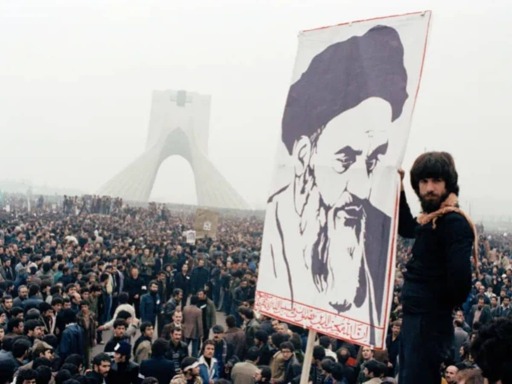

The recent “12-Day War” between the Islamic Republic of Iran and the Zionist entity was not merely a fleeting military round; in its essence, it represented a historic strategic turning point. By placing the military capabilities of the US and the more recent settler-colonial entity under a literal microscope — to monitor their operational efficiency against the Republic’s revolutionary prowess — Tehran intended to convey a far more profound message.
The school of Imam Khomeini: a revolution against the conventional
What we witness today is the fruit of decades of meticulous Iranian observation of American and Western military patterns in Afghanistan, Iraq, Syria, and Yemen, culminating in the “Smart Attrition” strategy. The origin of this qualitative superiority traces back to the revolutionary military thought established by Imam Khomeini following the success of the revolution, where he laid the foundation for domestic military production. Iran did not merely rely on the weaponry left behind by the Shah’s regime; rather, it developed a strategy based on creating qualitative counters to enemy weapons.
Tehran replaced massive, costly platforms — such as aircrafts and destroyers that carry large numbers of troops and serve as easy targets — with the manufacture of loitering munitions (suicide drones), naval drones, and reconnaissance planes. This radical shift has proven its absolute efficacy in the current confrontation with the West, which entered the fray with 20th-century weaponry while Iran surpasses them with an arsenal that actually belongs to our contemporary times.
The genius of this strategy is evident when comparing figures and budgets. While the US Navy’s budget for 2026 reached approximately $292 billion, Iran’s budget did not exceed $7.9 billion. Despite this astronomical spending, the United States has failed to “secure” the Strait of Hormuz or open it by force. This impotence proves that the US Navy is nothing more than a fleet proficient in pirating commercial vessels and bullying weak nations, yet it stands paralysed before a state that has successfully identified its numerous vulnerabilities.
Iran — the silent economic earthquake
On a strategic scale, Iran has succeeded in imposing operational control over the Strait of Hormuz, which commands 20% of global oil exports, 30% of liquefied natural gas (LNG), and 30% of the urea gas essential for agricultural fertilisers. Iran’s ability to control the strait is on its own a strategic military power; it is a weapon with immediate and long-term repercussions that cause paralysis in the global economic system and serve as the opening shot against the petrodollar. This explains Iran’s tendency to prioritise the passage of oil tankers carrying contracts in Chinese yuan.
This blockade inflicts existential pain on Western powers, akin to that which they imposed on the region throughout 150 years of colonialism. This pressure comes at a time when the West suffers from structural economic collapse, forcing them to taste the bitterness of war just as we do.
Here, this Quranic verse resonates:
If you are suffering, they are suffering just as you are, but you hope from Allah that which they do not hope.
The collapse of failed ‘kingdoms’
Field indicators confirm Iran’s ability to wage a war of attrition spanning years, while the West lacks the capacity to endure for even a few months. Every week of fighting weakens American and Israeli military capabilities and compounds adverse economic effects, exposing the fragility of Washington’s client regimes in the failed ‘oil kingdoms.’
Exposing this fragility is the most dangerous aspect for the West, as it may encourage popular uprisings that topple powers aligned with the Zionist entity. The emergence of a new regional order allied with Tehran would mean control over more than 40% of global oil. At that moment, Iran and its allied bloc would transform into a true superpower, standing as a peer to China and Russia, and bringing a definitive end to the era of American financial and military hegemony.
The prerequisite for Iran’s total geopolitical victory
Although the scales clearly tip in favour of the Axis of Resistance, the transition into a fully integrated superpower remains conditional on the liberation of the peoples of the Arabian Peninsula. True liberation requires reclaiming the energy sources on the eastern coast of the Arabian Peninsula — in the Qatif oil field, Bahrain, and Kuwait — and restoring them to the sovereignty of their peoples.
Should the war end without this radical transformation, the victory will remain limited to its military framework, devoid of global geopolitical gains. Without control over vital energy junctions and the dismantling of the colonial rulers’ grip, the victory remains deprived of its major economic pillar — the one that guarantees the end of the petrodollar era and the redrawing of the world map anew.
Featured image via Aljazeera
From Canary via This RSS Feed.