

This article originally appeared in the March 17, 2026 edition of Desinformémonos.
Mexico City. The Mexican Network of People Affected by Mining (REMA) expressed its concern about the accelerated approval of new mining projects in Zacatecas following recent statements by the head of the Ministry of Environment and Natural Resources, Alicia Bárcena, during her visit to the state on March 11.
The organization noted that the push for new mining operations reflects a public policy that prioritizes the expansion of the extractive model over the protection of water, territories and the health of communities, in addition to expediting environmental permits without considering the cumulative impacts in regions that already face overexploitation of aquifers and environmental degradation.
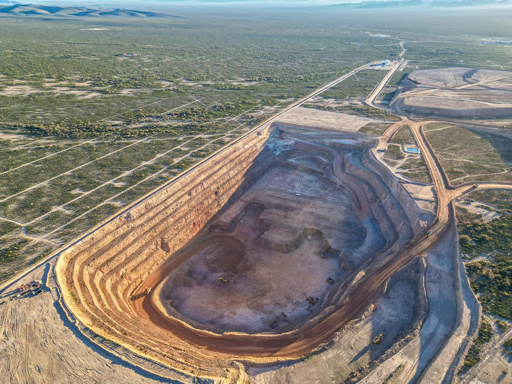
Among the projects that could move forward are the San Nicolás project, backed by Canadian companies Agnico Eagle and Teck Resources, as well as Cerro de Oro by Minera Álamos and other developments in municipalities such as Fresnillo, Melchor Ocampo, and Villa Hidalgo. According to REMA, several of these projects are located in areas with water scarcity, such as the Calera aquifer, the most overexploited in the state.
Given this situation, the network demanded a halt to the approval of new mining projects and an open public debate on the country’s environmental priorities, considering that the expansion of intensive mining exacerbates water pollution, ecosystem degradation, and conflicts in communities.
The full statement follows:
Press Release | SEMARNAT and the Government of Zacatecas are endangering health and the environment with the accelerated approval of new mining projects in Zacatecas territory
On the occasion of the visit of the Secretary of the Environment and Natural Resources (SEMARNAT), Alicia Bárcena, to the state of Zacatecas on March 11, 2026**,** and in light of her recent public statements regarding the approval of mining projects, the Mexican Network of People Affected by Mining expresses its deep concern not only with the government narrative that attempts to present the advancement of new mining projects as synonymous with progress and economic development, but also with the political orientation behind these statements and decisions, which continues to prioritize the expansion of the extractive model over the protection of water, territories, and the health of communities. This stance reflects a public policy that favors the expedited processing of permits and the accelerated approval of Environmental Impact Statements, while minimizing or ignoring the cumulative impacts that these activities generate in regions already affected by the overexploitation of aquifers, environmental degradation, and conflicting impacts on the health of the population.
Once again, we reiterate the profound impacts that the approval and development of new mining projects generate in terms of land dispossession, overexploitation of natural resources, concentration of wealth in the hands of a few, and impoverishment of communities. Added to this is the contamination of surface water and groundwater, as well as the serious health problems caused by mining activity. Experience shows that, once the damage has occurred, there is no technology or sufficient funding to fully remedy or reverse the environmental impacts caused by these processes. In other words, mining causes perpetual damage.
Among the mining projects that the government intends to promote and accelerate through the authorization of Environmental Impact Statements and surface assessments of water use is the San Nicolás Project, owned by Canadian mining companies Agnico Eagle and Teck Resources. According to data from CAMIMEX (the Mexican Mining Chamber), this project is positioned as the second most important copper project nationwide, with an estimated production of 65,800 tons, as well as the leading zinc production project, with an estimated 147,000 tons, and also aims to produce 17,500 ounces of gold.
This project is particularly concerning due to its location in the Calera aquifer, the most overexploited in the state of Zacatecas, within the Fresnillo-Zacatecas mining corridor. In this context, it is inevitable to question the haste in promoting water infrastructure projects like the Milpillas dam, which could be geared towards guaranteeing water for the growth of industrial and extractive activities in a region where access to water for communities already faces serious limitations.
Another project seeking to move forward is Minera Álamos’ Cerro de Oro, considered the eighth largest gold project nationwide, with a projected production of 28,000 ounces in the municipality of Melchor Ocampo. Other projects include Arian Silver’s Relleno de Hundidos, Industrias Peñoles’ Torcazas project in Fresnillo, and Compañía Minera TTT’s Juárez project in the municipality of Villa Hidalgo.
In the mining sector, it is impossible to maintain that natural resources can be used “responsibly,” as the head of SEMARNAT has stated when referring to the use of aquifers. Industrial mining is structurally linked to a model of intensive exploitation of natural resources that prioritizes high profits for companies at the expense of ecosystems and the living conditions of the populations that inhabit these territories.
In Zacatecas, the water crisis is already a stark reality. The state lacks sufficient water to fully meet the needs of the population in the metropolitan area, as well as in numerous municipalities and rural communities. However, industrial activities such as mining demand large volumes of water, while simultaneously polluting it and potentially disrupting surface and groundwater flows, contributing to the depletion of wells and springs, and lowering the water table. This is one of the many reasons why our network opposes the extractive mining model and its expansion throughout the country.
Pending further investigation into the project called “Aguas Firmes”, the experience accumulated in different territories allows us to recognize the modus operandi of large extractive companies, based on the simulation of environmental commitments and the construction of sustainability discourses that seek to legitimize their operations before public opinion, without in practice transforming the structural impacts generated by this model.
Although 2026 has been designated the “year of progress” in Zacatecas, from the perspective of the territories and communities affected by extractive industries, it could actually become a year of setbacks if the approval of Environmental Impact Statements and mining projects continues to accelerate due to their devastating consequences. Large mining companies plunder, dispossess, and destroy territories, as demonstrated by numerous documented experiences in different regions of the world, including within the state of Zacatecas itself. We recall the forced displacement of the population of Salaverna by the Frisco Group and of the community of La Colorada by Pan American Silver. Furthermore, one need look no further than the Peñasquito mine, owned by Newmont, to see the effects of pollution and the loss of water sources on surrounding communities. There is no such thing as “green mining,” “sustainable mining,” or “environmentally friendly mining”: industrial mining inevitably involves processes of environmental devastation and profound transformation of territories.
Numerous cases demonstrate this in Canada, Central and South America, as well as within Mexico itself. In Mexico, we can cite the case of the Ejido El Bajío in Sonora, where serious environmental damage persists from mining activity after only three years of operation by a Fresnillo mine, or the Ejido Carrizalillo, where large open-pit mines have destroyed fertile lands and contributed to social deterioration and violence in the regions where these projects operate, now in the hands of Equinox Gold. Meanwhile, the vast profits remain in the hands of the mining consortiums and their shareholders, while the communities that own the land and the state itself, with its so-called “mining vocation,” become dependent on the meager returns left by mining operations, which typically last between 10 and 15 years. At the same time, they face increasingly degraded, polluted, and impoverished territories, with the result that sooner or later they are displaced. For this reason, it is not a coincidence that mining areas often register high levels of impoverishment, as has been observed in the municipalities where gold mining occurs in Mexico or Peru .
For all the above reasons, the Mexican Network of People Affected by Mining (REMA) demands a halt to the approval of new mining projects in Zacatecas and calls for a serious debate on the country’s true environmental priorities.
There are urgent environmental problems that require immediate attention, such as the water crisis, the restoration of damaged ecosystems, the pollution accumulated from extractive activities, and the protection of territories and communities. If the federal government truly seeks to act with environmental responsibility, it should not prioritize the economic interests of mining companies—whose profits do not remain in the communities or the country—over the protection of water, life, and the collective rights of the people.
Stop the damage to the environment!
No to the expansion of mining in Zacatecas or in Mexico!
-
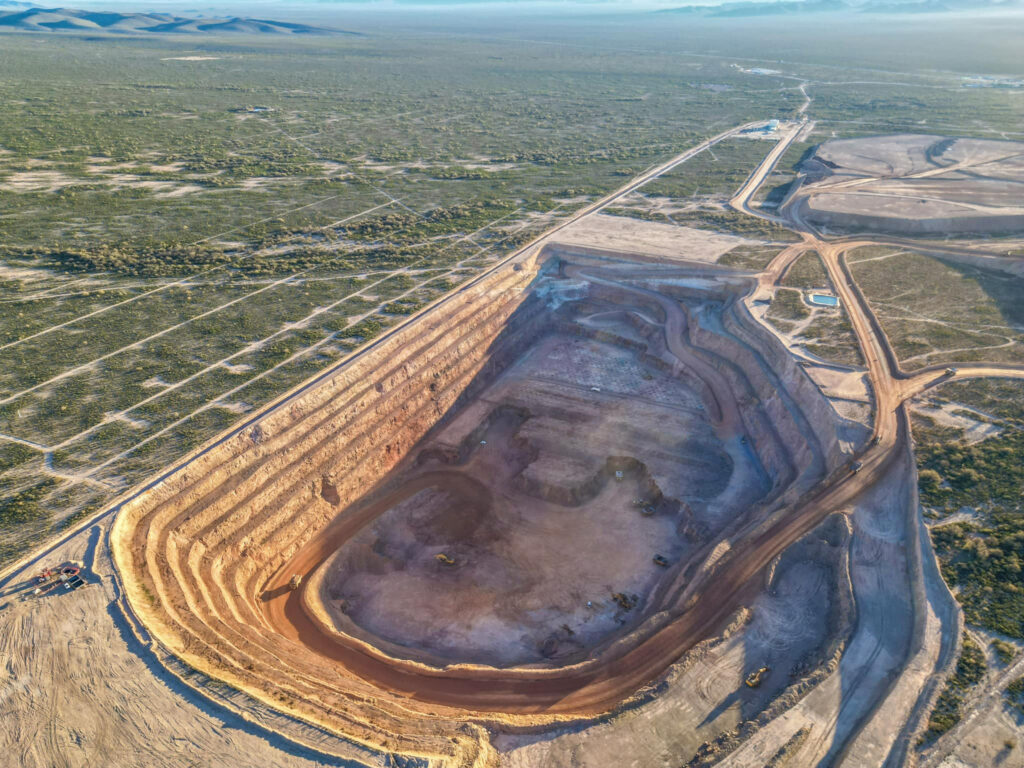
REMA Accuses Zacatecas of Expediting Mining Project Approvals
March 19, 2026
The Mexican Network of People Affected by Mining believes the government is expediting environmental permits without considering the cumulative impacts in regions that already face overexploitation of aquifers & environmental degradation.
-
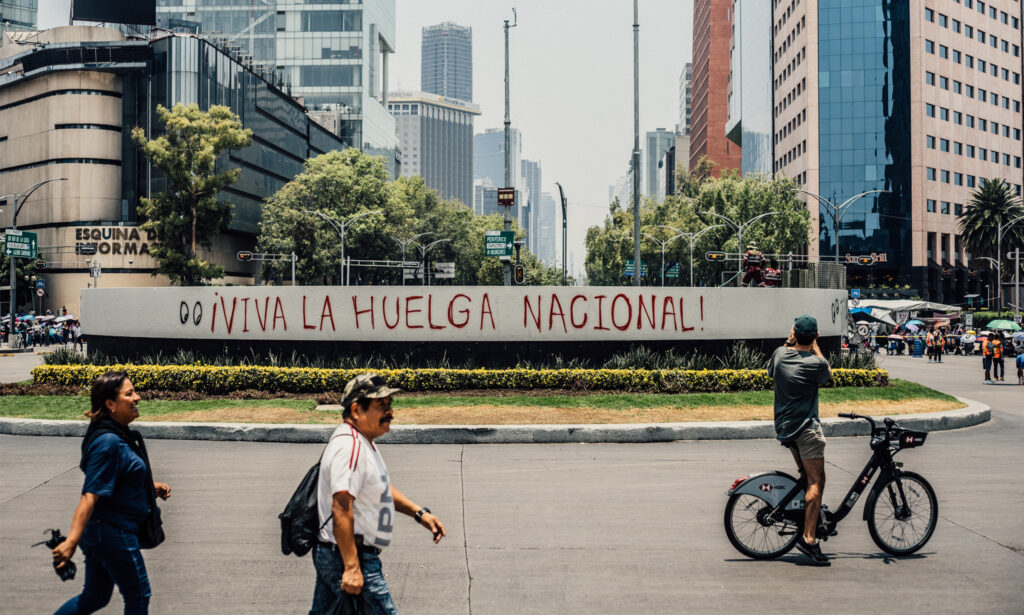
CNTE Teachers Will Blockade Mexico City’s Reforma
March 19, 2026March 19, 2026
The striking teachers indicated that as part of their 72-hour National Strike, they will continue protesting the Mexican government’s failure to comply with agreements reached in tripartite meetings and to demand repeal of the 2007 ISSSTE Law.
-
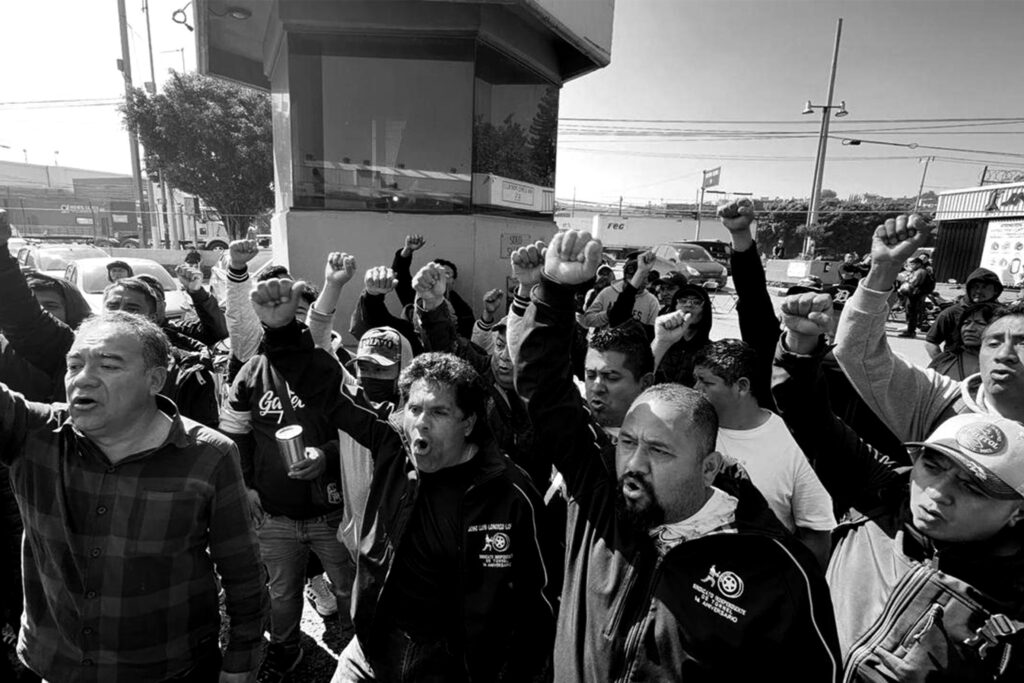
4 Workers Shot: Striking Workers Attacked at Tornel Rubber’s Tultitlán Plant
March 19, 2026March 19, 2026
Around 4:30 AM, about 60 armed men with sticks and firearms began attacking the workers, who managed to capture two of the attackers.
The post REMA Accuses Zacatecas of Expediting Mining Project Approvals appeared first on Mexico Solidarity Media.
From Mexico Solidarity Media via This RSS Feed.