

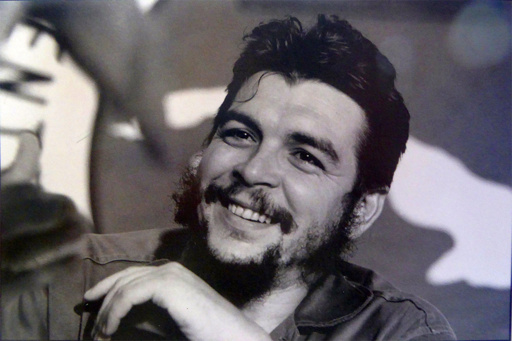
This interview was conducted by Gerardo Unzueta L. in 1959 and first published in Mexico in 1988 in the weekly magazine La Unidad and appears in the most recent issue of Memoria: Revista de Crítica Militante, which is a special issue devoted to the solidarity and fraternal ties between Mexico and Cuba. We thank Memoria for permission to reprint the article and encourage you to supportMemoriaand theCenter for Studies of the Labor and Socialist Movement.
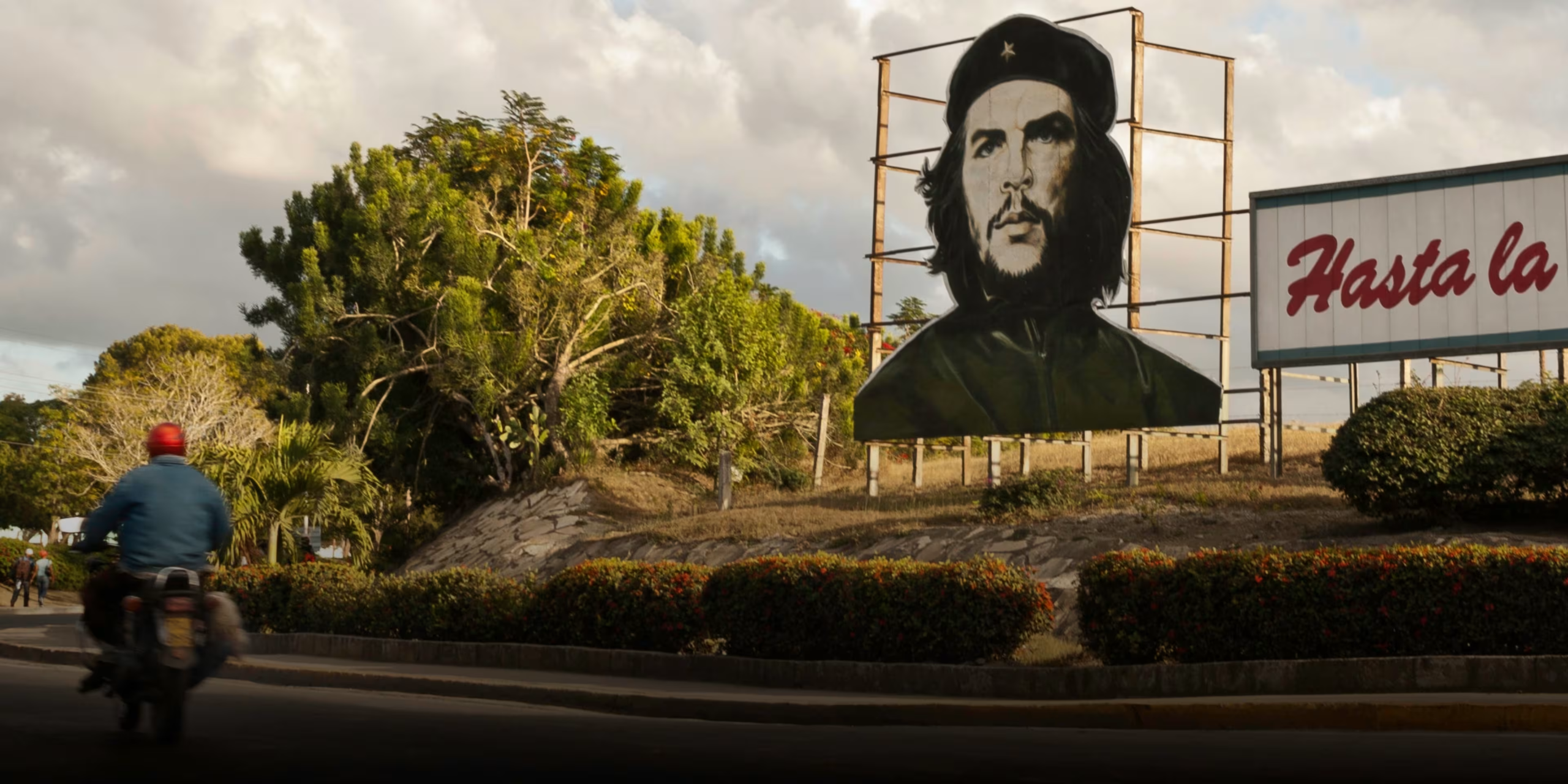
Almost thirty years have passed since September 26, 1959, when we interviewed Ernesto “Che” Guevara at an airport near Havana. Today, as the twentieth anniversary of his assassination approaches, we in Bolivia felt it appropriate to republish that interview, in which Che summarized, in 20 minutes, his thoughts on the Cuban Revolution, its significance, and its movement.
That morning, at six o’clock, I achieved one of the most valuable fruits of my journalistic work. It is rare to speak with a man capable of expressing in so few words the profound transformative power of a revolutionary act like that carried out by the heroes of the Sierra Maestra. Combativeness, internationalism, and humanity were intensely intertwined in those words.
Commander of the Sierra, already a state leader, Argentinian by birth, 31 years old, answered my first question: Why, being Argentinian, did he participate so decisively and prominently in the Cuban Revolution?
The only question that might arise, if there is one, is why I participated in the Cuban struggle. Whether I stood out or not has nothing to do with my nationality, and only time will tell, only history will tell, if we have the opportunity to enter it, if indeed anything stood out. We believe that this was a revolution made by the people, and that the great virtue of its leader, Fidel Castro, was his ability to unite the entire population and lead them to victory.
From my personal perspective, I reject any explanation that attempts to demonstrate, in any way, that a foreigner cannot come and fight on this land. For us, those of us who live south of the Rio Grande, any of the American homelands is ours, and for any of them we can shed our blood, certain that we are fighting for our own country.
Che’s first words, so forceful, placed us squarely within the Latin American context. Hence the second question: In your opinion, what is the projection of the Cuban Revolution in Latin America?
We have already emphasized on other occasions that the Cuban Revolution has contributed three fundamental points to the mechanics of social movements in America, three theories that become almost axioms: first, the people in arms can, through action alone, transform themselves from a small nucleus into an army that defeats the oppressor army in pitched battles; second, the total conditions for a revolutionary war should not be waited for but, on some occasions, can be precipitated by the establishment of an insurrectionary focus that serves as a catalyst, accelerating the actions of the people; and third, that in the panorama of our semi-colonial and underdeveloped America, the stage for the struggles for the liberation of the people is the countryside, the mountains, and not the big cities.
It’s also important to know the opinions in countries fighting for their liberation regarding the movement that has taken place in Cuba. What is the assessment of the Cuban Revolution in Afro-Asian countries?
They see her as something completely new, a true hope for America. Her name is inextricably linked to that of Fidel Castro, sometimes to such an extent that they know neither the geographical location nor the characteristics of our land and only know that there is a bearded leader who represents something new on this continent, whose name is Fidel Castro. But what all the peoples we visited agree on is their open admiration for the figure of our leader, for the strength and dynamism of our liberation movement, and for their faith in the American projections of that same movement.
Of the specific problems facing the Cuban Revolution, Commander Guevara, which ones have special Latin American significance?
I believe that all the problems facing our revolution, the vital problems, let’s say, those that transcend the national peculiarities of each country, encompass the entire American continent. Our frontal struggle against any attempt at foreign interference, our right—repeatedly expressed—to make Cuba’s voice heard as that of a free nation in all international organizations, our right—reiterated time and again—to carry out the social, economic, and political reforms that our people yearn for and for which we made this revolution, are clearly characteristics that, with varying degrees of intensity, will be shared by all the revolutions in Latin America that, like us, have the freedom of the people as their goal, their future happiness, and their total independence.
Clearly, our peoples have an interest in the existence and triumph of the Cuban Revolution, and therefore they also have duties to fulfill regarding the fate of this island. What are the duties of the Latin American peoples with respect to Cuba?
It’s difficult to define duty; duty generally arises from social consciousness, from the need to do something to defend oneself against something or to work toward a common goal. Our American peoples have little social awareness of their needs as a whole because of the great legacy of colonialism that has oppressed them; the division was precisely to facilitate the subsequent, more convenient distribution. We believe that if there is any duty to point out, it is the duty—which is in reality a right—to subsist. If the peoples of America clearly see what their great needs are and how they can subsist as nations that have achieved their effective independence, everything else—that is, real support for our revolution, the series of practical measures to achieve it—will come only as a corollary of that need to subsist.
We know that a new conspiracy outbreak has been uncovered today in the eastern province. In recent days, I have witnessed the capture of conspirators. To what factors do you attribute the continued occurrence of these outbreaks? Are these factors exclusively internal?
I can’t tell you at all what this new outbreak you’re reporting is due to. I can honestly say, this is the first I’ve heard of it. I’ve been working until now at the offices of the National Institute of Agrarian Reform (INRA), and I wasn’t informed of any dangerous situation. That’s why I can’t judge exactly what’s causing it. You know very well who monitored the previous attempts. There’s no counterrevolution worth anything here. There can be no attempt whatsoever to rise up against the designs of the revolutionary government, which is the voice of the people. Such attempts can only come from outside; but any attempt that comes from outside, and doesn’t have the support of the people, is inevitably doomed to fail.
What are the most outstanding achievements of the Cuban Revolution in its eight months of victory?
A few months ago, that was easy to answer. Today, it’s difficult to extract from the wealth of achievements of the revolutionary government which laws or events are the most important. We can, however, place the Agrarian Reform as the fundamental law of our government, and the monumental National Institute of Agrarian Reform (INRA) as its most fruitful achievement. Nevertheless, there is also something that was structured after the victory but was instrumental in the popular triumph, placing it in this new institutional position it has come to occupy: the Rebel Army, the army linked to the people. “The Rebel Army is the people in uniform,” Camilo Cienfuegos said. It is an army that works, that constantly contributes—in the form of manual or intellectual labor—the money it is paid to defend the nation. There is the National Institute of Savings and Housing. We have laws as important as those that lower rent, electricity, and telephone rates; the law on public beaches; and, most recently, a series of special taxes on alcohol consumption, but before that, a complete tax reform. And above all this scheme of tangible achievements, a new revolutionary orientation; a new revolutionary mentality, which is giving rise to a thriving nation, fundamentally directed, politically, to speaking the clear language of national independence and, economically, bearing on its shoulders the task of fulfilling one of the immediate aspirations of the Cuban people: liberation from monoculture, represented by sugarcane, and from the single market, represented today by the United States of America. The task ahead is broad and arduous. Only if we do not falter, if we continue to rely on the faith of the people and always consider that the people are our mentor, our guide, and our support—our reason for being, in a word—will we be able to reach the goals we aspire to and say at the end of this road that we have achieved victory for our homeland.
What are the most important programmatic points that the Cuban Revolution government must carry out in the coming months, both nationally and in terms of international relations?
I’ve practically answered many of those points in the brief outline I gave you earlier, many of these programmatic points. Fundamentally, as I’ve already said, in international politics, we must wage an open struggle against all forms of colonialism, against all kinds of exploitation of small nations by large ones, a vigorous fight for world peace, and for the voice of small nations to be heard on an equal footing in all international forums. Regarding our economic policy, I’ve already told you that we are engaged in the dual struggle to free ourselves from monoculture and mono-trade. We are fighting to have Cuban media outlets, to develop our national merchant fleet, our fishing industries, and then, supported by this improvement in banking, to begin the great leap toward the total industrialization of the country. That is our great future step, the one that will define the position of this colonial country, with no development whatsoever, and the great industrial nation of tomorrow.
Finally, Commander Guevara, you who were in Mexico, surely you will have something to say to the people of my country, at this time of great decisions for Cuba and Latin America.
I simply want to remind the Mexican people of my enduring and heartfelt tribute, which I could say, at a time when I was a political refugee, an outcast, persecuted by the entire world, yet received a warm welcome and a breath of human understanding from the Mexican people. When my daughter was born in Mexico City, I could have chosen her mother’s Peruvian nationality or my Argentine nationality; either option was logical, as we were only passing through Mexico. However, we decided, by mutual agreement, to give her the nationality of the nation that had welcomed us in the bitter hour of defeat and exile. That was the only thing we could do for Mexico at that time. Today, I reiterate the greeting we wished to extend with that gesture, and I reaffirm my certainty that here, as throughout the Americas, the Mexican people are valued and cherished as a great brother destined to occupy a prominent place in this new American structure that is emerging on the horizon.
-
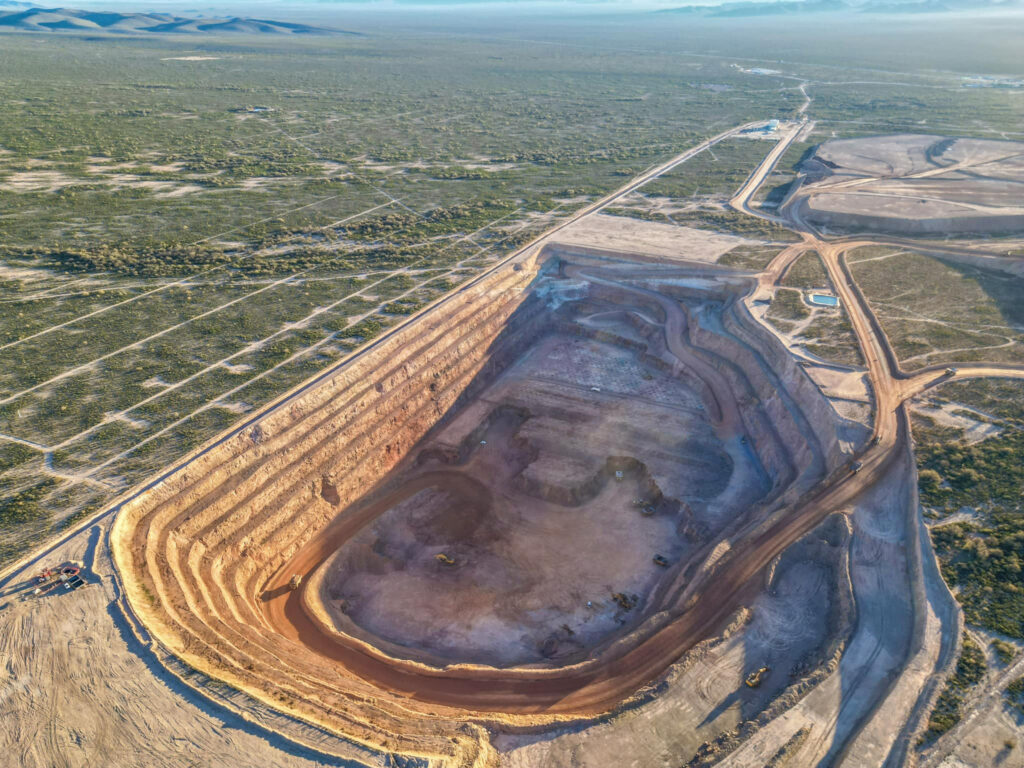
REMA Accuses Zacatecas of Expediting Mining Project Approvals
March 19, 2026
The Mexican Network of People Affected by Mining believes the government is expediting environmental permits without considering the cumulative impacts in regions that already face overexploitation of aquifers & environmental degradation.
-
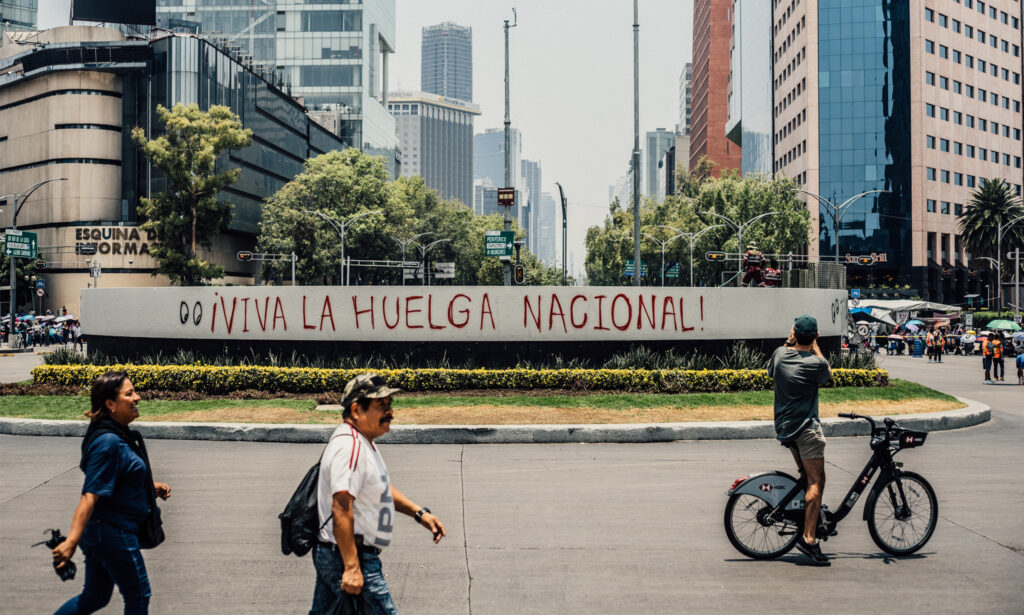
CNTE Teachers Will Blockade Mexico City’s Reforma
March 19, 2026March 19, 2026
The striking teachers indicated that as part of their 72-hour National Strike, they will continue protesting the Mexican government’s failure to comply with agreements reached in tripartite meetings and to demand repeal of the 2007 ISSSTE Law.
-
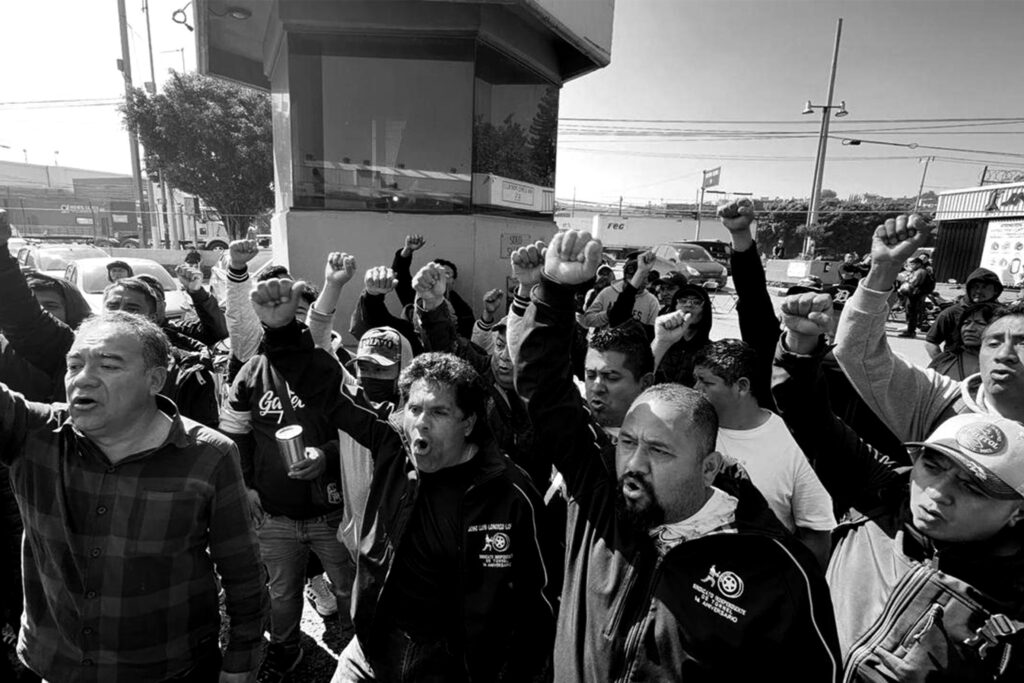
4 Workers Shot: Striking Workers Attacked at Tornel Rubber’s Tultitlán Plant
March 19, 2026March 19, 2026
Around 4:30 AM, about 60 armed men with sticks and firearms began attacking the workers, who managed to capture two of the attackers.
The post Che Guevara: We Can Give Our Blood to any American Homeland appeared first on Mexico Solidarity Media.
From Mexico Solidarity Media via This RSS Feed.