

Why Libraries Matter in a Fascist Moment
0:00
/4494.5763
1×
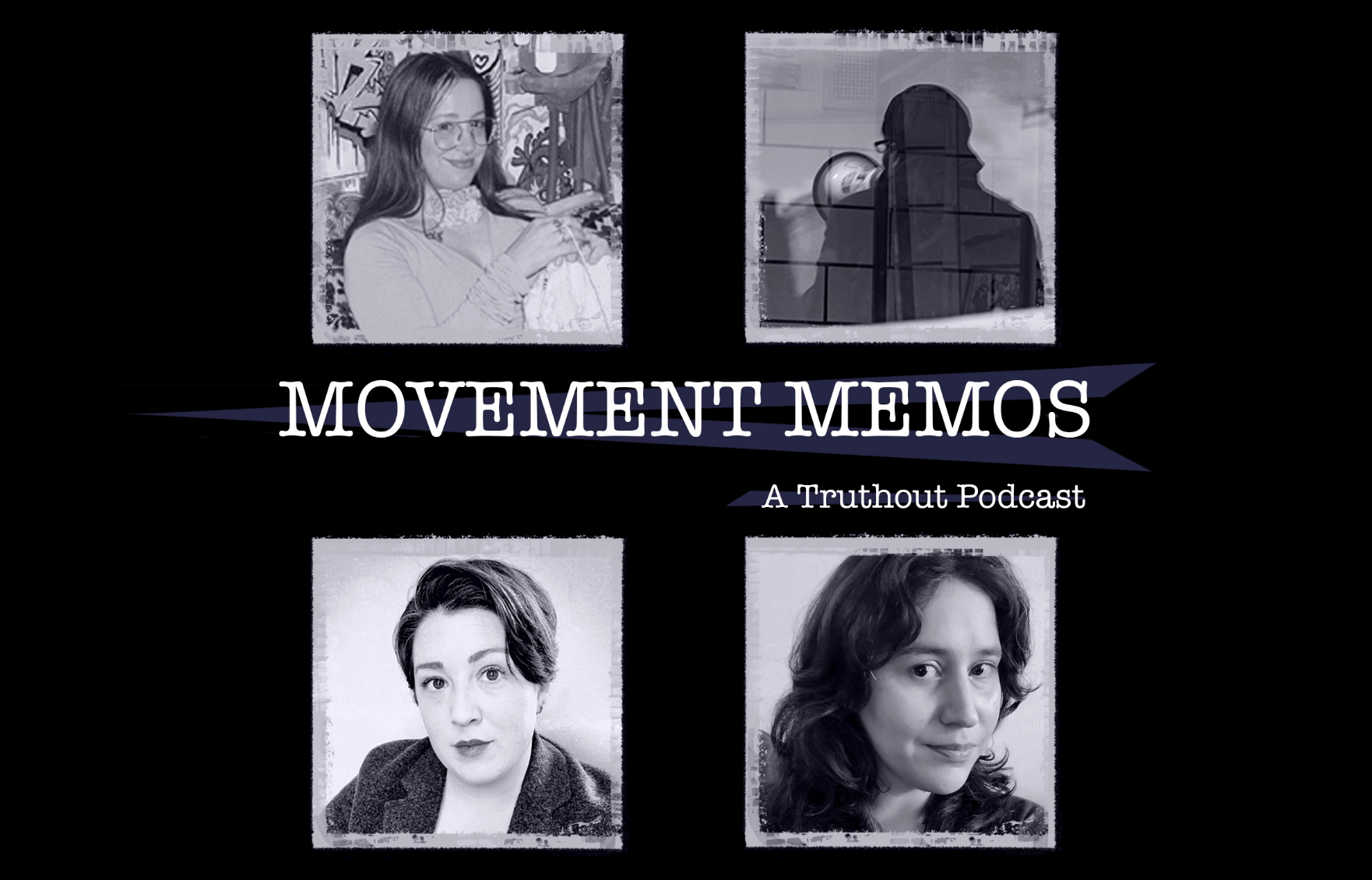
“A lot of people in power view knowledge as dangerous,” says organizer Mariame Kaba. In this episode of Movement Memos, Kelly Hayes speaks with Kaba and organizers Alison Macrina and Katie Clark about why public libraries matter, not just as places to borrow books, but as vital public infrastructure. They discuss libraries as spaces where people can gather without spending money, learn together, and build the kind of shared intellectual life that authoritarianism seeks to destroy. The conversation explores book bans, censorship, austerity, AI, political education, and the bipartisan defunding of public goods, while making a powerful case for libraries as sites of struggle, possibility, and collective survival.
Music: Son Monarcas & Jobii
TRANSCRIPT
Note: This transcript was originally published in Truthout. It is reprinted here with permission.
**Kelly Hayes:**Welcome to Movement Memos, a Truthout podcast about organizing, solidarity, and the work of making change. I’m your host, writer and organizer Kelly Hayes. Today, we are going to talk about public libraries, their role in public life, and what is at stake in the fight to defend them in this fascist moment. Libraries are one of the few public institutions where people can simply exist without being expected to purchase something, where we can access information and ideas, learn together, and participate in shared intellectual life. They are part of the public infrastructure that makes free thought, knowledge, and inquiry possible. And yet, these beloved institutions are frequently targeted for devastating cuts, including by Democratic mayors, rather than the investment and expansion that our collective well-being actually requires.
Today, we’ll be hearing from Alison Macrina, Katie Clark, and Mariame Kaba about libraries as public infrastructure, contested political terrain, and spaces of possibility, and about what it means to fight for them in this moment.
If you appreciate this podcast, and you would like to support Movement Memos, you can subscribe to Truthout’s newsletter or make a donation at truthout.org. You can also support the show by subscribing to Movement Memos on Apple or Spotify, or wherever you get your podcasts, or by leaving a positive review on those platforms. Sharing episodes on social media is also a huge help.
Truthout is an independent news organization, publishing stories that the craven corporate press won’t touch. We are a union shop with the best family and sick leave policies in the industry, and we could not do this work without the support of readers and listeners like you. So thank you for believing in us and for all that you do. And with that, I hope you enjoy the show.
[musical interlude]
KH: Alison, Mariame, Katie, welcome to Movement Memos.
Mariame Kaba: Thanks so much, Kelly, happy to be here.
Alison Macrina: Yeah. Delighted to be here, Kelly. Thank you.
Katie Clark: Really glad to be here. Thanks.
**KH:**I’m so glad to be in conversation with the three of you today. To start, I’d love to have each of you introduce yourselves and tell us a bit about your work.
AM: So I’m Alison Macrina. I use she/her pronouns, and I lead Library Freedom Project, where we’re working on political education and community building with library workers, particularly focused on issues around information democracy, tech justice, access to information, anti-surveillance, and free expression. We work within libraries because we feel like it’s the best way to reach a broad and diverse public.
KC: Hi, my name is Katie Clark. I am an elected library trustee here in the Greater Los Angeles area. I serve on the board of the Altadena Library District. We are an independent special district with two branches that serves about 43,000 people. We serve the unincorporated community of Altadena, which may be familiar to many of you because it was one of the most heavily affected communities in the Eaton Fire in January of 2025, so we’re both doing regular library stuff and then library in a post-disaster context. So I have been an elected trustee there since 2018, and we do all the range of things that you would normally expect, but because we’re an independent special district, we’re really the only public agency that serves specifically our community in an elected capacity. Everything else happens through Los Angeles County.
I am also, along with Mariame, of course, a member of the steering committee for For The People: A Leftist Library Project, and my particular focus For The People has been on our library trustee candidate training program. So we have developed an original 12-week curriculum that we have offered to cohorts of folks who are seeking elected or appointed positions on their library boards, and we are in the beginning of our third annual cohort. We have an incredible group of folks across the country who have gone through that process and are serving their libraries in a really wide range of amazing ways.
MK: My name is Mariame Kaba. I use she/her pronouns. I’m an educator. I’m an organizer, and I also went back to library school in 2020 in order to be able to learn more about archives and archiving and librarianship, and so that’s been really fun. I am part of For The People: Leftist Library Project along with Katie, and I’m sure we’ll talk more about that project moving forward. I’m also part of the New York City Public Library Action Network here in New York City. We call it NYC PLAN, and we are trying to move on getting our libraries more money in their budgets and also for those budgets to be stable along with a few other things that we’re also moving on. So that’s kind of my library affiliation.
**KH:**So libraries are often described as places where people borrow books, but in practice, they function as a much broader kind of public infrastructure. They are places where people access information, use the internet, learn new skills, encounter new ideas, and sometimes they simply are a place where people can exist without being expected to spend money. From your perspective, what role do libraries actually play in community life?
AM: I mean, you said it, Kelly. It’s so many essential functions of community life, and I think in particular, in this moment where the public sphere is being robbed of its last few coins by the ruling class that libraries are in this position where they’ve been sort of forced to step up and take on new responsibilities as other areas of public life have been defunded. But one thing in particular that you said I think is so important [is] that it’s a space where people who can’t purchase something are allowed to congregate. We have so few of these spaces where you’re not expected to make a purchase or that really, in the library, there’s almost no purchase you can even make. In this way, it also means that it’s a space where all kinds of people within your community can mix with each other.
Another really essential part of community life for libraries is that it’s a space where trans people are defended and celebrated, especially trans children, both in the sense of materials and programming that is welcoming and celebratory of trans people and also a space where a lot of trans people work. So trans library workers have this visible community role. And so, I think that one of the big reasons that there’s been such a reactionary backlash against libraries is that it’s a space where queer adults and queer children can be together and show not just that it’s okay, but necessary.
KC: I think so many of the things that Alison has underlined are absolutely essential and a reason why libraries are so dear to the hearts of so many of us. I think that we could talk for hours about what libraries do, and in some ways, I think it’s also important to think about what they are not, especially in this moment. Libraries are not a place of transaction in the capitalist sense, right? They’re not a place where you have to spend money. Certainly, they are a place where we devote our common public resources ideally to the common good, but you don’t have to make a purchase. It doesn’t matter what the number is in your bank account. It doesn’t matter what your housing status is. It doesn’t matter what your immigration status is.
Now, this is the ideal, of course. We do not see this articulated in every library or those ideals carried out in every library in the way that we want them to, but I think in the highest and best expression of the public library that we all strive for, you are there simply as a human being, as a neighbor, as a member of your community, and you have intrinsic value. You don’t have to do anything. You don’t have to perform anything. You don’t have to have a reason for being there. You don’t have to be productive. You can just exist, and there are very, very few spaces in our public life, certainly, where that remains the case today.
I think also, public libraries continue to be resistant to surveillance, resistant to incursions on people’s privacy in a way that many of our other public spaces are not. Again, this is something I think we strive for. We don’t always see that embodied in every public library, but what you look at, what you borrow, the programs you attend, all of that is your business and nobody else’s. I think, again, there are very few public spaces, very few taxpayer-funded spaces, spaces that we all support that can say that.
**MK:**Yeah. Yes to what Alison and Katie both said. I think something that we need to also kind of maybe nail down a little bit more is at a time in our culture, and Alison made mention of this, where there’s a need for third spaces, a need for actual public amenities in community that people can access, libraries are critical. They are places where you can have public space to meet, where there are sometimes venues in libraries where people go to theater performances and they go to concerts and they do a bunch of things that they can do with other people in common. This is so critical and really important and something that a lot of people have been talking about lately as we’ve descended further into fascism. Where can you go in this country where you can bump into people of multiple class backgrounds, different racial backgrounds, different creeds on a regular basis?
You usually can find that at a public library in whatever city or town you’re in. That’s really important, and it’s not to say that libraries can’t be exclusionary. Sometimes they are because human beings run these institutions, right? But they do offer, still, opportunities for that kind of cross engagement of people that I just don’t know where else you find that today. You don’t often find it in local churches anymore or local synagogues or mosques. You don’t find it. We still have it in some of our public schools, but they’re quickly trying to dissolve those as opportunities for multiple types of people to come into contact with each other regularly. So I do think that that is really incredibly important to think about and to think about libraries as public amenities, libraries as infrastructure in a time when we’re dealing with climate change, places where people usually can find a place that’s hot enough to be heated during very cold spells, a place that hopefully, in many places, has AC. You can cool down. We need to think about libraries expansively in order to understand how important they are in our culture and our society.
KH: Thank you. I really appreciate these points. I think libraries are often missing from our conversations about what it actually takes to resist authoritarianism and defend people’s ability to think, learn, and question freely. Why do libraries matter so much to that struggle?
**AM:**I think so much of what Mariame and Katie said. It’s just going to be that the whole time, by the way, Kelly. We all agree. We’re three colleagues who are in such amazing community and agreement with what one another is saying. But yeah, what Mariame was saying about these third spaces, I think that the fact of the library being a community space, interacting with people from all walks of life under it’s… Obviously we’re talking about the most ideal conditions, right? Under the most ideal conditions, it can be those things. I think that it’s not only that the library is this infrastructure that’s devoted to free inquiry, but I think that we learn best when we are in those kinds of spaces where we’re introduced to people and ideas that are not like ourselves. I think particularly, libraries are that infrastructure in this current moment when we’re at misinformation crisis levels.
There’s AI slop everywhere. We’re dealing with the theft of our attention from big tech platforms. The library is the most visible institution defending knowledge and truth. Thinking about the way that we as a society decided that that was infrastructure that was important to us in spite of all the other things in the US society that we get wrong, we have libraries in every single community and they are beloved and they literally exist to make free thought and inquiry possible under the best conditions, so it really boggles the mind why they aren’t front and center in these conversations. I see a lot of times when actually, libraries do get centered rhetorically in conversations about resisting authoritarianism, but rarely do people with any power translate that rhetorical reference into material resources.
In particular, I’m thinking about where I live in Philadelphia, our mayor, Cherelle Parker, has extolled the virtues of libraries many times. But when there was the huge cold snap over the winter here just a few weeks ago, the libraries were all required to serve as warming centers, which the workers were so ready and willing to do, but the city offered them absolutely no resources. And so, this way that the austerity sort of takes away from the library even when it’s positioned as something that can meet that moment, it’s really unfortunate.
**KC:**I think that when we look at the question about the role of the library in defending democracy, the role of the library in resisting authoritarianism and fascism, you’re absolutely right that libraries are usually not front and center. I think it’s also because we have a real aversion to thinking of libraries as political entities, but of course, they are, right? Just like public schools, just like anything else that is part of our political landscape, libraries as public agencies are a site where politics happens. I think we have a very romanticized view of public libraries. Many of us had a whole host of very positive experiences early in life, and we have this sort of rose-colored vision of libraries where you go and you do summer reading and there’s story time. How could that possibly be political? At the same time, we have this idea that politics somehow equals exclusively partisan, exclusively bad, as opposed to thinking about politics for what it really is, which is just the way that we all make decisions and allocate resources together.
So I think those two forces combined, this romanticization of libraries and an aversion to thinking of libraries as a site of politics, often means that we are not seeing either the role that libraries can play or the way that politics is playing out in our public library spaces. And so, a lot of the work that we do at For The People, especially with our library trustees, is trying to get people to shake up that assumption that actually, when we’re making decisions about how library workers are paid or what collection development policies we have or how our physical spaces are accessible or more frequently not accessible to people, those are choices about politics. The way that those choices show up in the fabric and the experience of the public library is, in many ways, a microcosm and a local expression of what we value, what we care about, and how we enact that.
**MK:**So I 100% ditto everything that’s been said again. I wanted to just also add that last year, I wrote a piece about criminalizing librarians. I wanted to kind of uplift the kind of threats to what librarians are facing in this moment and the realities of libraries in a “democratic society,” but now under increasing fascism. Some of the things that I wanted to kind of bring about in terms of that piece was to remind people that a lot of people in power view knowledge as dangerous. Knowledge is not some sort of kind of neutral thing that you just either have and don’t have or whatever. It’s a site of contestation about what to know, what you’re allowed to know, who is allowed to know what, and in that kind of context, public libraries are extremely dangerous institutions.
And so, as a result of that, a lot of people focus their attacks on libraries, on books, right? So you hear a lot of stories about banning books. Why are people banning books? Is it just out of nowhere? No. It’s that the right wing, if anything they know, they know that libraries are political institutions. They know that knowledge can be dangerous to their political project and they’re going to get in on that. Alison mentioned earlier about libraries being embracing of trans people and of LGBTQ people and of other kinds of folks, at least in the latter part of their histories, and that is not something people are excited about across the board. And so, when you see people from different interest groups, they try to remove a wide range of books from library shelves, they also try to target the librarians who decide that the egalitarian mission of the library is something worth pursuing, is something worth pushing.
So you’ve seen librarians over history become targets of their communities and also targets of the state during the Red Scares, during segregation, Jim Crow, currently, after the PATRIOT Act is passed. You see the ways that these institutions are distinctly, importantly democratic and political, and people decide to fight on that terrain to make them less democratic and to make them adhere to their particular politics. We’ve seen what Florida has done to censor materials related to LGBTQ people in public schools, but also in public libraries. We’re seeing that replicated in multiple places all at once, so I think we have to be really mindful as we’re thinking about this institution that it has been a contested site of struggle from its inception. This isn’t new, and we have to really tend to making sure that the institution basically makes it through this fascist, current moment, historical time that we are living through at the federal level, at the very least, though we have had fascist-like experiences at the state level for a long time in this country.
So I think those are important things to think about. And librarians, and Alison knows this very well in her work, librarians are always pushing back on kind of pressing for freedom to read, for people being able to have full access to information and to knowledge and also being guides for people to that knowledge. That’s a core tenet of librarianship and library practice is to offer access and to be able to make sure that people can gain the knowledge and information that they want unimpeded, so yeah.
**KH:**It strikes me that what you’re all describing here is not just censorship, but a much larger fight over knowledge itself. We’re seeing that in book bans, attacks on universities, and broader efforts to control what people can read and learn. What do these attacks reveal about how knowledge and storytelling function politically?
**AM:**Well, I think Mariame really said it just then talking about the ways that knowledge is dangerous and in particular how this is… So many of these things that we’re experiencing in libraries and with fascism writ large is not new. It’s not unprecedented that reactionaries throughout history have always removed history, have always removed access to knowledge, have always attempted to control information flows. What I think about in terms of what storytelling and knowledge does for us politically, the political functions they serve, I think about how I love to read any revolutionary memoir, autobiography. I can’t get enough, and you read and you see that so many political struggles, so many political awakenings come from people in the library discovering new worlds, young people, college students. How many revolutionary memoirs begin with a kid in the library?
It makes me think of what James Baldwin said – “You think your pain and your heartbreak are unprecedented in the history of the world, but then you read” – that storytelling helps us see others who are like ourselves, see others who are unlike ourselves, build empathy, help us imagine new worlds, understand and study our world better in order to change it. Libraries, I think at their best, are creating these opportunities for freedom and possibility in books and programming. I think that something that I always find really interesting is that if you look at any poll that looks at where people are with left and progressive politics, usually the biggest indicator of how progressive someone’s politics are, it’s not necessarily class, it’s not necessarily other demographic info, it’s access to education, knowledge, and information.
**KC:**I think that there are a lot of reasons to be very concerned about where we are politically. There are no shortage of horrors that are happening on a regular basis, but I think it’s also important to remind ourselves constantly that there are more of us than there are of them. The value that most of your neighbors have, most American citizens have for the value of free thought, for the value of free inquiry, for the value of free access to information is something that runs deep. I think that what we see in public libraries across the country is a site that physically embodies this idea that a bunch of different thoughts, a bunch of different approaches, a bunch of different concepts can coexist in one space in relative harmony. I mean, we say this all the time in libraries, but there’s a book in the library for everybody, but not every book in the library is necessarily for everyone. So it’s fine if there are things in the library that aren’t for me. That’s great. I’m sure they’re for somebody.
But what we’re seeing with this increasing tide of censorship and authoritarianism is a deep fear and an intense fragility around the presence of ideas, the presence of questions, the presence of other ways of thinking, being, existing that are fundamentally threatening to these deeply fragile ideologies. I think it’s important to remember how fragile they are. If your whole view of the world, if your whole political structure, if your whole theory of existence is something that can be so deeply threatened by the mere existence of stories about people who are not like you, that tells us something really important about how this is going to go in the end. I think as we see funding continuing to be slashed, not just for public libraries, but for people who are producing knowledge, producing work for artists and writers and playwrights, our work in the public library becomes more important than ever to remind people that the value of free thought and free inquiry is not something that is specific to a certain kind of ideology, but is something that crosses every single demographic and political line that we have.
**MK:**Yes. I would also just say a big part of what’s happening, in my opinion, is that what we’re seeing are the downstream effects of a larger desire to actually censor people. They are censoring knowledge because they want to censor human beings. They want to have certain human beings not count within our society, and therefore, they don’t want those human beings to have any sort of power, intellectual power, any sort of way to be able to see themselves represented in the world. They want those people stamped out. Downstream of that, then, is the censorship of people’s books and people’s knowledge and people’s access, and that is a huge part of the project that we are dealing with, the fascist project. Fascists love to burn books. We have a situation in our country where the loudest people, at least for the last few years, who were so apparently incensed by what they called woke, the kind of bastardization of Black thought around being awake in the world and paying attention, they took that and have twisted that into a way to be able to weaponize stuff against marginalized people.
They basically have been able to say for a long time that their fight was a free speech fight. The reason they are supposedly so against woke is so they can have free speech so that the First Amendment is protected in all different kinds of ways, and yet, those very same people are the most censorious people on the planet, except they are censorious at the state level. They want the state to impose state knowledge, state control, et cetera, et cetera. How completely dissonant is that, what they say versus what they’re trying to do? I think we have to really be thinking about that. Every time somebody brings up an issue about like, “Why should this book exist in this public space?” The question is, why should you be the arbiter of what book is in the public space? This is bonkers, especially when you all are screaming day in and day out that you are being censored in various kinds of ways so that you can’t be as racist, ableist, sexist, disgusting as you want to be on a regular basis.
So I do want to point that out, which is what is really going on here? What are we talking about when we talk about censorship? We’re not just talking about censoring knowledge. We’re talking about censoring human beings, too. I just want that to be a clear understanding for all of us as we’re engaged in these fights across the country and sometimes now across the world.
**KH:**That really resonates, Mariame. I’m thinking here about something you’ve often said about book bans in prisons. When access to reading, knowledge, and self-expression is tightly controlled inside a system that already regulates people’s bodies, movements, and contact with the outside world, we can see clearly what carceral and authoritarian systems are trying to prevent: people understanding their own conditions, recognizing their humanity, and imagining freedom. Abolitionists are always reminding us that if we want to understand fascism, we need to learn from people organizing on the inside, and this is one of the clearest examples of why.
**MK:**So yes, Kelly, right on target. I curated an exhibition a couple of years back in, I guess, now 2023 called Return to Sender. It was Return to Sender: Prison as Censorship, and it was really to try to pull people into seeing and understanding that they were trying to censor human beings. That’s what prisons are there to do, and that within that, they, of course, are then highly controlled, authoritarian, fascist spaces that also control people’s what they can learn, what they can read, who they can talk to, how long they can talk to those people, the lockdowns that exist to actually be able to further isolate people. We can learn a lot from incarcerated people about what we’re dealing with right now in fascist America, and we can also learn a lot about how they’re going after information and knowledge. Absolutely right.
I mean, I would also add something that I keep thinking about regularly, which is in the popular culture, I’ll often hear people say things like, “Oh, your book was banned. Then, it means the book has something dangerous in it. You should wear that as a point of pride that your book’s being banned.” Look, my books are banned in libraries all the time. Our book, Let This Radicalize You, doesn’t get into many prison libraries across the country. I’m going to tell you, that is not a badge of honor because you want information to go to the people who want and need that information. It is not something to put on your sleeve as like, “Oh, that means my stuff is really controversial. My stuff is really anti-establishment.” No, you want information to go to people because you want everybody to be able to access information, period. That is not a point of honor, and I would like people to stop talking about banning books and banning knowledge in that kind of way because I think it’s ridiculous.
**KH:**I totally agree. One of the best conversations I’ve had about Let This Radicalize You was with a group of guys at Stateville before the prison closed. It was a brilliant conversation, and the idea of people losing access to exchanges like that because of censorship is enraging. It’s not a badge of honor. It just fucking sucks.
And to me, that points to a larger contradiction in this country, because we say we value reading, learning, and access to information, but over and over again, those things are treated as expendable. Libraries are one of the most beloved institutions in the United States. I know that for me, growing up in a family without a lot of money, the library was a place my sister and I could always go and walk out with something under our arms that we were excited about, a book, some music, some new story or idea to explore. So what does it tell us that even though libraries are so widely loved, they are constantly threatened with cuts, closures, and understaffing whenever budgets tighten? What does that contradiction say about how public goods are valued in the US?
**AM:**Well, I think that, I mean, this is how the ruling class treats anything that’s popular or beneficial to society, and especially in the fascist project, they’re really… I mean, as we’ve seen, it’s end times fascism. It’s full-on eugenics. They’re only engaged in a project of destruction. So therefore, something as popular as the library, and I loved what you said, Katie, it really is true. There’s more of us than there are of them, and you can see this in the popularity of libraries. You can see this in the variety of people, all different kinds of people who are willing to stand up for libraries. But what the fascists want is they want to not only destroy the library, but they want people to be afraid of what the library represents. But fortunately, I think there’s many ways where there is so much local community resistance to that part of the fascist project.
We’ve seen it because the fascist attack on libraries has now been happening for years and years, and people in all kinds of local communities have been resisting these incursions. They love the library because of all of the things that we’ve been talking about here today. People love not having to purchase anything. They love a place that doesn’t have expectations of them other than very basic code of conduct, be nice to each other. They love that the library is a place that, generally speaking, is not going to break their trust like so many other parts of our society, like all the private platforms that we have to engage with all the time. I think that people, even though they have a lot of complaints about the nature of sharing things in common, they also love doing that, and I think that this is part of the reason why libraries are so intentionally underfunded and so many attempts to destroy them are being made because I think that the members of the ruling class understand that radical potential in a lot of ways.
I think that there’s also a very specific strategy to defunding public goods where they want to make public goods seem inherently dysfunctional. You defund them to a point where then you can say, it allows for the narrative that privatization is a better choice. But I think that part of this is that they know that if the public sector, libraries included, were well funded, we would have a completely different society. It wouldn’t solve all our problems, certainly not, but it would solve a lot of them, and the ruling class can’t have that.
**KC:**Yeah, I think that’s exactly right. We’ve talked a lot about where we are in this current moment politically and the more intense versions of fascism that we’re seeing day over day. But I want to underline that a lot of what we are seeing in our public libraries is not new. This is not something that has happened in the last four years or the last eight years or the last 10 years. The problems you see in America’s public libraries are often the result of a lack of investment over decades. Many of our library buildings are buildings that were built at the beginning of the 20th century or perhaps in the middle of the century, and they’re falling apart. I can’t tell you how many conversations I have with trustees all over the country and they say, “I don’t know where we’re going to find the money. We need $30 million to fix our elevator that doesn’t work, to fix our roof that leaks. We can’t use half the building because it’s got asbestos and we can’t afford to remediate it.”
These basic, basic problems of just capital infrastructure, like the building itself does not work, does not function, and we are not investing in it to say nothing of what we’re spending on staffing, on paying the people who actually make the library function, making sure they have a fair and livable wage, making sure that they have health care and benefits and all the things that they are entitled to, making sure that we have funded programs and collections and services. This lack of investment is a longstanding problem. It has been an issue for decades, and at the same time, it does not exist in a universe where we are not funding all public services. We are certainly funding some public services. We are funding police departments. We are funding surveillance. We are funding programs that punish and contain and control people, and we are not funding programs that support and encourage and connect people.
**MK:**I’m sharing, yes, yes, yes, to all of that, and I want to just say, picking up on Katie’s point that these are not new things, that this has been a long-time problem with public libraries and public goods in general, except for the goods that are, again, in the punishment-carceral state. I want to also suggest that… How to put this? It is concerning to me the conversation about how much people actually love the library because I think Katie brought up before the romantic vision of libraries that doesn’t necessarily look at the ways in which they are sometimes exclusionary and other things. They are institutions within a carceral state, so they’re going to have carceral tendencies in different kinds of ways, and they are institutions run by human beings, and those human beings are flawed, all that being true.
But I don’t think a lot of people know how their public library actually works or functions. I don’t think people know who pays for the library and how it gets paid for. For example, people definitely don’t know about the governance structure of their public libraries. We have found this, that for the people, people don’t know about library boards. I didn’t know about library boards until 10 years ago, and I know a lot about different public institutions. I didn’t even know we had boards that govern many of our libraries. I think that the ability not to understand how institutions actually function makes it so that it’s easier for the ruling class to be able to defund those institutions. It makes it easier for those who want to, for example, come into censorship to censor because they can take control of library governing boards and do their work that way.
So we really, really have to engage and build our knowledge and do political education around how these institutions actually function, how they work in order for us to be able to defend, but also call for expansion of them because, yes, we do need new capital campaigns to be able to deal with buildings that were built 100 years ago. We do need to pay people who are library workers a living wage. We do need to make sure that we can run the programs that people want in their communities. All that takes resources and money. That’s why budget campaigns that we run on the left must include the public library. We must include them on the list of the things that ought to be funded at an actual level that allows us to sustain them.
I think the other thing I want to point out is that something about where we are right now, if we’re in late-stage capitalism or some form of the mutation of the capitalist model of economics and politics, I think that it is really… I’ve heard library workers tell stories of people who come to the library and ask to rent books, people who ask what the monthly subscription fee is because we have gotten to the point in this country where it’s actually inconceivable to people that you can access anything without paying for it out of pocket and that people will be like, “What’s the catch? How is this a scam? How’s this not a scam,” because every single thing that we’ve hit on costs, quote, unquote, “money” out of pocket for you to be able to get what you want or need from it, whereas, actually, at the library, it’s each according to your need. That’s like the basic way of how it’s organized. This is extremely antithetical to the late-stage capitalist model of everything. I think that also makes libraries super dangerous and super threatening to certain groups of people who want to see an expansion of the idea to each according to what you can pay. They’re in a fight with each according to your need model of how to live in society.
We’re not customers at the public library. I think that that means that a lot of people in the country don’t know how to relate to institutions or to the government in a way that is not a customer relationship, a consumer relationship. You’re a patron at the library. That’s very different, and that’s why we have to fight for this institution because if we lose this as a public good and as a free public service, we will have lost everything. And so, I just want people to really think deeply about that. If you’re on the lefts in particular, this is your political project because we will not be able to build the society and the culture that we want without this kind of an institution as a basis from which people can not have to imagine a thing, but rather can be thinking about how to improve a thing.
KC: Mariame’s absolutely right. We have to fight this fight, and here’s the good news. This is a fight we can win, so it’s really important to understand, and this is something that we talk about in our Public Libraries 101 zine that For The People produce. The vast majority of all funding for public libraries, that’s your public library of mine, Alison’s, everybody’s, comes from local revenue. 87% of public library funding is coming from local sources. That means your city, your county, your local area. This is not something you’re fighting at the state or the federal level. This is something that you could go into a city council meeting, into a county commission meeting and you can advocate for, and you can make a huge impact at the local level. A lot of the talking that happens around politics assumes that everything is happening at the national or federal level, but less than 1% of all funding for public libraries comes from the federal government.
The vast majority of the money that we’re talking about flows through local budgets, and your ability to make an impact at the local level is hugely outsized. I can’t tell you how many library board meetings or city council meetings or county commission meetings don’t have members of the public in attendance. Now, is that by design? Are they at 10 o’clock in the morning on a Tuesday? Often, yes. But guess what? You and four people who show up to that meeting and pitch a huge fit about cuts to library budgets can make a huge impact. That is not something that you need thousands and thousands of dollars to run a campaign about. That just requires you calling up one or two people that you know, neighbors that also love your public library, getting in there and annoying the hell out of people until they fund these institutions properly. So not only is this a fight that we absolutely must fight, it is one that you can have a huge impact on directly this week, this month in your local area.
KH: What I keep hearing in all of this is that libraries help make a shared intellectual life possible. They are one of the few public institutions that still make learning, discovery, and collective growth broadly possible. In organizing spaces, we talk all the time about the importance of study and political education. What role do libraries play in supporting the kind of learning and exploration that movements depend on?
**AM:**I just want to first say that to the last question, Katie and Mariame’s responses, I was just over here nodding like a bobblehead and that I love talking about four people attending a public meeting because four people at a public meeting, if you’re a local lawmaker, feels like you’ve been ambushed by 100 people, and so just so on board with that. But back to this question, there’s so many different things that we can do with the infrastructure of libraries. Mariame was earlier talking about how important library infrastructure is. I don’t think that can be emphasized enough, and that is even with everything that Katie was sharing about how we’re dealing with decades and decades of defunding. What we can have with the infrastructure, even in its current form, held together with toothpicks and dental floss, we can make accessible political education happen at scale for free.
There are very, very few places in our society, I mean, it may be almost none, where that kind of opportunity is possible, and this is what we work on in Library Freedom Project. So we have a community of practice of a little bit less than 200 library workers around the country and then many other members of our extended community that engage with our trainings and our resources to provide some of this free accessible political education. So we offer things like privacy classes, ways to resist big tech in all different forms, basically everything from removing unwanted AI features from your phone or your computer to getting engaged in a fight to stop a data center from being built. Libraries have this space of providing timely, accurate, trustworthy local resources and so the opportunities for education across literacy levels, across class levels, introducing people to new ideas in an accessible way in their own languages.
I think part of the infrastructure that’s so key here is that something that I really think that we struggle with in movement spaces is bringing in people to organizing work because nobody wants to necessarily go to another meeting or that might not feel accessible to them, but libraries are a place where people already are. It’s a place where people already go, and so you can use the library to provide access to all these additional things, even if it’s sort of passive, even if it’s like you just have a few flyers at the reference desk introducing people to some new community organizing idea or something else to help deliver more agency into their lives.
I think that something that I have observed working in libraries and, in particular, working with library workers in the last 20 years is that increasingly, I think that library workers are getting a really strong materialist analysis of these conditions, that we’re both understanding the causes of the austerity, recognizing those that we’re dealing with conditions that we shouldn’t have to, and also working in defiance of it to serve our communities, and providing additional supports to our communities when everything else has been taken.
**KC:**I think Alison’s point about libraries being someplace where people already are is so critical. So a conversation that I have all the time, a question that I get asked all the time is, “Look, I care about all of these left political ideas. I care about public libraries, but I don’t know what to do. I don’t know. I read articles, and I listen to podcasts, and I do all this stuff, but I feel like I don’t know anybody in my town who’s doing this. I don’t know anybody. I don’t know what to do. I don’t know where to start.” Go to your public library. Go. You don’t have to go with an explicitly political goal. Go and see what’s happening. Find something that feels vaguely aligned to you. Maybe that’s a book club. Maybe it’s a community conversation. Maybe it’s joining your friends of the library group. Maybe it’s a group for parents or caregivers or folks who have similar family conditions or living situations to you. Find something with people who you feel aligned with and just start talking to them.
I mean, so many of us, I think, are really being stretched to the limit by the demands of capitalism, by the fraying social safety net we live within, by how difficult and expensive it is to exist in the modern world. Sometimes it can feel like doing one more thing, figuring out one more way to solve the problems of the world is totally impossible, but you don’t have to do that. You just have to know two or three neighbors who vaguely feel the same way you do about some things and maybe not about everything, but if there are people who also love public libraries are also in those spaces, just talk to them, and you will see these relationships start to emerge. You will see these opportunities start to arise organically. But if you can just put yourself in the physical space of the library with other people from your community, it makes the biggest difference. God love the internet, but saying your opinions on the internet will never accomplish, but walking into your local public library and existing with some of your neighbors, it’s a game changer.
**MK:**Yes to everything that was said. And just we know that public libraries are spaces where people are having book group conversations all the time right now. There’s probably a group meeting right now reading a book together. People are running workshops for each other and community. People are taking up esoteric ideas that nobody else has space for and putting it on and saying, “Hey, just come together.” People are running crochet groups, and as part of those crochet groups, they’re talking about their communities, what they care about, their lives. Those are all political things. That’s all part of political education. So they already are doing that, but then there’s the additional kind of value of librarians as educators. Librarians are also educators. Librarians are educating the public about misinformation, about disinformation, about AI, about censorship, about any number of things. Librarians are also navigators for people around information, community and local information.
When SNAP was cut and people were not getting their SNAP benefits, my library, which is Epiphany Library, not far, just a couple of blocks away from my house, they went ahead and just made a photocopy of all the pantries in Manhattan and put that outside, and people were taking those. No judgment. No worry. You just come. You can take that information and go and find a pantry in the area that supports you. Same thing for any number of things, Narcan in some of the libraries, again, part of a political project to keep people safe. And so, it just can’t be said enough that as a point of distribution for information and other kinds of things that people need, right now, you cannot beat the library for public provision of various kinds of things, and that is why they’re under attack in the ways that they are. I would also just say, I forgot to say earlier, that the attack on libraries has been bipartisan, that it is not just “the right wing,” but we have the corporate Democrats also penny-pinching the libraries.
Unfortunately, we also have people who call themselves progressives saying that everything must be cut and therefore the library must suffer, too. What kind of frigging idea is that? This is bonkers. Your job is to find the money for the things that are life-affirming and to seize the funds from the things that are killing people. That is your job as a politician, as a leader in a community, et cetera. And yet, we are not holding those leaders’ feet to the fire when they continue to cut the library on a regular basis. We are dealing with that right now in New York City where Zohran Mamdani ran on stable funding, increased funding for our libraries, and his first political preliminary budget does not reflect that. In fact, it’s a cut, and I think that’s absolutely unacceptable and egregious. In your town and in your space, very democratic socialists, talking a good game, but not showing up to do what is actually demanded of them, that is the basis for their whole entire political project,
You must log in or # to comment.