

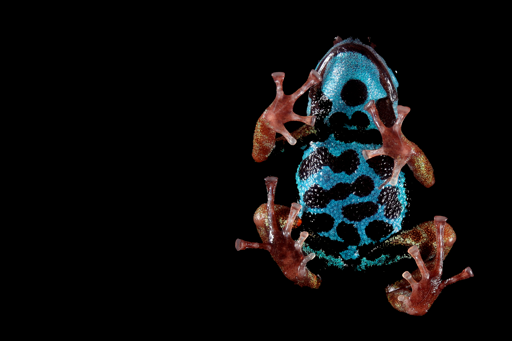
Scientists in Brazil described a new-to-science species of poison dart frog last year. It was first found among the leaves of wild banana plants on a research expedition to the Juruá River Basin in the western Amazon in 2023. The frog, around the length of a paperclip (14–17 millimeters, or 0.5-0.7 inches), is reddish-brown and blue on top, bright blue with black spots underneath, and has copper-colored legs. It was named Ranitomeya aetherea, in reference to the word “ethereal.” “We attribute this name to one’s feeling of enchantment and delicacy when encountering these frogs, as if they were from outside this world,” the study’s authors wrote in the species’ description. The species has only been found at one site, where it lays its eggs in the small pools of water that collect inside plant leaves. This remote habitat is largely intact, with no immediate threats from deforestation or wildfires, creating a shield of protection from human-led activities. This is in stark contrast to most other amphibian species, 40% of which are threatened with extinction. However, researchers stressed that biopiracy — the illegal collection and trade of rare species — and climate change are still threats. The frog’s exact toxicity is unknown, but the whole Ranitomeya family is known to be poisonous, with toxins on their skin and bright colors to alert would-be predators. “We know it’s poisonous to those that try to prey on it,” lead author Alexander Mônico, a researcher at the National Institute for Amazonian Research (INPA), told Mongabay.…This article was originally published on Mongabay
From Conservation news via This RSS Feed.