

When Christa Barfield started farming in a 24-square-foot greenhouse in her Philadelphia backyard in 2020, she had no experience or training. She just knew she wanted to grow healthy vegetables and sell them locally, and she knew she wouldn’t use chemical pesticides.
Early on, she connected with staff at the Rodale Institute, the country’s most influential center for in-field organic agriculture research, based in Kutztown, Pennsylvania, 75 miles northwest of Philadelphia. With their help, she figured out next steps and acquired new skills, like large-scale soil testing. Today her business, FarmerJawn, includes 123 acres of diversified vegetable production, farm stores, and a growing Community Supported Agriculture membership, and she’s set to apply for both USDA Organic and Regenerative Organic certification in 2026.
“This is our year right here,” said Barfield, who is now a board member for both Rodale and the Pennsylvania Farmers Union.

Christa Barfield. (Photo courtesy of FarmerJawn)
The free consulting Barfield received through Rodale is one example of a program paid for by the Pennsylvania Farm Bill, the first state-level omnibus bill dedicated to investments in agriculture.
Signed into law by then-Governor Tom Wolf in 2019, the bill supports local farming and nutrition. It provides farm-to-school grants, business development for farms looking to produce higher-value products, and farm workforce development. It has been continually funded with bipartisan support—and it could serve as a model for other states as the federal farm bill remains stalled, two and a half years behind schedule.
Because of the holdup in Congress, federal investment in farm programs beyond standard commodity payments and crop insurance has become less reliable. Under the Trump administration, the U.S. Department of Agriculture (USDA) has also proven willing to cancel contracts with farmers enrolled in programs funded by the federal bill.
Pennsylvania’s farm bill, meanwhile, is building stronger agricultural economies and communities, the kind of work a federal farm bill was designed for.
“I would say that real change in agriculture happens at a local and state level. We shouldn’t stand around and wait for federal policies,” said Jeff Tkach, Rodale’s CEO. “It has truly been a bipartisan effort [in Pennsylvania] and that has been unwavering.”
Several other states are considering similar packages or are investing in agriculture one small bill at a time. Whether states play a bigger role in farm policy in the coming years will depend on many factors, but many food and farm advocates see the Pennsylvania Farm Bill as a valuable guide.
Why a Farm Bill Works for Pennsylvania
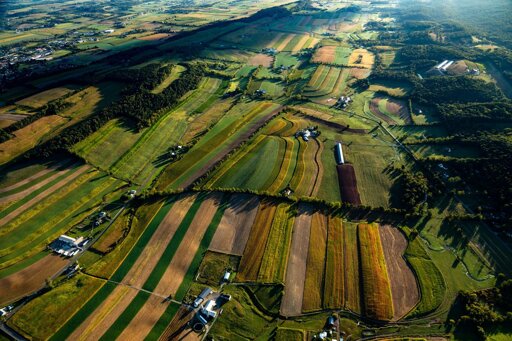
Pennsylvania has a unique farm landscape, a result of its diversity in both topography and population. It has a large industrial poultry industry and plenty of commodity grain. But it also has large, well-established local food economies, with many small farms selling directly to residents, explained Hannah Smith-Brubaker, the executive director of Pasa Sustainable Agriculture.
It also ranks No. 3 for the number of farmland acres certified organic and has the highest number of farmers under 35 in the nation.
“I think that there has long been an understanding in Pennsylvania that federal ag policy touches such a narrow number of farmers and encompasses such a narrow vision of what agriculture looks like,” said Lindsey Shapiro, a vegetable farmer who is also Pasa’s federal policy organizer. “Pennsylvania has been trying really hard to create policies that broaden the reach of ag policy and include producers that have traditionally been ignored or left out.”
Many in the state attribute a good portion of that focus to the state’s secretary of Agriculture, Russell Redding, who has had the job for 13 (non-contiguous) years under three different governors. At Pasa’s annual conference in February, as Redding walked on stage, the hundreds of farmers in the room erupted in ecstatic applause, hoots, and hollers.

Pennsylvania Secretary of Agriculture Russell Redding attends Pasa Sustainable Agriculture’s annual conference in February. (Photo courtesy of Pasa)
The farm bill came out of a process he and Wolf first started, Redding told Civil Eats, to define and quantify Pennsylvania agriculture. One of the big takeaways from that project was that “diversity is our strength,” he said. “And it’s every dimension of diversity, so that’s the urban and rural, it’s the Amish and the English, it’s the forest products, it’s the apple orchards, it’s the animals, et cetera.” Redding thought many aspects of that diverse production, like farms in urban areas, were not adequately represented in federal programs and that the state should do more to support them.
Redding is also who Tkach, at Rodale, spoke to first about how Pennsylvania could lead the way in organic production. In 2018, Tkach said he shared with the secretary his vision for translating Rodale’s 45 years of research into practical assistance.
“Up until that point, we had no mechanism to take the science off our farm and translate it onto other farms,” he said.
Redding was especially interested, Tkach said, in helping the state’s ailing dairy industry survive; organic milk fetches premium prices. When the first Pennsylvania farm bill passed in 2019, an organic transition program was one of its six pillars.
Rodale received a $250,000 grant through that program to provide free on-farm consulting—including agronomic advice and help with paperwork and market access—to any farm in the state that wanted to transition land to organic.
The program has been funded annually ever since and has successfully helped more than 60 farms transition 10,000 acres, Tkach said. It helps a range of farms, from direct-to-market vegetable farmers like Barfield to multi-generational commodity grain operations. Rodale has also helped processing facilities obtain organic certification.
More significantly, the organization used the organic transition program to launch the same consultancy across the country. They now have 32 consultants working with more than 1,000 farm clients nationwide.
“I travel around the country with my work, since Rodale has campuses now in Iowa, Georgia, Washington state, and California, and I’ll tell you that there are leaders in those states that are very jealous of what we’ve created here in Pennsylvania,” Tkach said. “California, I think, is taking a very close look at what we’ve done, and they’re starting to follow suit.”
“I travel around the country with my work, and I’ll tell you that there are leaders in those states that are very jealous of what we’ve created here in Pennsylvania.”
In addition to organic investment, Smith-Brubaker said many of Pasa’s member farmers have applied for the state’s Farm Vitality Grants, which can be used to venture into creating value-added products (like making jam from the fruit they grow) and succession planning. Redding said those grants were foundational to the Pennsylvania Farm Bill, especially because the state has a lot of farmland that is preserved under easements but that is in transition, with many retiring farmers figuring out who they might pass the land to and new farmers looking for land.
Others benefit from Urban Agriculture Infrastructure Grants; Barfield landed one to help her open a “corner store” in Philadelphia’s Kensington neighborhood, to sell fresh produce and other healthy products in a neighborhood with few nutritious options.
“In federal programs, there aren’t a lot of opportunities for infrastructure purchases on a farm,” Smith-Brubaker said. “The fact that the Pennsylvania Farm Bill includes funds not only for infrastructure, but infrastructure that’s specific to the unique challenges of farming in an urban setting, that’s really unique and exciting.”
The state farm bill also funds farm-to-school and other projects, and Redding said its success spurred additional programs that aren’t technically part of the farm bill but build on the same goals, like Agriculture Innovation Grants, introduced in 2025.
Shapiro at Pasa said that she’s encouraged by the Pennsylvania Department of Agriculture’s (PDA) engagement with Pasa’s farmers around how the bill might change to meet the state’s evolving needs.
“Theoretically, we need a new federal farm bill every five years,” she said. “Maybe we need a new state version as well.”
Should Other States Follow?
By Redding’s count, 16 states have reached out to him to read the Pennsylvania Farm Bill as a model. Connecticut passed its version of a farm bill in July 2025, and Maryland is considering putting together a larger package of investments in agriculture. “There’s nothing inside of the farm bill that’s not transferable to every other part of this country,” he said.
One big bill with several components is rare at the state level, but other states are filling agricultural gaps they see with individual legislative fixes. Minnesota legislators, for example, created their own version of a canceled federal program that paid for food banks to buy from small farms nearby.
While many states can’t create their own farm bills because they don’t allow “omnibus” bills, legislators can pass multiple bills at the same time in a sort of package format, said Kendra Kimbirauskas, senior director of Food, Agriculture and Rural Economies at the State Innovation Exchange.
Kimbirauskas, who works with state legislators on progressive food and farm policies, said there might also be reason lawmakers want to avoid passing larger farm bills.
Bigger bills can come with some of the same controversial “riders” that happen at the federal level, since it’s easier for lawmakers to slip things in.
“Most of them are operating with huge budget shortfalls and now they’re having to make up for all of these other things like housing and Medicare and SNAP.”
For example, last year, North Carolina lawmakers tucked a provision that would have given pesticide companies immunity from lawsuits claiming their products caused health harms into their version of a state farm bill, the North Carolina Farm Act of 2025. The bill didn’t pass, but at the state level, industry groups might wield more power, since it’s a smaller playing field, Kimbirauskas said.
The biggest challenge for states looking to spur agriculture innovation, though, is finding the funds.
“Most of them are operating with huge budget shortfalls and now they’re having to make up for all of these other things like housing and Medicare and SNAP,” she said, referring to recent changes made by the federal government. “There’s the aspiration of what folks really do want to do and then overlaying that is the reality of what can be done.”
Still, she said, state legislators are leaning into farm fixes that don’t require a lot of funding, like state-level right-to-repair laws, and there are other examples of state-level agriculture investments picking up speed.
In Minnesota, the state legislature created a farm-to-school program in 2019 to enable more schools to buy produce and meats from nearby farms. It started with $500,000 in funding the first year. Last year, despite a tighter budget, lawmakers working across the aisle increased the funding to nearly $2.5 million.
“At the end of the day, what farmers and what communities need is a farm system where we can have good food in our communities and get a fair price for that, and farm-to-school is just a win-win-win across the board,” said Sean Carroll, the policy director at the Land Stewardship Project, which has advocated for the Minnesota legislation. “It is not controversial in the state. It’s bipartisan.”
Notably, Carroll said, there’s also no powerful group that lobbies against farm-to-school funding.
During a tumultuous year for their state, Minnesota lawmakers also created the first state grant program specifically designed to replace funding that the Trump administration cancelled last year, helping food banks buy fresh food from local farms. The Farm to Food Security Grant Program is funded at $700,000 annually for two years, and the state’s agriculture department put out its first request for applications in mid-February.
Just across Pennsylvania’s state line, Maryland Governor Wes Moore’s administration passed the Chesapeake Bay Legacy Act, which created the state’s first guidelines around regenerative agriculture and gave regenerative practices a boost.
That came despite a challenging budget outlook, Maryland Secretary of Agriculture Kevin Atticks said. “The state leases a lot of land to farmers, and going forward, the farming practices [on that land] must be deemed regenerative under this definition.”
The bill also codified a program that the Maryland Department of Agriculture is launching, called Leaders in Environmentally Engaged Farming (LEEF), a sustainability certification that rewards farmers for practices that sequester carbon and contribute to healthier ecosystems.
Now, Atticks said, he is making big plans for when the state’s budget issues began to ease, which will likely include a legislative package of investments in local food and farms.
Because of the way Maryland’s legislative process works, a typical farm bill isn’t possible. “As an example, if we wanted to do something about farmers growing food and also mandate that school lunches had to incorporate local food,” he explained, “those are in two completely different sections of law, and so that would need to be two bills—one to deal with the eating and one to deal with the growing.”
Still, some ideas from Pennsylvania will likely make their way into the legislation. “We’ve had meetings with Secretary Redding’s team about their farm bill,” Atticks said. “Ours will notably look different than any other state’s, but we do have plans to continue highlighting agriculture in the state, because it’s going to be critical in the next couple of years.”
In fact, some D.C. insiders think that there may never be a typical farm bill at the national level again, given last year’s fracturing of the coalitions that used to help move the legislation. If Congress does manage to get the process back on track, it’s going to take a while.
In Redding’s mind, states should start to think about their own laws as the central tool for agricultural policies, with complementary federal laws—not the other way around.
“You can’t do what we do without [federal farm bills], but the narrative is not about what Congress is going to do. The narrative has become, ‘What is Pennsylvania going to do?” he said. “That’s an important change, and I think it has actually allowed us to talk about our own definition of agriculture and recognize that we’ve got organic producers and urban producers and folks doing amazing things in communities that have never been acknowledged before.”
Plus, there’s the simple fact of getting around D.C.’s deep divide. Far from being a fight for funding, in Pennsylvania, across party lines, Redding said the farm bill “has been the most predictable and supported element of the budget for the last nine years.”
The post Should Every State Have Its Own Farm Bill? appeared first on Civil Eats.
From Civil Eats via This RSS Feed.