

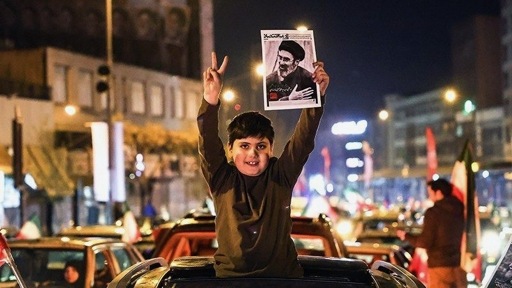
Wars are rarely decided on the battlefield alone. Military campaigns can destroy cities and kill large numbers of people, but political outcomes are defined by endurance, legitimacy, and the historical currents that flow beneath the immediate violence. While the war that US President Donald Trump imposed on the people of Iran may produce tactical victories for Israel and the United States, the political terrain already tells a different story. Iran has lost infrastructure and people, but it is likely that Iran will win the war politically.
First aspect: regime change. The central aim of the US-Israeli military campaign appeared to be regime destabilization or change. However, earlyassessments from US intelligence bodies show that despite the assassinations of senior political leaders, the political system has not collapsed. Furthermore, despite the heavy bombardment, there has not been any internal revolt. Indeed, the war appears to have strengthened the Islamic Republic and its Islamic Revolutionary Guards Corps (IRGC). History shows us that when a nation, especially one with a history of national pride like Iran, is attacked by outsiders, internal political considerations temporarily recede as the question of sovereignty becomes paramount. This means that neither the United States nor Israel has any real political endgame for the war.
When do they stop bombing? On March 9, Trumpsaid that Iran has “no navy, no communications, they’ve got no air force. Their missiles are down to a scatter. Their drones are being blown up all over the place.” If Iran has no more military capacity, then why not invade Iran and overthrow the remainder of the state? Obviously, that is not under consideration. The objective of regime change only remains a dream of the former Iranian oligarchy in exile and of the Israeli government.
Second aspect: asymmetrical power. Over the course of the genocide against the Palestinian people, the Israeli military weakened the “axis of resistance” forces across Lebanon and Syria (including allowing a former al-Qaeda chief to become President of Syria, who then granted Israel overflight rights to bomb Iran). Both Israel and the United States assumed that this meant Iran no longer had the advantage of this “axis of resistance” to strike Israel in retaliation for the bombing of Iran. However, the “axis of resistance” is not just a military alliance; it is also rooted in a political culture.
Traveling through the working-class – mostly Shia – neighborhoods of southern Lebanon and in Syria (including a dramatic one in rural Aleppo) over the past decade showed me that these areas have a strong cultural affinity with the Iranian religious and political leadership. This link embeds Iran into a wider political fight against Israel and the United States, thereby complicating the strategic environment and raising the cost of escalation. The conflict is not a simple state-to-state war, but part of a broader contest over the future of West Asia that includes a range of political and social groups that are not prepared to allow the United States and Israel to prevail in Iran.
Read more: Iran denies rumors of contact with the US
Third aspect: diplomatic problems. The US-Israeli war began with an attack thatkilled 165 girls at an elementary school. Amnesty International’s Erika Guevara-Rosassaid that this “harrowing attack on a school, with classrooms full of civilians, is a sickening illustration of the catastrophic and entirely predictable price civilians are paying during this armed conflict.” The attacks have destroyed important civilian infrastructure, such as hospitals and energy facilities, and have led to grave problems for everyday life across Iran. Since the US and Israel began this bombardment just when it appeared as if there was a breakthrough in negotiations, governments and populations across the world now have another example of the US using overwhelming military force rather than diplomacy. This perception matters because global legitimacy has now shifted, and countries such as China and Russia refuse to isolate Iran. Russia, itseems, has airlifted Iran’s new Supreme Leader Mojtaba Khamenei, to Moscow for treatment of injuries sustained during the bombing – a sign of the enduring relations between the countries.
Read more: US claims of security and peace “nothing but a lie” says Iran’s supreme leader in his first public address
Fourth aspect: strategic geography. Iran’s ability to shut down the Strait of Hormuz – through which a large share of the world’s oil and natural gas supplies pass – has now led todisruptions in the entire global economy. Brent crude, the indicator for oil prices, surged over 100 USD, freight rates for oil tankers and war risk insurance premiums rose rapidly, and fertilizers that travel through the strait are now stranded, which will have an enormous impact on global agriculture. Iran’s geographical ability to shut down the strait gives it leverage that few states possess. The United States is now desperate to get any country to put pressure on Iran – militarily and diplomatically – to reopen the strait, but few seem interested. China, for instance, opened bilateral talks with Iran to allow its own ships to pass and then urged de-escalation; US allies in Asia, such as Japan and South Korea, as well as European countries, declined to participate in the military adventure.
Fifth aspect: limits of military power. Israel and the United States can strike Iranian facilities and infrastructure, but they cannot invade a country of nearly 100 million people, many of whom will actively resist the occupation. Such a ground invasion would trigger a regional conflagration that will draw in Iraq and Yemen, where the situation is largely quiet. A few attacks in Iraq have not yet shown the kind of support that Iran will garner there if there were a US and Israeli ground invasion. The experience of Iraq (2003) and Libya (2011) show that it is easy to destroy the president’s office but harder to dismantle the political system without chaos. Military superiority collides with political reality. Air power can destroy infrastructure, but it cannot erase a political ideology or dismantle a state that retains internal cohesion.
Sixth aspect: a future of nuclear weapons. The July 2025 attack by the US and Israel completely destroyed Iran’s nuclear facilities; Trump had said at the time, “Obliteration is an accurate term!”. What was not removed from the country, however, was the stockpile of 440kg of enriched uranium. This provides the basis for a nuclear weapons program, if Iran decides to change its mind about the necessity of deterrence by nuclear weapons. The recent history of nuclear proliferation is instructive: in 1994, the Democratic People’s Republic of Korea (DPRK or North Korea) signed the Agreed Framework to freeze its plutonium nuclear program. Then, after US President George W. Bush intensified regime change language in 2001 (with the phrase “axis of evil”), the DPRK withdrew from the Non-Proliferation Treaty in 2003. There was a diplomatic breakthrough in the Six-Party Talks in 2006, followed by the US freezing USD 25 million of DPRK’s money, which led to the October 2006 nuclear weapon test. These two wars (2025 and 2026) imposed on Iran might break the pledge not to test nuclear weapons and lead to a development of an Iranian nuclear weapon.
Iran will emerge from this war with its infrastructure damaged, under great economic pressure, and with families devastated by the loss of life and limb. But wars are not judged solely by destruction. They are judged by whether political objectives are achieved. The US and Israel will not attain any of their war aims. History often delivers such ironies. Empires enter wars confident in their military superiority, only to discover that political legitimacy, national resilience, and strategic geography are forces that bombs cannot easily defeat.
Vijay Prashad is an Indian historian and journalist. He is the author of forty books, including Washington Bullets, Red Star Over the Third World, The Darker Nations: A People’s History of the Third World, The Poorer Nations: A Possible History of the Global South, and How the International Monetary Fund Suffocates Africa, written with Grieve Chelwa. He is the executive director of Tricontinental: Institute for Social Research, the chief correspondent for Globetrotter, and the chief editor of LeftWord Books (New Delhi). He also appeared in the films Shadow World (2016) and Two Meetings (2017).
This article was produced by Globetrotter.
The post Iran will win the war: six aspects to consider appeared first on Peoples Dispatch.
From Peoples Dispatch via This RSS Feed.
You must log in or # to comment.