

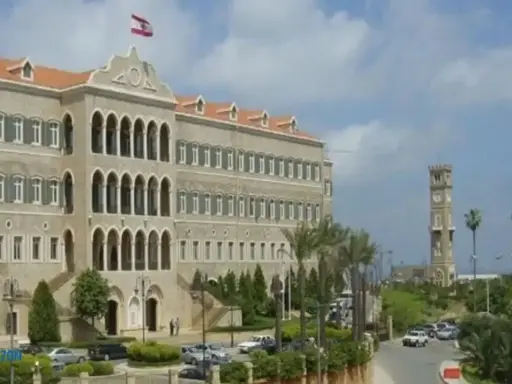

In the quiet corridors of the Grand Serail, the Lebanese state has transitioned from a sovereign actor into a somber archivist of its own destruction. While the southern border is defined by the thunder of Israeli airstrikes and the tactical manoeuvres of Hezbollah, Lebanon’s official response has been reduced to the clinical language of a data centre, issuing casualty tolls and displacement statistics with the detached precision of a UN observer mission.
This institutional paralysis has created a surreal “spectator state.” By failing to command a unified national defense strategy or address the humanitarian collapse of over 700 thousand displaced Lebanese through independent state mechanisms, Lebanon is no longer the architect of its destiny, but a passive witness to a war being fought on its behalf, and often, in spite of it.
Lebanon — a government functioning as an NGO
This institutional withdrawal has birthed a “UN Model” of governance, where the Lebanese state acts more like an international NGO than a sovereign power. Deprived of a unified national strategy, the Prime Minister’s office and relevant ministries have largely retreated into the role of data aggregators, issuing daily bulletins on displacement and infrastructure damage that mirror the reports of humanitarian agencies.
By focusing on the effects of the war rather than its conduct or resolution, the state effectively signals its own irrelevance on the battlefield. This is not merely a byproduct of military asymmetry, but a symptom of a deeper “sovereignty vacuum.”
When the cabinet issues pleas for the implementation of UN Resolution 1701 while lacking the political or physical infrastructure to enforce it, it confirms a haunting reality: Beirut is currently a spectator to a dialogue of fire occurring between a non-state actor and a foreign military — possessing the maps of the tragedy but none of the solutions to escape it.
Kicking the can down the road
But now the question is: on what ground is the Lebanese state hurrying towards peace with Israel when Israel itself rejected the idea? While the latter continues targeting civilian structures, killing paramedics, and expanding its occupation in southern Lebanon under the excuse of ‘creating a buffer zone.’
The state is negotiating over a territory it does not militarily control and a population it cannot currently protect.
This turns diplomacy into a performance.
By ‘hurrying’ toward a peace deal that Israel signalled it will only accept on its own terms — total freedom of action in Lebanese airspace and a ‘no-go’ zone in the south —, the Lebanese government risks formalising its own irrelevance. And by not declaring a state of war, yet failing to secure a peace, the government stays in a ‘grey zone’ where it avoids the responsibility of defense but reaps the consequences of defeat.
Post 2019 economic collapse
Since the collapse of the country’s political and economic systems in 2019, successive governments have struggled to exercise authority even over domestic policy, let alone wartime strategy.
In such circumstances, advocating for de-escalation is one of the only tools available to a state that lacks military or political control over the unfolding confrontation. At the same time, Israel’s continued aggression undermine the credibility of any immediate peace discourse.
The expansion of Israeli positions in southern Lebanon under the guise of a ‘buffer zone’ suggests that Israel is prioritising long-term security arrangements rather than short-term diplomatic engagement with Lebanon. In practical terms, this means that the battlefield is shaping the political outcome more than any negotiation framework currently proposed by Lebanese officials.
In that sense, the rush toward peace and normalisation rhetoric may not reflect an actual political process as much as it reveals the limits of the state itself. When a government lacks the authority to shape the conflict, its language of diplomacy becomes less a strategy and more a signal of its marginal role in determining the outcome of the war being fought on its own territory.
By pleading for a ceasefire while its paramedics are targeted and its southern villages are systematically levelled, the government in Beirut is attempting to build a house on quicksand. There is no ‘ground’ for these peace talks. It’s all desperate hope that international pressure might succeed where Lebanese institutional agency has failed.
Lebanon — Spectator State mode
This ‘Spectator State’ model carries a lethal long-term cost: it severs the final thread of the social contract. The government in Lebanon is watching from the sidelines as its territory is carved up and its citizens are killed.
It ceases to be a protector and is rather becoming a mere witness to its own dismantling.
If the aftermath of this conflict results in a permanent Israeli security belt and a fractured Lebanon, the state’s role as a ‘statistical observer’ will have reached its logical, tragic conclusion. Sovereignty cannot be maintained through press releases or casualty counts; it requires the courage to lead and the capacity to defend.
Without a unified defense strategy and a functioning presidency, Lebanon risks emerging from this war not as a state in recovery, but as a geographic memory, overseen by a government that forgot how to govern.
Featured image via tha Canary
From Canary via This RSS Feed.