

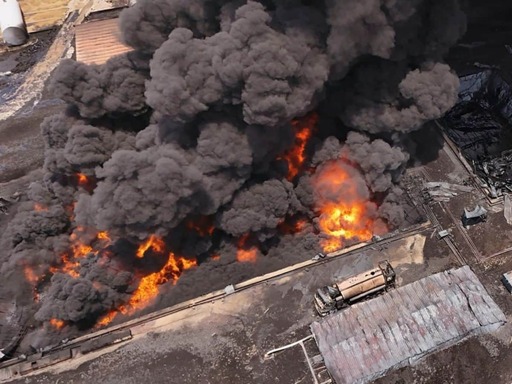

For decades, Gulf states bought US Treasury bonds and American weapons in exchange for “protection.” Sold their oil in petrodollars. But as Iranian retaliatory missiles target their oil infrastructure and US bases they host, the deal’s fine print hangs in the balance. An arrangement that clearly prioritises Western hegemony and the US dollar over multipolarity.
Gulf monarchies — Saudi Arabia, United Arab Emirates, Kuwait, Qatar, Bahrain and Oman — have been a linchpin in the architecture of American global power, according to Professor Adam Hanieh, the author of “Crude Capitalism.”
According to the latest news from the New York Times (NYT), “complaints about the limited value of American protection are growing louder,” by the Gulf’s leaders. “Since the war began, pro-government businessmen and even some officials inside the Gulf countries have also begun to raise questions about the value of their ties to the United States,” NYT said.
The Washington Post had a similar analysis about the war:
Publicly, officials in the largely repressive Gulf monarchies blame Iran. Privately, many rail against Washington for unleashing chaos but see no other power able to provide the same security benefits.
Indeed, the Canary has reported on growing discontent among businessmen in the UAE.
Earlier in March, Khalaf Ahmad Al Habtoor, the Emirati billionaire behind the Al Habtoor Group, wrote a long post on X in Arabic questioning Trump’s wisdom. In addition, his post showed cracks in the US-Gulf states alliance.
Dissidents of the Gulf monarchies are also pushing back against MAGA voices calling for more involvement by the GCC. Maryam Aldossari, a Saudi Arabian dissident, took a swipe at MAGA Senator Lindsey Graham
The U.S. started this war for Israel’s benefit, not anyone else’s. American arrogance mirrors the arrogance of an occupying state, fueling war. @LindseyGrahamSC https://t.co/eEEhssZDkJ
— Maryam Aldossari (@maryam_dh) March 9, 2026
However, the Gulf states are also handicapped in that breaking US ties is not easy. Given the extraordinary extraterritorial reach of US law through sanctions, export controls and financial regulations, Gulf states face significant risks in not following US orders.
What is the Weapondollar-Petrodollar Coalition?
Weapondollar-Petrodollar is a term political scholars use to describe the decades-old arrangement between the US and Gulf monarchies.
At the heart of these “petrodollar interdependencies,” as Hanieh puts it, was the sale of US weapons and military hardware.
Put simply: Gulf states sell their oil in dollars. They take the revenues and buy American Treasury bonds and American weapons. In exchange, Washington provides security guarantees to the region’s ruling families.
When President Nixon abandoned the gold standard in 1971, the US dollar lost its fixed value. Currencies began to float. This created a problem: if the dollar was no longer backed by gold, why would the world keep using it?
The answer was oil.
A 1974 deal between the Nixon administration and Saudi Arabia’s King Faisal ensured the kingdom’s oil revenues would be recycled into U.S. Treasury bonds, creating artificial global demand for US currency and financing America’s deficits. The arrangement was so sensitive that, as Bloomberg’s Andrea Wong reported in “The Untold Story Behind Saudi Arabia’s 41-Year U.S. Debt Secret” (2016), King Faisal demanded the kingdom’s Treasury purchases remain “strictly secret.”
The untold story behind Saudi Arabia’s 41-year U.S. debt secret https://t.co/DAbgMGBdRd pic.twitter.com/tIhCYYoVUM
— Bloomberg (@business) May 31, 2016
Instead of investing oil profits in their own countries, Gulf states bought weapons and US Treasury bonds. US military exports to Saudi Arabia increased more than tenfold between 1972 and 1978, according to Crude Capitalism. In 1974 alone, Iran (pre-revolution) agreed to purchase more US arms than the rest of the world combined in any previous year.
By 1976, thousands of US military personnel and contractors were present across the region, with particularly large contingents in Saudi Arabia and Iran
Hanieh writes:
With many of their investments held in dollar-denominated assets based in the US, the Gulf monarchies gained a stake in the stability and continued growth of the US economy.
London as a conduit for petrodollar
London banks served as the middlemen in all this. Gulf states sold oil for dollars, then deposited those petrodollars in London rather than New York. Britain’s colonial history in the region meant London banks already had deep ties to Gulf rulers and their wealth.
As the Pandora Papers showed, those ties never really weakened. Gulf rulers parked billions in London property through offshore companies registered in Britain’s “spider’s web” of tax havens of the Cayman Islands, Jersey, and the British Virgin Islands.
This can be called: “Britain’s second empire.”
Gulf oil money passed through London and was recycled as loans, all while keeping the dollar firmly on top.
As Adam Hanieh writes:
the City of London became the main headquarters for petrodollar recycling and international lending.
That pipeline never really closed. Today, the Gulf’s sovereign wealth funds remain major players in London. The Qatar Royal Family owns the Harrods department store. The Saudis pour billions into British real estate, tech firms and sports clubs. So does the UAE.
In fact, Foreign Secretary Yvette Cooper was in Riyadh, Saudi Arabia, just earlier this week. She said:
This is why it is so important for me to be here in Saudi Arabia — an essential partner for the UK in the Gulf, who have been targeted by reckless attacks by the Iranian regime, and who have supported British nationals to come home and is working to maintain energy security and supply.
Earlier this year, Prince William made his first official visit to Saudi Arabia — timed to coincide with Riyadh’s World Defence Show in February.
He was following in the footsteps of his ancestors: Margaret Thatcher’s government, which sealed the £43bn Al-Yamamah arms deal with the Kingdom in the 1980s. It remains the largest in British history.
The Saudis didn’t pay in cash. They paid in oil, up to 600,000 barrels per day. BP and Shell shipped it, and the money flowed into a secret Ministry of Defence account.
Iran is destabilizing dollar hegemony
This is where the perspective of thinkers like Max Ajl can be illuminating.
Ajl frames Iran’s actions not merely as sectarian or expansionist, but as a form of resistance to — and a force for — decolonising the region from the very Western hegemony that the Weapondollar-Petrodollar coalition was built to uphold.
One can now dare to imagine the Gulf states not beholden to the West, instead using the economic development model that Iran used to circumvent sanctions by forging a form of ‘industrial resilience.’ The Shahed Drones are an example.
In fact, we might see dedollarisation sooner than expected. CNN reported on Wednesday that countries outside the Middle East were discussiong pricing oil in Chinese Yuan.
Tehran is in discussions with eight countries outside the Middle East over its offer to grant safe passage to oil traded in the Chinese currency yuan, an Iranian security source told CNN. The source did not identify the eight countries.
Could the GCC, instead of relying on poor labour from Asian countries, start parking its oil profits in its own countries and develop its working class? Instead of Gulf monarchies parking their wealth in UK real estate markets, they use that money to break from Western hegemony. Another world is possible.
Featured image via the Canary
By Nandita Lal
From Canary via This RSS Feed.