

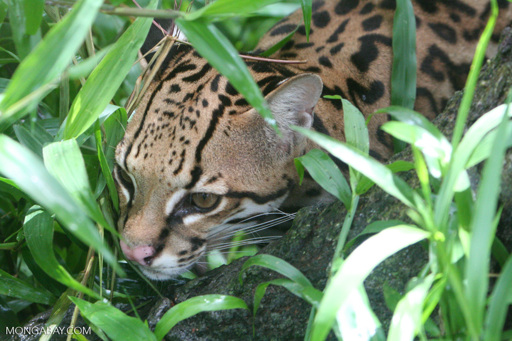
In 2016, when biologists in Mexico reviewed their photo traps from Cozumel, a Mexican island in the Caribbean, they were surprised to see an ocelot, a wildcat considered endangered in the country. But curiosity soon turned to alarm: ocelots are effective predators of endemic species on the island, which have no experience or natural defense against the medium-sized wildcat. Luis-Bernardo Vázquez heads a research team at the Urban Ecology Lab, El Colegio de la Frontera Sur-SLCL. He’s been studying the wildlife of Cozumel for years using tools ranging from camera traps to transects and road surveys. “Before 2016 we never detected any ocelot in the island,” he said. “Because we had many years of sampling before that with no records, we think the species was not present on the island before that time.” Ocelots (Leopardus pardalis) are declining across much of their range, from the U.S. state of Texas all the way to Uruguay. They’re listed as an endangered species in the United States but, ironically, as an unwanted threat on Cozumel. The presence of an ocelot as an invasive predator on Cozumel Island could be a threat to endemic wildlife like the Cozumel white-footed mouse (Peromyscus leucopus cozumelae), Cozumel harvest mouse (Reithrodontomys spectabilis), Cozumel rice rat (Oryzomys couesi cozumelae), dwarf peccary (Dicotyles tajacu nanus) and Cozumel curassow (Crax rubra griscomi). “A species can be endangered in one place and ecologically damaging in another, and that requires communities to decide what future they want for their island,” David Will of…This article was originally published on Mongabay
From Conservation news via This RSS Feed.