

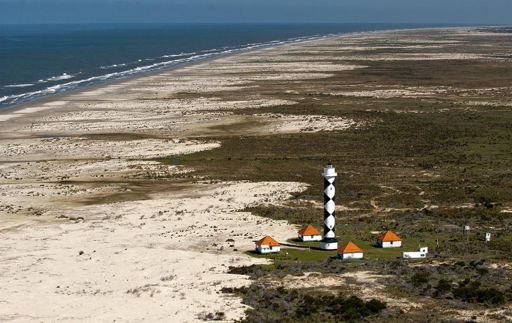
Brazil’s federal government created a huge conservation area on March 6 to protect a critical biodiversity hotspot in the Atlantic Ocean. The newly created Albardão marine park and coastal environmental protected area are home to at least 25 endangered species and Pleistocene epoch megafauna fossils. The new national park is off the coast of Brazil’s southernmost state, Rio Grande do Sul, and spans more than 1 million hectares (2.5 million acres), making it the country’s largest marine park and third-largest marine protected area. A buffer zone spanning an additional 614,000 hectares (1.5 million acres) was also included in the government decree. “The Albardão region brings together ecosystems that are fundamental for Brazil’s biodiversity,” the federal government wrote in a statement. “The site is considered strategic for the life cycle of several threatened species.” The government decree creates some exemptions for sustainable ecotourism, scientific research and artisanal fishing in the marine and coastal protected areas. The Albardão Marine Park is home to endangered Lahille’s bottlenose dolphins (Tursiops truncatus gephyreus), of which just 500 individuals are alive today, and franciscana dolphins (Pontoporia blainvillei), listed as critically endangered in Brazil and vulnerable worldwide. Another 23 species of endangered sharks and rays also inhabit the region, including endangered angelshark species, which a 2025 Mongabay investigation revealed was being served in local school lunches. Also in the area are the critically endangered bowmouth guitarfish (Rhina ancylostomus). An adjacent coastal protected area was also created, spanning nearly 56,000 hectares (138,000 acres). It includes dune fields and…This article was originally published on Mongabay
From Conservation news via This RSS Feed.