

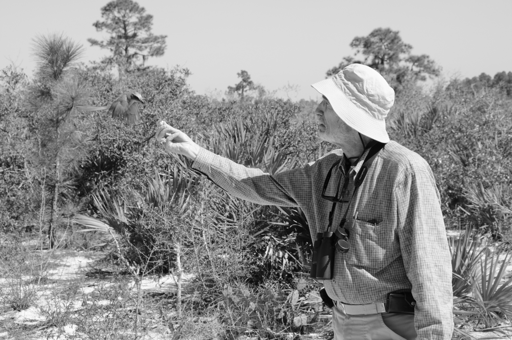
The modern environmental movement acquired many of its arguments from scientists who studied forests, oceans and the atmosphere. Few supplied it with a warning as stark, or as controversial, as that delivered by Paul Ehrlich. A population biologist trained on insects, he became one of the most recognizable public intellectuals of the environmental age. His predictions of famine and ecological strain in The Population Bomb helped shape debate about limits to growth in the late 20th century. They also made him a lightning rod. Ehrlich, who died March 13 at 93, spent most of his professional life at Stanford University. His formal training was in entomology and population biology. As a young researcher, he studied butterflies with the meticulous patience of a field naturalist, cataloging how species dispersed across landscapes and how small populations survived. Those studies, often conducted with his wife and collaborator, Anne Ehrlich, helped illuminate ideas about population structure, extinction risk and habitat fragmentation. They were technical contributions, widely respected within ecology. Public fame arrived by a different route. In 1968, Ehrlich published The Population Bomb, a short, urgent book that argued that rapid human population growth threatened to outstrip the planet’s capacity to provide food and resources. Its opening pages were deliberately blunt. Ehrlich wrote that “the battle to feed all of humanity is over,” predicting that hundreds of millions might die in famines during the following decades. The book appeared at a moment when global population growth rates were historically high and food shortages had…This article was originally published on Mongabay
From Conservation news via This RSS Feed.