

A campaign in the United Kingdom is demanding that the British government issue a formal apology for the 1919 Jallianwala Bagh Massacre, one of the most infamous atrocities of British colonial rule in India.
The Jallianwala Bagh Massacre 1919 Centenary Committee, a coalition of community groups and activists, has been campaigning for years for an official apology from the serving British prime minister and for the inclusion of colonial history in the UK national curriculum.
A colonial atrocity
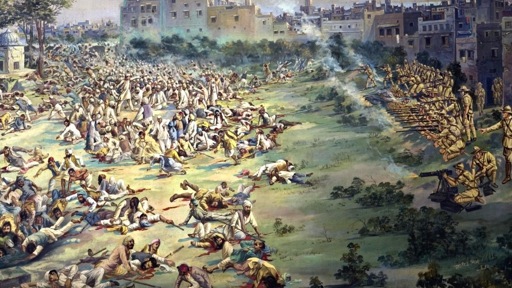
On April 13, 1919, a tragic event unfolded at Jallianwala Bagh in Amritsar, Punjab, India. During a public gathering, British Indian Army troops, under the direct command of Brigadier General Reginald Dyer, fired upon a large crowd of unarmed, peaceful civilians. Estimates of the number of people killed vary, but official British reports recorded approximately 379 deaths, while other sources suggest the actual figure may have been far higher, in the order of 1500. Thousands more were injured.
General Dyer ordered his troops to fire into the densest part of the crowd without warning or instructions to disperse. Shooting continued until ammunition was exhausted, and afterward, Dyer withdrew without arranging medical aid or removal of the dead. A curfew in Amritsar prevented families from reaching those affected in the Bagh. The gathering at Jallianwala Bagh included people attending Vaisakhi, a major harvest festival, and others protesting the Rowlatt Act, legislation restricting civil liberties such as freedom of speech and assembly. Dyer showed no remorse for the massacre, regretting only his inability to bring in armored vehicles. He stated he would repeat his actions. In Britain, he received a hero’s welcome – awarded a “Saviour of India” sword and £26,000 (about £1.3 million today), while Indian victims’ families got £25 each. His actions sparked outrage in India but praise from many in Britain.
More than a century later, the British Government has still not issued a formal responsibility.
Grassroots campaigns and descendants of victims seek justice 100 years later
Nearing the Centenary of the Jallianwala Bagh Massacre, in January 2016, the Indian Workers’ Association GB initiated a campaign to demand a formal apology by the serving British Prime Minister. The campaign describes itself as secular, and multi-ethnic, reflecting what organizers say was the spirit of unity among those gathered at Jallianwala Bagh to protest British colonial rule. The issue gained renewed attention around the centenary of the massacre in 2019. Three days before the 100th anniversary, April 10, 2019, the former leader of the Labour Party, Jeremy Corbyn, called on then-prime minister Theresa May, to deliver a “clear, unequivocal apology” for the killings. May expressed her “regret” but stopped short of issuing an apology.
The Labour Party later pledged in their 2019 election manifesto that it would deliver a formal apology if it came into power. However, activists say Prime Minister Keir Starmer has decided to withdraw his commitment. Campaigners argue that beyond a formal apology for the loss of life and humiliation that followed the Jallianwala Bagh Massacre, what is necessary is teaching colonial history as an integral part of the National Curriculum.
They are calling on supporters to attend events, spread awareness on social media, and pressure local representatives to support the demand for an apology.
“The campaign believes that learning from the past brightens the path to a better future.”
The post Campaign demands formal apology from Britain for 1919 Jallianwala Bagh Massacre in India appeared first on Peoples Dispatch.
From Peoples Dispatch via This RSS Feed.