

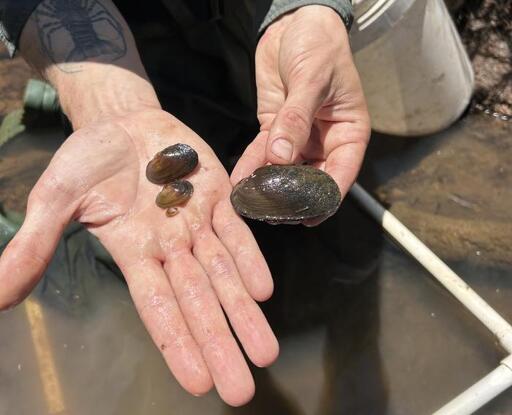
Described as the “liver of rivers” for their water filtering capabilities, freshwater mussels are facing an extinction crisis. These slow-growing, long-lived bivalves are one of the most threatened groups of animals on the planet. Now researchers in Australia have found that artificial water bodies could provide a lifeline for some species. Freshwater mussels live in the sediment of streams, rivers and lakes, where they filter water, absorb heavy metals, sequester carbon, and serve as a food source for other animals. But humans have severely modified their habitats with structures including dams, weirs and drains. The research team wanted to find out if artificial habitats can sustain healthy populations of Carter’s freshwater mussel (Westralunio carteri), a species endemic to southwestern Australia and considered vulnerable to extinction on the IUCN Red List. The research, published in Pacific Conservation Biology, was motivated by substantial declines in W. carteri over the last 50 years, largely a result of saltwater intrusion and drying habitats. Lead author Jake Daviot of Murdoch University said in a press release that “without proactive and novel approaches to conservation, more populations are going to be lost in the face of human development exacerbated by climate change.” The researchers surveyed mussels in 12 sites between 2020 and 2024, including six natural habitats and six artificial habitats, such as farm dams and drainage canals. They recorded the size and number of mussels, how spread out they were, and local habitat conditions. Most of the artificial sites surveyed had a similar density of…This article was originally published on Mongabay
From Conservation news via This RSS Feed.