

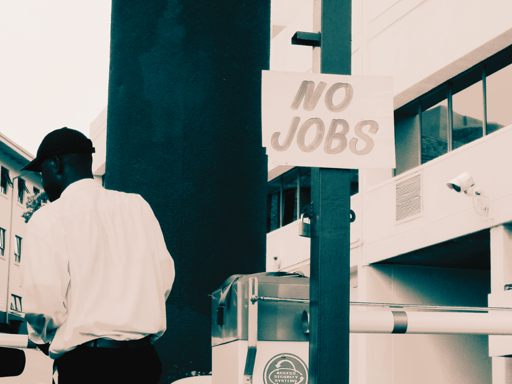

Trump and Netanyahu’s illegal war on Iran has sent energy prices skyrocketing. The effect on energy-intensive industries in the UK has been immediate and severe. And, as a knock-on effect, as many as 100,000 jobs could be lost across the UK.
Of course, we won’t shed a tear for the impact on highly polluting industries themselves. However, the situation is a striking illustration of the vulnerability created by the UK’s desperate reliance on increasingly volatile fossil fuels.
The Straight of Hormuz
The current grab for fuel began after Iran closed off the Straight of Hormuz. Around a fifth of the world’s oil passes through the narrow waterway. As such, the US and Israel have accidentally made Iran a global oil superpower.
This is the view of air warfare scholar Professor Robert Pape, whose damning critique of the attack on Iran has generated wide interest recently. On 12 March, Pape said that:
Iran hit 16 vessels so far in Strait of Hormuz.
That’s all it takes for Iran to control 20% of the world’s oil and become an oil hegemon — the number 1 strategic outcome US has sought to prevent in Middle East since 1970s.
The Iran war has already caused a spike in Brent crude oil prices, up from $60 in January to around $100. This is already being called the biggest disruption to oil supplies in history.
Likewise, wholesale gas prices in the UK have risen to 171p a therm, more than double last month’s 78p. This is the highest they’ve been since the beginning of Russia’s war on Ukraine.
The already-failing UK chemicals industry is also being hit hard. The sector uses fossil fuels not only for power, but also as raw materials for its products. Production in the industry had already dropped by 60% since 2021, with 25 sites shuttering, with more are teetering on the brink as the Iran war rages on.
Unemployment ‘closer to 6 percent’
As a direct consequence, some economists have suggested that over 100,000 jobs could be cut within months. Likewise, the uncertainty over energy prices has led to speculation that the Bank of England won’t make its expected cuts to interest rates anytime soon.
James Smith, of investment bank ING, opined that employers may seek to make up for rising energy costs by slashing jobs. Smith said:
It depends how long energy prices stay high. If we’re in a scenario where the disruption lasts three months or so, then I would imagine [unemployment would be] be pushing above 5.5pc.
Smith also stated that the previous shocks from the war on Ukraine had left the economy in a weakened state. He said:
Now, it’s very different. We saw this last year with the hospitality sector, where we had the big rise in National Insurance and the minimum wage. We saw a sharp drop in employment and no discernible impact on prices.
These sectors that are most affected by higher energy prices, particularly in the service sector, don’t have the pricing power that they did in 2022. They’re more likely to deal with higher energy costs by cutting back their worker numbers.
Jordan Rochester, of Mizuho bank, echoed this sentiment. He suggested that the UK’s unemployment rates—already at a worrying peak—will likely increase:
If the rate of unemployment’s ascent matches that of the past year, it would defy forecasts again and put us closer to 6% rather than 5%.
Environmental fallout
Similarly, industry body Make UK highlighted that UK businesses are putting up their prices at the fastest rate since 2023. The trade body’s senior economist, Fhaheen Khan, stated that:
While output and investment show some improvement after a challenging end to last year, rising costs and weakening domestic demand are creating real pressures for businesses.
With UK industrial energy costs among the highest in the developed world, any sustained increase in oil and gas prices could quickly push up input costs, squeezing margins and limiting investment.
Meanwhile, the soaring price of fossil fuels will not be accompanied by a corresponding drop in pollution. US and Israeli strikes have hit Iranian nuclear facilities, munitions stockpiles, and oil refineries.
As a result, Iran is suffering toxic black rain, clouds of unbreathable smog, and catastrophic environmental effects that will be felt for generations to come.
The situation—in the UK, Iran and across the world—is a stark reminder of the fact that the decisions of tyrants like Trump and Netanyahu have consequences far beyond their own countries—and those of the foreign citizens they murder with impunity.
Featured image via Unsplash/the Canary
From Canary via This RSS Feed.