

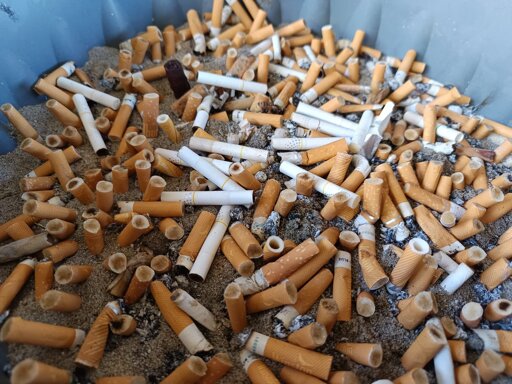
Cigarette butts are the most common form of litter worldwide. Trillions are discarded every year in cities, parks, beaches, along railway tracks and roadside environments. Despite their small size, these remnants of smoked cigarettes represent a persistent form of pollution because their filters are made primarily of cellulose acetate—a plastic polymer derived from natural cellulose and highly resistant to environmental degradation and produced as tightly packed microscopic fibers.
From Earth News - Earth Science News, Earth Science, Climate Change via This RSS Feed.
After 10 years, the maximum observed mass loss reached about 84%, indicating that a substantial fraction of the original material was still present in the soil. In urban-like environments, however, degradation reached only about 52%, leaving nearly half of the filter material behind.
