

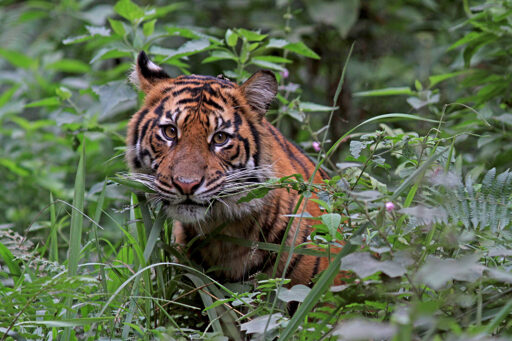
Tiger populations have risen in some countries, such as Bhutan, Nepal and India, but the global population of the big cat species remains critically endangered, says Debbie Banks, campaign lead for tigers and wildlife crime at the Environmental Investigation Agency. The global tiger population was recorded at roughly 5,574 in 2022, with the species having disappeared from roughly 95% of its historical range. Banks joins Mongabay’s podcast this week to detail the status of Panthera tigris, the successes and failures of the first Global Tiger Recovery Program (GTRP), what the second iteration (2.0) seeks to do differently, and what she thinks range countries need to focus on. “This story is very much a mixed bag of localized successes and elsewhere just stagnation … and a lack of political and financial investment to bring tigers back from the brink in some places.” In places such as Laos, Cambodia, Vietnam and other Southeast Asian countries, tigers are in a “crisis,” she describes, due to a variety of factors including persistent wildlife trafficking and a lack of political will to combat it through law enforcement and demand-reduction campaigns. “In a country like Laos … it’s been a political choice not to pursue the kinds of investigations that are required to disrupt this trade.” Making good on the commitments of GTRP 2.0, Banks says, would also benefit nations seeking to fulfill their environmental protection commitments under the Global Biodiversity Framework agreed upon by the Convention on Biological Diversity (CBD). That’s because tigers are what’s…This article was originally published on Mongabay
From Conservation news via This RSS Feed.