

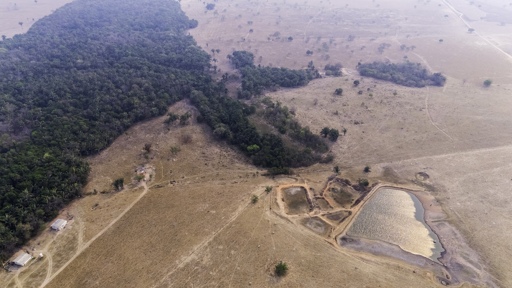
SINOP, Brazil — In Brazil’s Mato Grosso state, the country’s agricultural heartland, vast stretches of lush Amazon rainforest and Cerrado savanna give way to seemingly endless fields of soy. Located in a transition zone where the Amazon and Cerrado meet the Pantanal wetlands, about 90% of the state’s area was once covered in native vegetation. But from the 1970s onward, agricultural innovation and public policies — including subsidies that encouraged farmers to settle and clear land in Mato Grosso — allowed the agricultural frontier to advance rapidly, turning Mato Grosso into one of Brazil’s main farming powerhouses. The Amazon, the world’s largest tropical rainforest, covers about 60% of Brazil. The Cerrado, one of the world’s most expansive savannas, spans some 2 million square kilometers (772,000 square miles) of tropical grasslands, trees and watersheds that regulate rainfall patterns and temperatures. About a fifth of the Brazilian Amazon has been deforested since monitoring began in 1985, and nearly half of the native vegetation of the Cerrado biome has been cleared for cattle and soy. Some of Mato Grosso’s former vast soy fields and cattle pasture have been left degraded — eroded grasslands that function neither as forest nor productive farmland. At a Biancon Group farm in Mato Grosso’s Itaúba municipality, Ivan Biancon, co-owner of the family-owned agribusiness group, scoops soil into his hands and lets it fall. The soil, he says, is now healthy enough to grow cotton, corn and soy beans. When he and his brother, Igor, first arrived, “these were…This article was originally published on Mongabay
From Conservation news via This RSS Feed.