

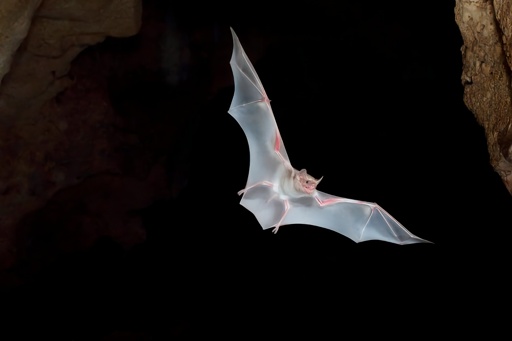
As the afternoon fades at the Three Sisters Caves in Kenya’s Kwale county, David Wechuli’s team begins setting up nearly invisible nets along the hillsides in the coastal forest. “When dusk arrives, bats begin pouring out of the caves,” Wechuli says. “Some fly straight into the nets. We quickly remove them, carefully untangling each bat before taking morphometric measurements such as body size, weight and wing length.” The captured bats are carefully placed in small cotton bags, allowing them to breathe while preventing escape over the next two or three hours. The research team from Bat Conservation International (BCI) will work into the night, measuring each animal, determining their sex, and taking tissue samples to check for the presence of disease, before photographing each one and releasing it back into the night. Earlier in the afternoon, the team will have inspected the site, moving carefully through the dark cave filled with thousands of bats clinging to the cave’s roof and rock walls. “Some caves are deep tunnels, more than 100 meters [330 feet] long,” Wechuli tells Mongabay in a phone interview. “Others have bats roosting very high. You have to know the cave before you even start capturing anything.” Wechuli and other researchers are working to better understand how bats live, the role these flying mammals play in ecosystems, and how human activities are reshaping their habitats. His research and conservation work is focused on the coastal caves in the Shimoni region of Kwale county, as well as in volcanic…This article was originally published on Mongabay
From Conservation news via This RSS Feed.