

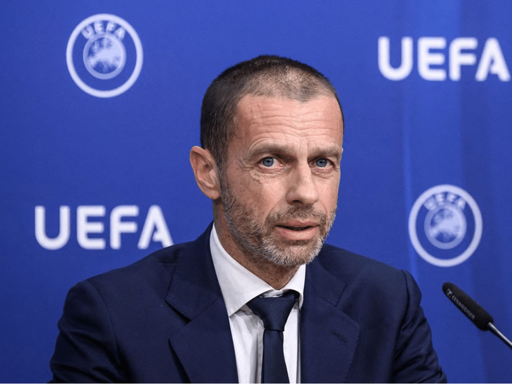

UEFA is facing mounting political pressure in Switzerland following a parliamentary move that could threaten its tax privileges after failing to impose any sanctions on Israel.
The French newspaper L’Équipe revealed that a group of left-wing members of parliament in the Swiss canton of Vaud submitted a draft resolution questioning whether the conditions for UEFA’s tax exemption are still met.
If the draft resolution passes, UEFA will be summoned to justify why it hasn’t sanctioned Israel, especially since the Swiss federal government has previously linked tax privileges for international sports federations to their role in promoting peace through sport.
The initiators of the proposal believe UEFA is no longer fulfilling its role, which could open the door to a review of its tax status in Switzerland, where its headquarters are located.
According to internal estimates within UEFA, canceling the tax exemption could cost the organisation about €30 million annually (£26 million). Tax authorities may also demand clarification on how its annual revenues, estimated at about €5 billion (£4 billion), are distributed.
The cantonal parliament is scheduled to debate the draft resolution on 24 March. A close vote is expected in the 150-member assembly, where left-wing parties hold only 64 seats, leaving the outcome uncertain.
UEFA’s president must call for a vote
This pressure comes at a time of escalating international campaign led by the campaign group, Game Over Israel, which wants global sports organisations to boycott Israel, similarly to what happened with Russia after its invasion of Ukraine.
Former Manchester United player, Eric Cantona, reignited the debate when he highlighted the disparity in treatment of both countries at a solidarity event in London last year.
According to sources within UEFA, communications and pressure from federations, sponsors and sports media have continued unabated in recent months, indicating how prominent this issue has become within European football.
Any decision to suspend Israel’s participation in European competitions requires a vote within UEFA’s 21-member executive committee, including its president, Aleksander Čeferin, who is the only person authorised to call for such a vote.
Internal sources indicate a number of committee members are inclined to support a ban. However, Čeferin —known for his meticulous calculations — only calls for a vote when he is certain of a clear majority.
The Israeli Football Association, on the other hand, categorically denied the existence of any upcoming vote to suspend its membership, describing the circulating reports as “fake news” and affirming its commitment to all FIFA and UEFA regulations.
Mounting pressure
But the pressure is no longer solely political or moral; it has also extended to the financial sphere. Several European federations have incurred significant losses during matches played by their national teams against Israel due to the stringent security measures and low attendance.
For example, the 2024 France-Israel match at the 80,000 capacity Stade de France attracted only about 16,000 spectators. Security costs for the Europa League match between VfB Stuttgart and Maccabi Tel Aviv last December were estimated at about €10 million (£9 million).
As pressure mounts from parliaments, players and national federations, European football appears to be facing a new political test that could determine not only Israel’s participation in continental tournaments but also the boundaries of the relationship between sport and politics in Europe.
Featured image via the Canary
By Alaa Shamali
From Canary via This RSS Feed.