

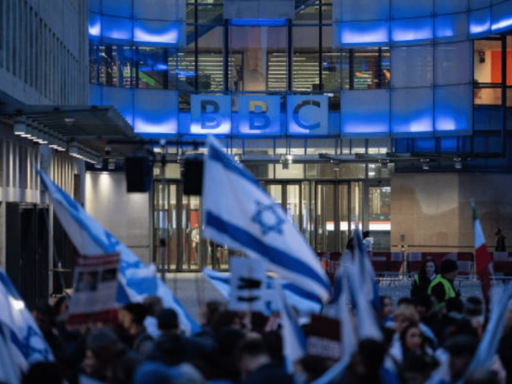

The Information Commissioner’s Office (ICO) has ruled that the BBC’s decision to dodge a Freedom of Information Act (FOI) request for details of calls between top executives and the Israeli embassy broke the law.
The broadcaster was asked to provide records of any calls that then-director-general Tim Davie, board member Robbie Gibb, then-News CEO Deborah Turness, and chair Samir Shah placed to the embassy or any of its personnel – or come up with a lawful reason not to do so. So far, the BBC has farcically told the unnamed civil servant who placed the FOI request – because he was concerned at the BBC’s outrageously biased coverage of Israel’s genocide in Gaza – that it didn’t hold any relevant records.
That bias has been so extreme that even BBC staff have written publicly to bosses to condemn it and the culture of intimidation that keeps journalists in line. Davie and Furness were subsequently toppled from their BBC roles – for not being biased enough in favour of Israel.
BBC breached rules
The ICO found that the BBC breached Section 10 of the FOI Act by failing to provide a substantive response and has ordered the broadcaster to provide one within thirty days or be in contempt. The problem is that the ICO is generally toothless. While it has the power to impose huge fines, it almost never does so – especially when politics and Israel is involved.
If these calls exist, they represent a serious breakdown of the BBC’s Charter of Impartiality and a potential violation by the Israeli embassy of the Vienna Convention on Diplomatic Relations.
The BBC’s management is known to dread calls from a displeased Israeli embassy, so there is no realistic doubt that its executives consult routinely with the Israeli embassy on how to avoid its displeasure. Nor is that spineless collusion limited to the BBC. The Crown Prosecution Service is known to have consulted with the embassy about which anti-genocide activists it should prosecute in its war on pro-Palestine speech.
The Vienna Convention on Diplomatic Relations bans diplomats from interfering in the internal affairs of their host nation – a ban that Israel ignores with impunity, expecting and receiving farcical cover-ups from UK governments.
While the BBC’s failure to respond properly is unlawful, for it to destroy, conceal or edit the evidence of the calls would be a much graver offence.
Featured image via the Canary
By Skwawkbox
From Canary via This RSS Feed.