

By Shan Kenshin Ecaldre
Bulatlat.com
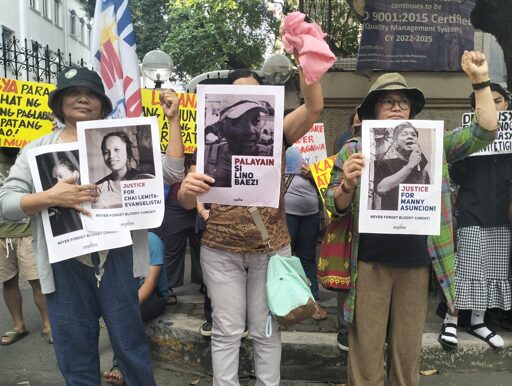
Cabuyao, LAGUNA — Five years after the coordinated raids that left nine activists dead across Southern Tagalog, families of the victims and survivors of what has come to be known as the Bloody Sunday Massacre said justice remains far from their reach.
On March 7, 2021, simultaneous police and military operations under the codename Cooperation-Plan: Asval (COPLAN ASVAL) were carried out in several provinces in the region by elements of the Armed Forces of the Philippines, the Philippine National Police, and the Criminal Investigation and Detection Group.
The operations resulted in the killing of nine activists and the arrest of several others.
Authorities claimed the operations were based on search warrants issued by courts in Metro Manila.
But families and human rights groups said the raids followed a familiar pattern: masked operatives forcibly entering homes, the use of questionable warrants, and the narrative that the victims had supposedly “fought back.”
For the families left behind, the years that followed have been marked by grief, frustration, and a continuing fight for accountability.
‘The justice system in the Philippines is rotten’
For Rosenda “Nanay Inda” Lemita, whose relatives were among those killed, the repeated dismissal of cases by authorities has only deepened her anger.
“There is no justice. The justice system in the Philippines is rotten,” Lemita told Bulatlat in Filipino. “The Department of Justice has done nothing but dismiss the Bloody Sunday cases again and again. That is how cruel they are.”
According to Lemita, evidence from investigations conducted by the National Bureau of Investigation, the Commission on Human Rights of the Philippines, and forensic findings pointed to the liability of police officers involved in the killing of her daughter Chai Lemita-Evangelista and son-in-law Ariel Evangelista .
Despite this, cases filed against officers linked to the deaths of the fisherfolk couple were dismissed.
“The couple was brutally murdered,” she said. “They did nothing wrong except help others, especially the poor who could not defend themselves in issues concerning land and the environment.”
Lemita said the families continue to demand accountability not only from the police involved in the operations but also from officials who oversaw the campaign.
“Those responsible must also be held accountable, including former president Rodrigo Duterte,” she said.
A pattern of killings
The Bloody Sunday raids were among the most controversial security operations during the Duterte administration.
Days after the raids, labor leader Dandy Miguel of PAMANTIK–KMU was shot dead in Laguna while on his way home on March 28, 2021, further fueling concerns over attacks on activists in Southern Tagalog.
Read: Dandy Miguel, a comrade to all workers to the very end
Investigations later raised questions about the circumstances of the killings. On July 7, 2021, forensic pathologist Raquel Fortun documented lethal gunshot wounds on the victims’ bodies and reported signs suggesting they may have been deliberately killed.
The controversy also prompted institutional responses. In August 2021, the Supreme Court curtailed the authority of courts in Manila and Quezon City to issue search warrants outside their territorial jurisdiction—an issue raised in connection with the Bloody Sunday raids.
Arrests, dismissals, and countercharges
Following the killings, several activists were arrested during the same wave of operations.
Among them was activist Nimfa Lanzanas, who faced charges of illegal possession of firearms and explosives. After months of hearings, the Calamba Regional Trial Court dismissed the case in June 2022.
Read: Nimfa Lanzanas, a woman with a big heart
“In my case, I achieved something because the trumped-up charges filed against me were dismissed,” Lanzanas said in an interview with Bulatlat.com . “But many things have not been achieved.”
Lanzanas lamented that cases filed against dozens of policemen linked to the deaths of labor leader Emmanuel Asuncion and the Evangelista couple were eventually dismissed by the Department of Justice.
Read: Pattern of impunity: Courts dismiss Southern Tagalog activists’ countercharges vs police, military
“True justice must be complete,” Lanzanas said. “But it has been difficult, especially during the administration of Duterte. We saw how powerful the state was.”
She added that families of other victims, including Indigenous Dumagat communities, were hesitant to pursue cases due to harassment and intimidation.
‘Justice will only come from the people’
For organizer Wilfredo Capareño, who was also arrested during the period, the experience reinforced his distrust in the justice system.
“In this system of justice, people like us will never see any powerful individuals imprisoned,” Capareño told Bulatlat.com. “Activists will not receive justice.”
Capareño said he remained cautious even after some cases were dismissed.
“My children want me to go home, but how can I go home when the military and the so-called ‘rebel returnees’ they use are there waiting to capture me?” he said.
For him, the struggle for justice extends beyond the courtroom.
“Justice will only be achieved when the people themselves win,” he said. “Justice coming from the reactionary state cannot be achieved.”
Mourning continues in Southern Tagalog
Human rights advocates say the impact of the Bloody Sunday killings continues to reverberate across the region.
“After five years, up to this day, we cannot say that justice has been achieved,” said activist Mags Camoral.
“The families of the victims are still grieving, and the entire Southern Tagalog region continues to mourn,” Camoral said.
For Camoral, the Bloody Sunday killings symbolized a broader climate of repression against activists.
“Sunday is supposed to be a sacred day,” Camoral said. “But Bloody Sunday seemed to have been ruled by demons.”
Bringing the fight beyond Philippine courts
With domestic remedies yielding little progress, families and human rights advocates have begun bringing the issue to international bodies.
In November 2025, the families of Asuncion and the Evangelista couple, together with Defend Southern Tagalog, filed a complaint before the United Nations Human Rights Committee.
Earlier that year, Defend Southern Tagalog also joined a delegation during the 59th session of the United Nations Human Rights Council, raising concerns about alleged state-sponsored human rights violations in the region. For the families and survivors, the pursuit of justice remains uncertain, but the call continues.
“We continue to call for justice,” Camoral said. “We have not lost hope that justice will be achieved. But we rely not on the institutions that failed us—we rely on the strength and unity of the people.” (AMU, RVO)
The post 5 years after Bloody Sunday, justice remains elusive for victims, survivors appeared first on Bulatlat.
From Bulatlat via This RSS Feed.