

Reader support is what makes Drop Site possible. Without it, this journalism wouldn’t exist. If you’re able, please consider making a tax-deductible donation or upgrading to a paid subscription today.
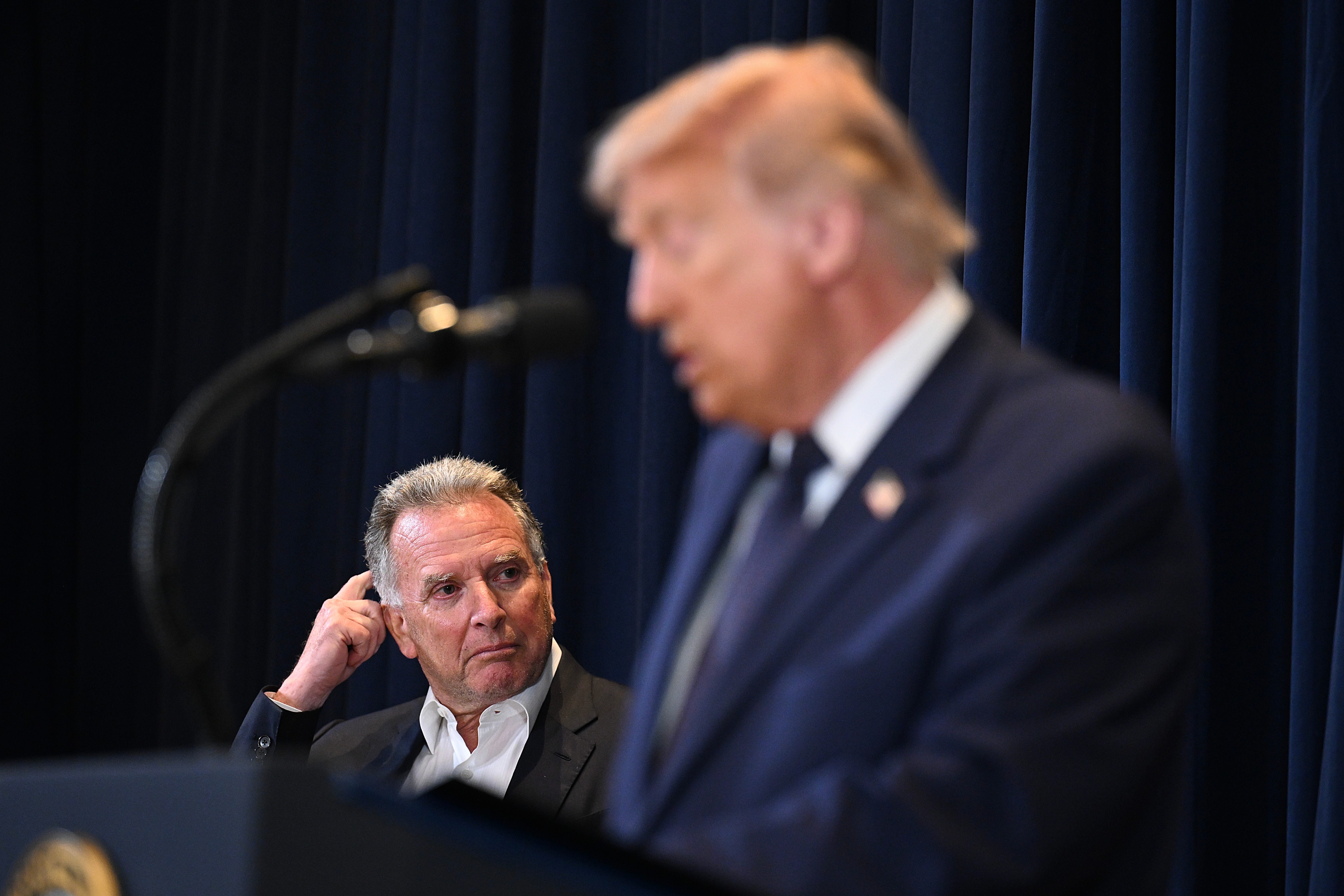
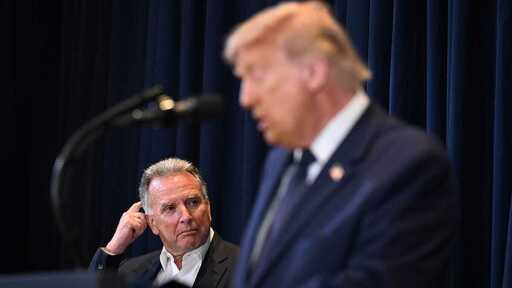
U.S Special Envoy to the Middle East Steve Witkoff listens to President Donald Trump speak to reporters at Trump National Doral Miami on March 9, 2026 in Doral, Florida. Photo by Roberto Schmidt/Getty Images.
President Donald Trump has been leading a double life in prosecuting his war against Iran. In public, he regularly boasts that Iran’s military might has been decimated, its leadership killed off, and that the few officials remaining alive in Tehran are begging him to talk. “They want to negotiate. They want to negotiate badly,” Trump said Sunday night. “We’re talking to them. But I don’t think they’re ready, but they’re getting pretty close.”
Behind the scenes, it is the Trump administration that has been asking for talks. Two Iranian officials told Drop Site that Trump’s Special Envoy Steve Witkoff personally sent messages to officials in Tehran, including Foreign Minister Abbas Araghchi, last week exploring possibilities for resuming negotiations. Iran has not replied to Witkoff. The Iranian officials told Drop Site that Iran has also received messages from the White House via third countries.
“Because of decisions made by [Iran’s] top authorities, no response was sent to his messages,” a senior Iranian official told Drop Site. “The message here is clear: Iran has once again closed the window for any direct negotiations,” he added. “The authority to declare a ceasefire rests solely with the country’s Supreme Leader. It’s not something the foreign minister, or any other official or organization in Iran, would send messages about to a foreign party.”
In response to request for comment, a White House spokesperson sent Drop Site the following: “The radical, left-wing Drop Site News is clearly carrying water for the Iranian terrorist regime — and reports like these based on pure fiction and citing unnamed anonymous sources should be discarded immediately. Iran feeds this fake news media outlet propaganda and they publish it as fact, which is abhorrent, America Last behavior. Operation Epic Fury will continue unabated until President Trump, as Commander-in-Chief, determines that the goals of Operation Epic Fury, including for Iran to no longer pose a military threat, have been fully realized.”
Witkoff did not immediately respond to a request for comment.
In a series of media appearances over the weekend, Araghchi publicly rejected Trump’s characterizations. “We never asked for a ceasefire, and we have never asked even for negotiation,” he told CBS on Sunday. “We are ready to defend ourselves as long as it takes. And this is what we have done so far, and we continue to do that until President Trump comes to the point that this is an illegal war with no victory.”
One of the sources, a senior Iranian official who spoke with Drop Site on the condition of anonymity because he is not authorized to discuss potential negotiations, said the U.S. outreach indicates that the Trump administration underestimated Iran’s resolve and is seeking an offramp. “Many direct and indirect requests for a ceasefire have been coming from the U.S.” over the past week, said the senior Iranian official. “Now that they’ve seen the Iranian side isn’t responding to those requests, they’re trying to make up for their embarrassment by twisting the narrative in the media.”
“This whole thing is completely false,” the senior Iranian official continued, referring to Trump’s repeated claims that Iran is asking for a ceasefire. “The responses that we provide [to third party countries] for a ceasefire are being publicly presented by [Trump] as if they were his own positions.” He said that Iran has made clear to all nations that inquire about potential ceasefire talks that Tehran will not enter into any agreement that leaves the door open for continued U.S. and Israeli attacks by Iran.
“The United States appears to be seeking a temporary ceasefire in order to assess the outcomes thus far and to employ a combination of diplomacy and pressure to advance its broader objectives within Iran’s political system,” the senior Iranian official added. He said that while many nations have reached out to Tehran urging it to engage in talks with the U.S., their efforts should instead be aimed at Trump and his administration.
On a daily basis, Trump and his War Secretary Pete Hegseth stand before cameras and offer sweeping assessments of their obliteration of Iran’s missile and drone capacity. U.S. Central Command posts grainy videos of strikes blowing up airplanes, naval vessels, and infrastructure. “We have achieved a 90% reduction in their ballistic missile launches and a 95% reduction in their drone attacks. They don’t have too many missiles left,” Trump said Monday. “This is a paper tiger that we’re dealing with now. It wasn’t a paper tiger two weeks ago.” Yet Iranian strikes against U.S. bases and assets in the region, as well as attacks on Israel, continue.
Global oil and gas prices have risen dramatically over the past two weeks, as Iran has threatened to attack any U.S. or Israeli-linked tankers that traverse the strategically vital Strait of Hormuz. International oil shipments through the strait have plummeted to less than 10% of their pre-war levels. At the same time, Iranian exports last week exceeded their normal levels. “Through effective management of the Strait of Hormuz, Iran has secured a notable advantage at sea,” the senior Iranian official said.
“The Strait of Hormuz is not closed in general, it is closed only to America and its allies, and we will continue this policy as long as the attacks continue,” Araghchi told Al Araby Al Jadeed on Sunday. Tehran has also suggested it would be open to increasing the flow of traffic through the area as long as the financial transactions were paid for in Chinese yuan.
U.S. Treasury Secretary Scott Bessent claimed Monday that the U.S. has been allowing Iranian ships to pass through Hormuz without bombing them. “The Iranian ships have been getting out already, and we’ve let that happen to supply the rest of the world,” he told CNBC.
Last Wednesday, the CEOs of Chevron, ExxonMobil, and ConocoPhillips held talks with senior officials at the White House and warned of grave consequences if the Strait of Hormuz was not reopened. One oil executive told the Wall Street Journal that if oil reached $120 a barrel, it would cause “economic destruction.” Those meetings came as Trump is pressing the U.S. military to come up with options for stripping Iran of its dominance in the strait.
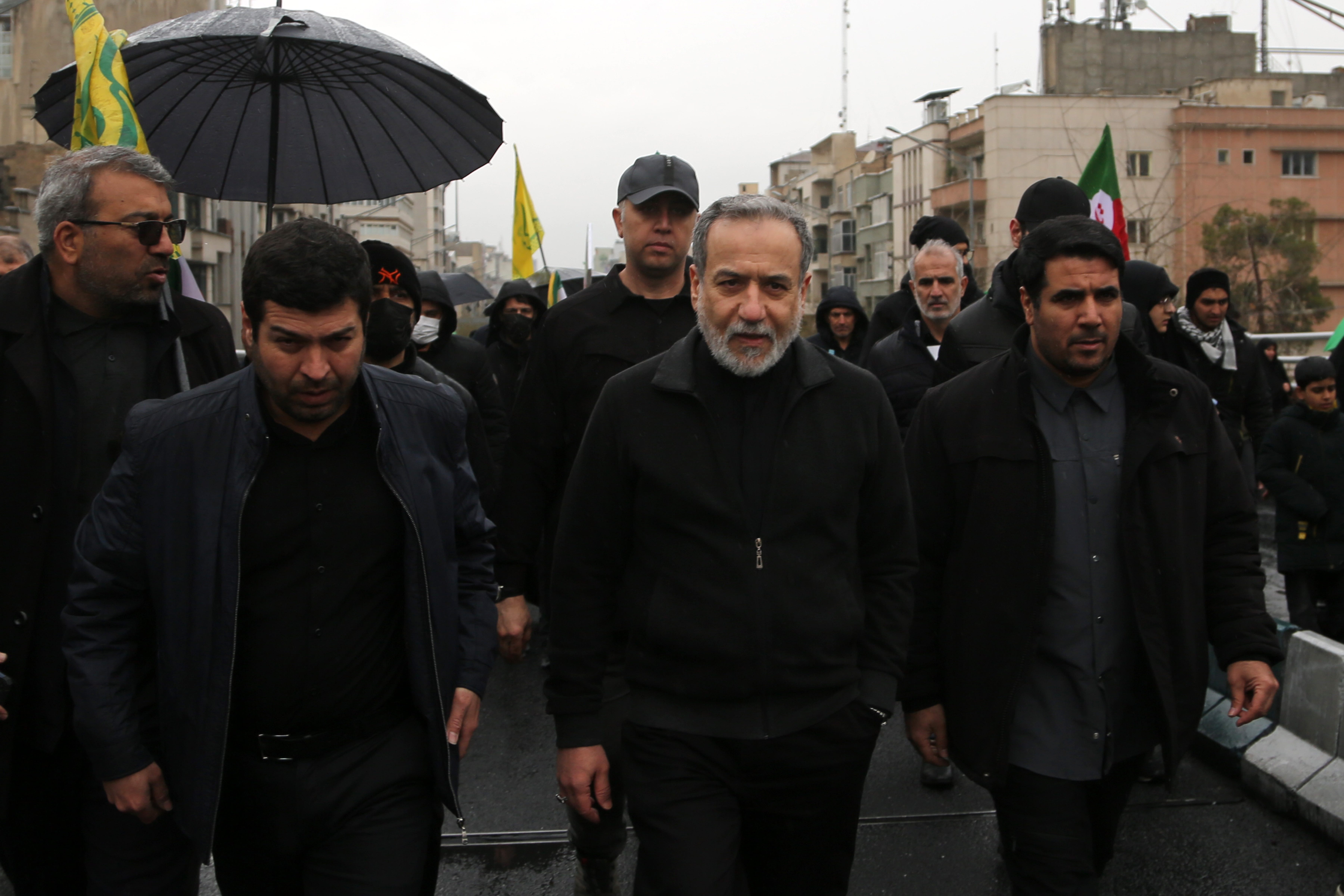
Iranian Foreign Minister Abbas Araghchi © participates in the traditional Quds Day rally in the capital Tehran on March 13, 2026. Photo by Fatemeh Bahrami/Anadolu via Getty Images.
This weekend, Trump claimed he was assembling a multinational coalition to escort ships, and the Pentagon recently approved the rapid deployment of at least 2,000 U.S. soldiers from the 31st Marine Expeditionary Unit. “I’m demanding that these countries come in and protect their own territory, because it is their territory,” Trump said Sunday, saying that NATO nations as well as China should participate. “They should help us. You could make the case that maybe we shouldn’t be there at all, because we don’t need it. We have a lot of oil.” Many nations have expressed reservations about participating in such operations and some—including Germany, Greece, Japan, and Australia—have ruled out joining any Hormuz mission. Trump has suggested he may postpone his trip to China scheduled for later this month if Beijing does not agree to aid U.S. operations in the strait, and has warned of a “very bad future” for NATO if it does not participate.
“This war has nothing to do with NATO. It’s not NATO’s war,” said Stefan Kornelius, a spokesperson for the German chancellor, in a press briefing on Monday. “I would also like to remind you that the U.S. and Israel did not consult us before the war, and that Washington explicitly stated at the start of the war that European assistance was neither necessary nor desired.”
Trump’s decision to deploy Marines, combined with recent U.S. strikes on the Iranian island of Kharg, could indicate that the U.S. is contemplating an operation to occupy the island, which houses Iran’s most important oil terminal through which 90 percent of its crude oil exports run. Trump said the U.S. has refrained from directly bombing the oil depots on Kharg but said that if Iran directly prevents ships from passing the Strait of Hormuz, “I will immediately reconsider this decision.”
“No one should read into anything more than what the president announced,” a senior White House official told Axios. “The president has made no decisions on Kharg Island,” the official said, adding, “The president is not going to wait around and let the Iranians dictate the pace of the conflict.”
Iranian naval forces have spent decades wargaming in the Strait of Hormuz, including exercises that began on February 16, less than two weeks before the U.S. and Israel launched the war. These preparations have focused on asymmetric attacks on larger military vessels, utilizing fastboats, drones, and anti-ship cruise missiles. If Trump decides to move toward military confrontation in the Strait of Hormuz, it would increase the risks to U.S. troops, placing them within direct reach of Iran’s shorter range munitions and smaller naval attack vessels and maritime missile systems.
“Everything they have done during this period has been the result of miscalculation and error,” Araghchi told Al Araby Al Jadeed. “The attack on Kharg was a mistake, and occupying Kharg would be an even bigger mistake. As we said before, we are waiting for American ground forces to enter our territory, because we know how to confront them.”
In response to the Iranian stance in the Strait of Hormuz, Saudi Arabia has increased its oil output through its western coast and oil tankers have begun traveling through the Red Sea in large numbers. But these ships will ultimately need to ship their cargo through the Bab al Mandeb strip where they could potentially face a blockade from Yemen’s Ansar Allah. While the group, which controls large parts of Yemen, technically has a ceasefire agreement with the US, signed in May 2025, there have been indications it will enter the war in defense of Iran.
Mohammed Al-Bukhaiti, a senior member of Ansar Allah’s political bureau, said on March 14 that a “zero hour”—a coordinated campaign of military operations—could be declared soon. “All options are on the table,” Al-Bukhaiti told RT Arabic. “If we are compelled to use the Bab al Mandeb card, we will use this in a flexible manner by targeting all the countries involved in the aggression against Lebanon and Iran.”
“The End of the War is in Our Hands”
Even before the U.S. and Israel launched their attacks on February 28, Iran vowed that it would not repeat the “12-Day War” of June 2025. Then, as with the current war, the U.S. claimed to be negotiating with Iran only to turn around and launch massive bombings. The ceasefire that ended the June war was requested by the U.S. and Israel and, from Iran’s perspective, it was a strategic pause aimed at preparing for the wider war that began last month. “They went back, prepared themselves again, and attacked us once more,” Araghchi said Sunday. “This scenario cannot be repeated. We will end this war when we guarantee that it will not be repeated, and that requires a decisive and final conclusion to the war.” Iranian officials have told Drop Site that they will not consider any ceasefire proposals until Tehran believes it has convinced the U.S. and the world that Iran will not accept repeated and periodic U.S. and Israeli military strikes.
“The end of the war is in our hands,” said Major General Mohsen Rezaei, a veteran commander of the Islamic Revolutionary Guard Corps in an interview on Iranian television on March 14. He said that as part of any ceasefire negotiations Iran would seek reparations for the damage done during the U.S.-Israeli bombing and reiterated Tehran’s call for the U.S. to withdraw its military presence in the Persian Gulf. The senior Iranian official also said that Tehran would only consider a ceasefire if it also included Lebanon and Iraq and was certified by the United Nations Security Council.
Unlike previous military confrontations where Iran has choreographed its retaliatory strikes against Israel and U.S. bases in the region ahead of time, the past two weeks have seen the Iranian military conduct unprecedented missile and drone strikes across the Persian Gulf as well as a steady pace of attacks on Israel.
“Iran’s strategy is centered on diversifying its attacks and opening multiple fronts against the U.S. and Israel over an extended period,” the senior official said. “The focus will be on gradually wearing down the opponent and delivering more effective blows to U.S. and Israeli interests, in order to create the necessary conditions for a broad and sustainable ceasefire.”
The senior Iranian official told Drop Site that Tehran understands it is fighting an asymmetric war and is confident in its ability to endure the U.S.-Israeli bombing. More than 1,400 people have been killed in the U.S.-Israeli bombings and more than 18,500 injured, according to Iran’s Health Ministry. Among the dead are at least 223 women and 200 children—41 of them under the age of two.
Iranian state media and news outlets close to the IRGC have suggested that Iranian forces may soon begin targeting the offices of large tech companies in Israel and the Persian Gulf, including Google, Amazon, Microsoft, IBM, Nvidia, and Palantir. Iranian strikes have forced the closure of Gulf airports and spurred an exodus of Americans, Europeans, and other Westerners from the United Arab Emirates, Qatar, and Bahrain. The U.S. has been forced to abandon a number of military facilities and move personnel to hotels or out of the region.
“Continuing these strikes—if carried out precisely and without harming the citizens of these countries—can play a very effective role in applying pressure to achieve a ceasefire,” the senior Iranian official said. “There are very deep economic ties between American companies and these countries. Threatening those interests would be a powerful leverage to pressure the Trump administration.”
With the exception of Oman, the Persian Gulf nations that make up the Gulf Cooperation Council (GCC) have refused to issue any condemnations of the U.S.-Israel attacks on Iran. Instead, they have portrayed Iran as the aggressor and accused it of engaging in wanton attacks on their sovereignty and dismissing any suggestion that Iran has a right to target U.S. bases or assets housed within their borders.
On March 11, the UN Security Council adopted a resolution drafted by Bahrain on behalf of the GCC that denounced Iran’s “egregious attacks” and demanded that Iran “immediately and unconditionally cease from any provocation or threats to neighboring States, including the use of proxies.” The resolution did not mention either the U.S. or Israel, nor did it issue any condemnation or expressions of concern over the killing of Iranian civilians or the bombing of Iranian schools, apartment buildings, hospitals, oil and gas facilities and heritage sites.
While Iran continues to speak to officials from some GCC countries, it has made no secret of its anger with them. “The situation is not good at all. This war was ignited by the United States and the Zionist entity,” said Arraghchi. “They did not condemn the attack on Iran, and that is truly regrettable.”
Iran has acknowledged that some of its strikes against U.S. military bases and other assets in the Gulf have inflicted “collateral damage,” and Iranian officials have pointed to an apology issued by President Masoud Pezeshkian to Iran’s Arab neighbors on March 7. Iranian officials maintain that their strikes are aimed at U.S. and Israeli military and intelligence structures.
Iran has also claimed that in some cases, it has struck sites in Gulf countries based on intelligence they were used to directly attack Iran. Gulf countries have denied that their territory is being used in any attacks, despite the presence of key U.S. installations such as the U.S. Navy 5th Fleet headquarters in Bahrain or CENTCOM in Qatar. But Araghchi said that Iran has intelligence that some of the strikes on Kharg island came from missiles launched from the UAE. The New York Times recently verified video showing ballistic missiles being launched at Iran from Bahrain.
Araghchi denied that Iran has deliberately targeted any civilian sites in Gulf countries that have no connection to the U.S. or Israel. In some cases, Iran has acknowledged it did hit hotels or other civilian buildings, but has claimed those sites were being used by U.S. soldiers or Israeli intelligence. This is the same justification Israel has repeatedly employed to defend its strikes on civilian sites in Gaza and international law experts have widely denounced the practice as illegal. Iran has also denied being behind a range of attacks over the past two weeks, including in Cyprus, Turkey and in several Gulf countries and has accused the U.S. and Israel of conducting false flag attacks in an effort to try to further pull other nations into an overt conflict with Iran.
“We are ready to sit with our friends in the region and form an investigative committee to determine which targets were struck and whether they were American or not,” Araghchi told Al Araby Al Jadeed. He claimed that Iran has intelligence that Israel and the U.S. have cloned Tehran’s Shahed drones and are using them to conduct strikes on civilian sites in the Gulf. Iran has not publicly released any evidence to support these claims.
In a post on X Sunday, CENTCOM denied the allegations. “U.S. attack drones are only targeting Iranian military capabilities to eliminate threats posed to the region,” read the post.
On Monday, Ali Larijani, the chair of Iran’s Supreme National Security Council, published a six point message addressed to Muslims across the world and to Islamic governments in which he defended Iran’s actions in responding to the U.S.- Israeli war. “Today the confrontation is between America and Israel on one side, and Iran, the Muslim nations, and the forces of resistance on the other. So which side do you stand with?” Larijani wrote. “Think about the future of the Islamic world. You know that America is not loyal to you and that Israel is your enemy. Pause for a moment and reflect on yourselves and on the future of the region.”
Jawa Ahmad, Drop Site News’s Middle East Research Fellow, contributed to this report.
From Drop Site News via This RSS Feed.