

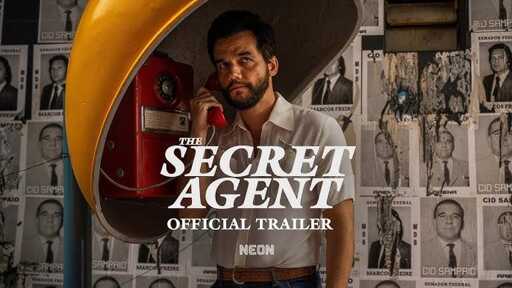
RIO DE JANEIRO, BRASIL - Oscar fever is rampant today in Brasil as everyone is talking about whether Kleber Mendonça Filho’s political thriller The Secret Agent will win an Oscar.
A victory by Brasil would mark the second Oscar win in a row after the anti-fascist Brazilian film I’m Still Here garnered Best Foreign Film last year. In that film, Fernanda Torres portrays the real-life story of Eunice Paiva, a widow trying to find the truth about the disappearance of her husband under the dictatorship in 1970s Brazil.
Now, The Secret Agent, the most commercially successful Brazilian film in U.S. history, is nominated for a Brazilian record of 4 Oscars, in the categories of Best Film, Best Cast, and Best Foreign Film. Brazilian actor and left-wing activist Wagner Moura is nominated for Best Actor for portraying a professor on the run from hired gunmen during the dictatorship in 1977 Recife, the urban hub of northeast Brazil.
Wagner Moura has already won Best Actor at the Golden Globes. Many Brazilians, who have cheered Moura’s award talk show appearances in the United States, have denounced both Trumpism and Bolsonarismo.
"Bolsonaro is our Brazilian Donald Trump. But our Trump is in jail,” joked Moura on Jimmy Kimmel’s show this past week.
The movie, which was subsidized and received substantial publicity from Brazilian President Lula, drew a record 2.45 million Brazilians to the box office.
"The Secret Agent is an essential movie to not forget the violence of the dictatorship and the resilience of the Brazilian people,” wrote Lula after the film won Golden Globes for both Best Actor and Best Foreign Film in January. Lula’s promotion of the film helped get Brazilians of all classes to embrace the film.
“We are going to make a revolution in culture,” declared Lulaa video released by his Brazilian Workers’ Party earlier today.
However, The Secret Agent has gone beyond being just a political thriller liked by left-wingers, to become a symbol of Brasil’s vibrance, seen in Carnival floats, memes, and advertisements on television.
In recent days, foreign companies, including Burger King, Heineken, Uber, and HBO Max, have run ads featuring Tania Maria, the surprise breakout actresses of The Secret Agent. The Brazilian internet has dubbed her “Grandmother of Brasil” for her portrayal of Dona Sebastiana, a 78-year-old activist who shelters political dissidents.
The commercial success of The Secret Agent, which was produced for only $5 million, has made it an international cultural and commercial success unlike any previous Brazilian film.
When I woke up this morning, the first thing that I saw on Instagram was a red billboard put up by Heinz on Hollywood’s Sunset Boulevard celebrating the success of Wagner Moura, who hails from Bahia and proudly refers to himself as “Baiano”.

Heinz billboard on Sunset Boulevard (Heinz)
However, the billboard by Heinz was not just in English, but also in Portuguese. It read “For Your Consideration ‘O Baiano Tem Molho’, meaning “The Baiano has sauce’”, “sauce” being slang for “talent”. Perfect product placement for a company like Heinz, known for selling sauces.
Heinz, is a company long associated with Pittsburgh. For decades, the Pittsburgh Steelers’ football games were played at Heinz Field. However, the marquee Pittsburgh company was sold to the Brazilian company Hemmer in 2022.
In some ways, seeing a trademark Pittsburgh company put up a billboard in Portuguese celebrating a Brazilian movie was a welcome sign of how much closer our cultures have come, thanks to streaming service, foreign-language films are seen more than ever before in the United States
In late December, I was honored to host the Pittsburgh premiere of The Secret Agent in the historic Harris Theater in downtown Pittsburgh. For weeks, we prepared posters, booked Brazilian food, and even got one of the stars, Robério Diógenes, who plays the sinister police chief in The Secret Agent, to speak to a crowd in Pittsburgh via Zoom directly from Fortaleza, Brasil.
On the night of the opening-night party, a huge snowstorm hit, roads were nearly impassable, and I found myself in a panic about whether anyone would show up for the film. Surprisingly, 72 people braved the dangerous winter conditions to attend Pittsburgh’s opening-night party.
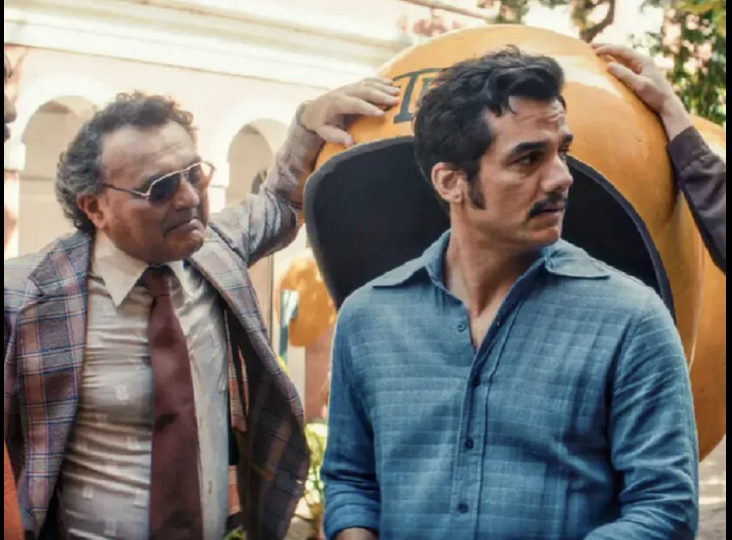
Robério Diógenes start in “The Secret Agent” alongside Wagner Moura
“This film helps us understand the past and understand the current political moment,“ said Robério Diógenes.
Initially, The Secret Agent was supposed to run for only two weeks at the non-profit Harris Theater in Pittsburgh, but the movie sold so well there that they extended its run to a third week.
At a time when many Americans fear fascism in their own country, movies like The Secret Agent are showing Americans how Brasil overcame fascism in the not-so-distant past.
“Memory is resistance,” Isadora Ruppert, one of the actresses of The Secret Agent, told Payday Report. Ruppert, who plays a historical researcher in the film, sat down to talk to me at a cafe in the Rio de Janeiro neighborhood of Gavea, a few blocks from where I studied at PUC Rio twenty years ago as a foreign exchange student from Pittsburgh.
We were just a few blocks from the cafe where I went out on a student strike in 2007 with Marilele Franco. In 2018, Franco, who was a Rio de Janeiro city councilwoman, was assassinated. After much obstruction by Bolsonaro and his allies and an 8-year fight in the memory of Marielle Franco, the Rio police chief and a congressman were convicted in February in the killing of Franco.
“It was 2016 when Marielle was elected. It was my first year that I could vote. I remember it well,” says Ruppert. “And it was right around the time that I was also getting into contact, in a deeper way, with Kleber’s cinematography.”
She says that Kleber’s films, like The Secret Agent, ask us to recall painful events such as the assassination of Marielle Franco and Brasil’s dictatorship.
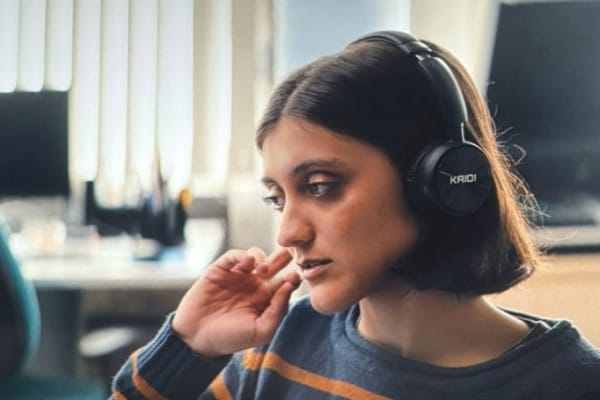
Isadora Ruppert stars as a researcher in “The Secret Agent”
“The film is about memory, but it’s also about the lack of memory, about the amnesia of a country, which we know is something that is very ingrained in our society as a whole,” says Ruppert. “This lack of memory, because people really do have short memories. And also, politically, this period of the military dictatorship was something that was swept under the rug, in the sense of not talking about it.”
Ruppert says that for many, finding out about the past can be painful. Before acting in the film, Ruppert had researched the Brazilian national archives about her own Jewish ancestors, who had fled prosecution in 1920s Poland. She found the experience painful and exhausting.
“It’s important that we get in touch with these wounds so that they can truly heal,” says Ruppert. “Because otherwise we also don’t really know what happened, how it happened, and about this difficulty in finding this research in the archives.”
During the dictatorship, some in her family were persecuted for their political involvement. In her family, they often found it painful to discuss.
“It really was a very painful time and left very visible scars. My own family was affected by the military dictatorship,” says Ruppert. “My grandmother was persecuted by the military dictatorship and it has been very difficult at times to address this issue.”
Still, despite the painful questions that The Secret Agent forces us to ask, the film also encourages us to reckon with the past to understand our present and fight for the future…
“The Secret Agent is a film about memory or the lack of memory and generational trauma,” Wagner Moura said when accepting his Golden Globe earlier this year. “I think, if trauma can be passed along to generations, values can too, so this is for the ones that are sticking to those values in difficult moments.”
From Payday Report via This RSS Feed.