

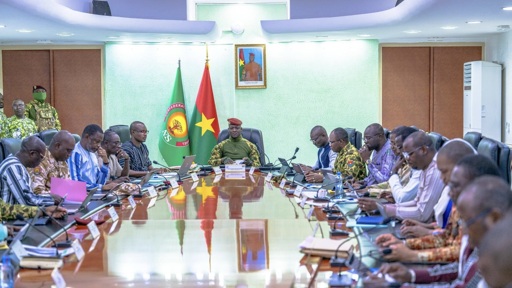
Burkina Faso launched its 64-billion-dollar National Development Plan (NDP) for 2026–2030, earlier this week on March 9. The plan is one of the largest economic programs ever proposed in the Sahel. About two-thirds of this money will be raised domestically from the revenues generated by state-owned enterprises and through citizen shareholding programs.
“Using our sovereign resources, we can sustainably transform our economy and improve the lives of our people,” insisted Finance Minister Aboubakar Nacanabo, highlighting the significance of this break from the previous regime’s reliance on external funding.
Earlier, on January 29, when the cabinet adopted the NDP, Nacanabo listed four specific objectives to be achieved in these five years:
-
Reduction of the poverty rate from 42% to 35%
-
Increase in life expectancy from 61 to 68 years
-
Increase in electricity generation capacity from 685 MW to more than 2,500 MW
-
And, most importantly, retaking control over the whole territory of the country
The Burkinabe state was in control of barely 60% of its territory when Capt. Ibrahim Traoré took power in 2022, after the ouster of the France-backed regime of Roch Kaboré’s in a popularly supported military coup earlier that year. Terror groups held the rest of the country.
Expelling French troops from the country, Traore’s government has strengthened the national army, regaining control over almost 75% of the territory by the end of 2025.
The country has also experienced major strides in agriculture and industry. Nationalizing five foreign-owned gold mining assets in June 2025, the state was able to cash in on the rally in the price of gold, the main export of Burkina Faso. Using the revenue generated to repay over two billion dollars, the government reduced its domestic debt by a quarter, considerably improving the country’s fiscal position.
On this sound footing, Burkina Faso has now made an ambitious leap, with the 64-billion-dollar five-year plan, aimed at not only expanding the mining operations but also processing raw materials locally instead of exporting them. Developing infrastructure to promote industrialization is a top priority in the NDP, which has been in the making for a year, starting on March 9, 2025.
On December 31, 2025, the steering and supervision committee, chaired by Prime Minister Jean Ouédraogo, reviewed and adopted the NDP. “The document,” Ouédraogo said, “now stands as a true national pact for the structural transformation of our economy, the consolidation of security and peace, the rebuilding of the State, and the promotion of inclusive and sovereign endogenous development.”
The post Burkina Faso launches Five-Year plan appeared first on Peoples Dispatch.
From Peoples Dispatch via This RSS Feed.