

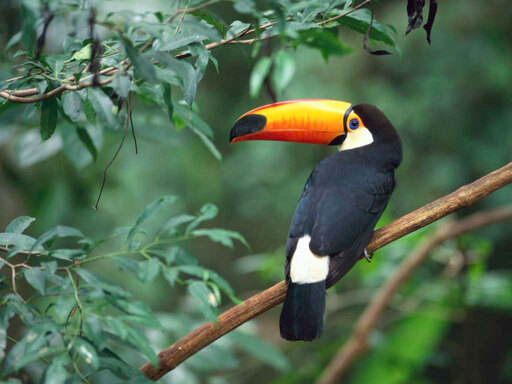
Many Indigenous peoples and local communities live in close contact with nature and learn to identify the wildlife around them from an early age. New research published in the International Journal of Conservation draws on that knowledge to better understand a scientifically documented trend: large bird populations are shrinking. Álvaro Fernández-Llamazares, an ethnobotanist with the Autonomous University of Barcelona, Spain, and lead author of the study, first noticed that trend as a graduate student doing field work in the Tsimane’ Indigenous community in the Bolivian Amazon. “Many elders told me that the large birds they had grown up seeing in the forest had become much rarer. Species that were once common in their childhood were now difficult to encounter,” Fernández-Llamazares told Mongabay in an email. He cited similar accounts from Indigenous peoples and local communities in other parts of the world and from very different ecosystems. Large birds from their youth were disappearing, while smaller species seemed to be on the rise — a pattern scientists were also finding. “What had not been explored before was whether these global patterns were also reflected in the long-term ecological memories of people who interact with birds on a daily basis,” he said. So, researchers surveyed 1,434 people across three continents and 10 sites as part of a broader Local Indicators of Climate Change Impacts (LICCI) project, an international research initiative to understand how Indigenous and local communities observe the changing climate in their territories. Respondents were asked to name three birds that…This article was originally published on Mongabay
From Conservation news via This RSS Feed.