

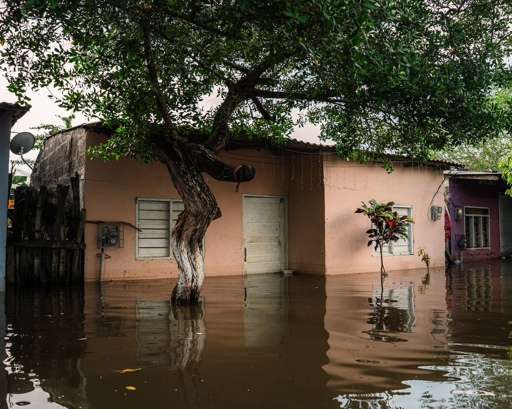
MONTERÍA, Colombia — In the suburb of La Palma, in the city of Montería, Córdoba, two boys stand knee-deep in water. A shimmering film of dirt spreads across its opaque surface. The two are piling family possessions into an upturned refrigerator – a makeshift raft used to ferry their belongings toward dry land. Across the street, Ana Castillo, 33, watches them from her doorway. Her home sits just a few inches above the water. By her side, a dark stain rising 1 meter (3.3 feet) up the wall marks where the water line was just a few days earlier. “This took us by surprise,” Castillo says. Broom in hand, she tries to sweep the last of the water from her front room. “It’s sad to see your things half-submerged in water.” La Palma is one of the 27 neighborhoods in Montería affected by severe flooding during the region’s dry season. What began as torrential rain in early February turned into a regional disaster: 24 municipalities in Cordoba were affected, and seven people died. The causes are still under debate; while scientists have pointed to unstable weather patterns and the influence of climate change, locals, some experts and high-ranking politicians say high water levels in the Urra Dam, a hydroelectric project long contested by Indigenous communities, have aggravated the floods. In the neighbourhood of La Palma, Montería, two young men attempt to use a fridge as a makeshift canoe. Image by Euan Wallace. Amid the debate, authorities continue to grapple with…This article was originally published on Mongabay
From Conservation news via This RSS Feed.