

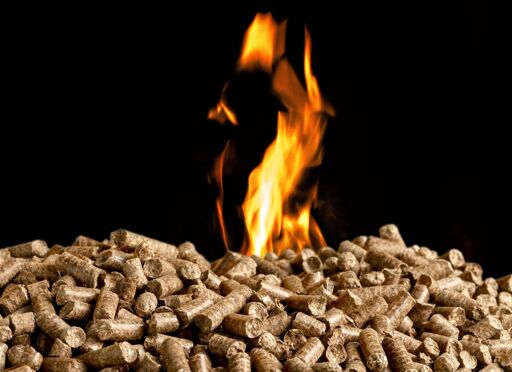
For years, a battle has raged between EU nations that claim their forest biomass certification policies safeguard against deforestation, promote sustainability and enable carbon-emissions reductions, even as forest advocates have argued that those policies fail to combat climate change, are badly flawed or outright fraudulent. EU policymakers remain entrenched today, defending their certification schemes as a means of complying with laws to stop burning coal and for achieving national net-zero goals, despite evidence that burning wood pellets to make energy is dirtier than coal. But now forest advocates are turning up the pressure in the Netherlands in an unprecedented way. In a possible first-of-its-kind action, the Dutch Public Prosecution Service is considering a criminal investigation against RWE, one of the Netherlands’ largest energy providers. RWE faces allegations made by two forest advocacy groups that the company, which has collected billions of euros in Dutch biomass subsidies, misrepresented itself by claiming that hundreds of thousands of tons of wood pellets imported from Malaysia came entirely from sawmill waste. The two advocacy groups, Comite Schone Lucht and Biofuelwatch, say their research establishes that those pellets come mostly from whole trees, contributing to Malaysian deforestation. The Public Prosecution Service, the sole authority responsible for investigating and prosecuting Dutch criminal offenses, is expected to decide how to proceed by the end of March. Research shows that “biomass burning power plants emit 150% the CO2 of coal, and 300-400% the CO2 of natural gas, per unit energy produced.” Image by GIZ Bush Control and Biomass…This article was originally published on Mongabay
From Conservation news via This RSS Feed.