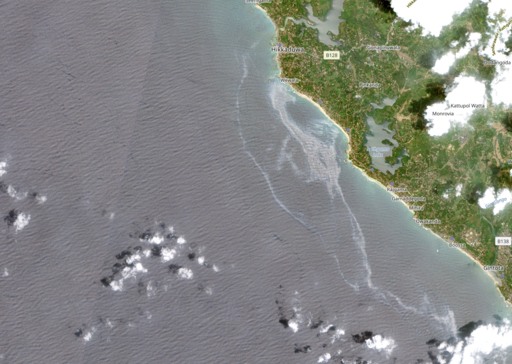
HIKKADUWA, Sri Lanka — On Saturday, March 7, three days after the Iranian warship IRIS Dena was torpedoed by a U.S Navy submarine close to the southern coast off Galle in Sri Lanka, fishers and coastal communities noticed a thick oil patch along the coast of Hikkaduwa. Hikkaduwa is one of the most pristine coastal belts in the south of Sri Lanka, frequented by tourists throughout the year with a peak tourism season from December to March. Even as authorities say the oil spill has been brought under control to some extent, environmentalists express concerns about the possible environmental implications of the oil spill on marine ecosystems in Hikkaduwa and its environs. The frigate was torpedoed by USS Charlotte, a U. S. Navy submarine. The Iranian-flagged IRIS Dena was returning from the International Fleet Review 2026, a multinational naval exercise held in Visakapatnam, India. The incident occurred in international waters, around 40 nautical miles (74 kilometers or 46 miles) off the island’s southern coast. “As soon as we were informed by the Coast Conservation and Coastal Resource Management Department (CCD) about the appearance of several oil patches along Hikkaduwa coast on March 7 morning, we deployed teams to check on the situation,” Samantha Gunasekara, chair of Sri Lanka’s Marine Environmental Protection Authority (MEPA), told Mongabay. He said that ever since March 4, the day the warship was attacked, local teams have been alerted via a WhatsApp group to watch for evidence of any environmental impacts. “We obtained photographs from coastal…This article was originally published on Mongabay
From Conservation news via This RSS Feed.
PLEASE get the people in the regions affected by oil-spills connecting with THIS information:
https://www.earth.com/news/spinning-fire-whirls-may-clean-oil-spills-faster-and-with-less-smoke/
Note the time-constraint: it works best when all the volatiles haven’t evaporated, yet.
Please get this to the key people,
_ /\ _