

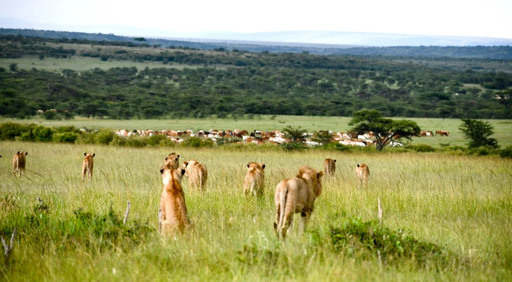
Lions, Africa’s largest predators, are a near-universal source of fear for the continent’s wildlife. But in Kenya, it’s the king of the jungle that’s now becoming fearful — of domestic livestock. In Kenya, most wildlife is found outside formally protected areas. The lions, zebras and elephants that attract tourists mostly live in pastoralist rangeland. For farmers and herders, this can be both a curse — coexistence is hard work where predators sometimes attack livestock and cattle compete with wild herbivores for grass — and a blessing — many community-owned conservancies profitably lease portions of their land to tourism operators for safaris and lodges, generating revenue for their members. In most conservancies’ grazing plans, herders can make use of the entire landscape. This allows grazing pressure to be more evenly distributed, but it also assumes that when herders and their livestock aren’t present in an area, other herbivores and the predators that hunt them make free use of the space. Niels Mogensen, a biologist with the Mara Predator Conservation Program, a Kenya Wildlife Trust initiative aimed at preserving large carnivores, says no one had actually checked to see if this was true before now. A lioness with cubs, Mara Conservancy, Kenya. Image by Ross Pollack via Flickr (CC BY-NC-SA 2.0). Between 2015 and 2023, he and his colleagues carried out surveys at seven community-owned wildlife conservancies in the Mara ecosystem. They covered nearly 69,000 kilometers (43,000 miles) in total, collecting data about the presence of lions, and wild and domestic herbivores.…This article was originally published on Mongabay
From Conservation news via This RSS Feed.