

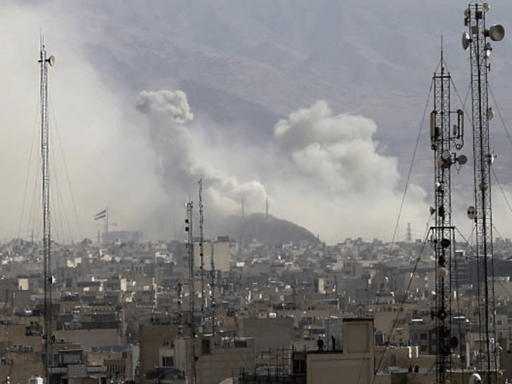

The unprovoked US-Israel attack on Iran has displaced 3.2mn people, according to the United Nations (UN). And the Iranian Red Crescent has said over 17,000 homes have been damaged. The war is less than two weeks old.
The US and Israel attacked Iran first on 28 February without provocation. Iran was offering unprecedented concessions in negotiations at the time. The Pentagon has since stated there was no imminent threat from Iran. And the UN’s atomic watchdog, the IAEA, has said there is no evidence Iran was developing a nuclear weapon.
The UN’s refugee agency said on 12 March:
Between 600,000 and 1 million Iranian households are now temporarily displaced inside Iran as a result of the ongoing conflict, according to preliminary assessments, representing up to 3.2 million people.
The agency added:
Most of them are reportedly fleeing from Tehran and other major urban areas towards the north of the country and rural areas to seek safety. This figure is likely to continue rising as hostilities persist, marking a worrying escalation in humanitarian needs.
Iran: Afghans taking refuge targeted again
In a perverse twist, Afghans who had taken refuge in Iran have again become victims of US aggression:
Also affected are refugee families hosted in the country, mostly Afghans, who are particularly vulnerable, given their already precarious situation and limited support networks. Families are leaving affected areas amid rising insecurity and limited access to essential services.
The scale of displacement is also reflected in remarkable Iranian Red Crescent figures for homes and businesses struck by US or Israel bombing. Iranian Red Crescent Society chief Pirhossein Kolivand said on March 12 2026 that:
17,300 residential units, 4,120 retail spaces, and 160 healthcare facilities were affected.
Kolivand reported
that nine hospitals ceased operations due to military airstrikes conducted by the U.S. and Israel.
Adding that:
69 schools, 16 Red Crescent centers, 21 rescue vehicles, and 19 ambulances had been hit.
The US-Israeli war has careened out of control with no apparent plan in place. Even after assassination strikes, meant to trigger the collapse of Iran’s government, Iran is apparently stable and capable of fighting back. US president Donald Trump faces resistance at home too.
Senator Chris Murphy said on 12 March:
Everything Israel does is made possible by U.S. support and weapons. Israel should not be telling us when to wage war on Iran. What kind of partnership is this?
Sen. Chris Murphy (D-CT), who has been strongly critical of Trump’s war on Iran, told Drop Site’s Julian Andreone that the United States “should have leverage over Israel” — not the other way around:
“Everything Israel does is made possible by U.S. support and weapons. Israel… pic.twitter.com/JmH6YfSij1
— Drop Site (@DropSiteNews) March 12, 2026
US reporter Ken Klippenstein counted 18 countries that have been pulled into the war so far. With the vital Strait of Hormuz at least partly shut, the world economy is under serious strain.
And sources within the Trump administration have estimated:
that the first six days of the war on Iran had cost the United States at least $11.3 billion.
With no obvious off-ramp, and not much visible will to try and find one, the Trump administration looks increasingly stuck. Trump does not want to lose face, yet Iran is unlikely to capitulate or enter talks. The US attacked during productive good-faith negotiations, after all. In the meantime, homes, businesses and people in Iran continue to be bombarded.
Featured image via the Canary
By Joe Glenton
From Canary via This RSS Feed.