

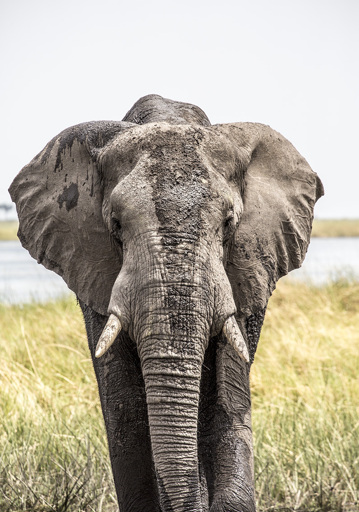
Khatijah Rahmat, a postdoctoral researcher at the Max Planck Institute for the History of Science in Germany, says she’s trying to build legitimacy around the concept of animal temporality — the ability to experience time — specifically in elephants. Doing so could have implications for conservation and beyond. “How we envision an animal’s relationship to time influences whether we see them as feeling, remembering beings. My aim is to encourage a more dynamic view of their place in the world when we recognize them as equally temporal beings.” This week on the Mongabay Newscast, Rahmat explains three key areas of evidence for interpreting elephant temporal experience and how this knowledge could be folded into how we think about protecting elephants or animals in general. “I think it increases the depth of empathy we can have for animals,” she says. “It can really push the concepts of policy … but it also can really challenge some of our current, basic assumptions about how we think about logic and evidence.” Interpretations of how animals experience time are not objective, and can’t be replicated in typical lab conditions, making Rahmat’s study heavily reliant on indirect observation, which she outlines in her thesis. “What I’m talking about when I say elephant temporality is the interpretation of duration … how they translate it. And this is not something that we can easily provide in the lab,” she explains. “But the results or the effects that I’m talking about … are quite real and the phenomena…This article was originally published on Mongabay
From Conservation news via This RSS Feed.