

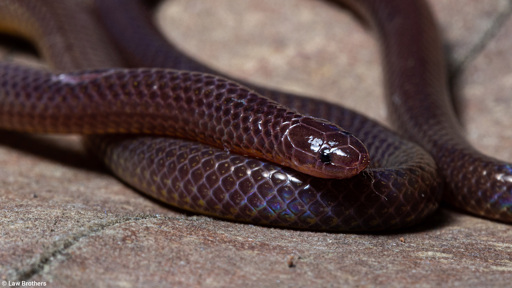
In the older quarters of Singapore, fragments of forest persist like memories that refuse to fade. Within them live creatures that few residents ever see, and some that no longer exist there at all. The disappearance of species on an island is not always dramatic. Often it happens quietly, in decades of thinning habitat and interrupted life cycles, until absence becomes normal. A snake not recorded since 1904 leaves no trace in the soil, only a line in an archive. Selangor mud snake (Raclitia indica), which was rediscovered in Singapore in 2020 after an absence of 106 years. Photo credit: the Law Brothers Singapore’s ecological history is one of compression. Since the 19th century, most primary forest has been cleared for plantations, industry, and housing. Today only a sliver of original forest remains, surrounded by a landscape remade for human needs. Such transformation has exacted a toll on wildlife, especially terrestrial vertebrates. Estimates suggest that roughly a third of species across several groups have disappeared locally over two centuries. Snakes and lizards, however, tell a more complicated story. A recent analysis of Singapore’s squamates, the group that includes snakes and lizards, reconstructs a timeline of loss using historical records and statistical modeling. The pattern resembles two pulses of erosion. The first, in the early 1900s, coincides with the near-total conversion of primary forest. A second, smaller wave arrives late in the 20th century, as remaining secondary forests give way to rapid urbanization. Primary-forest specialists suffered most. Species able to tolerate…This article was originally published on Mongabay
From Conservation news via This RSS Feed.
You must log in or # to comment.