

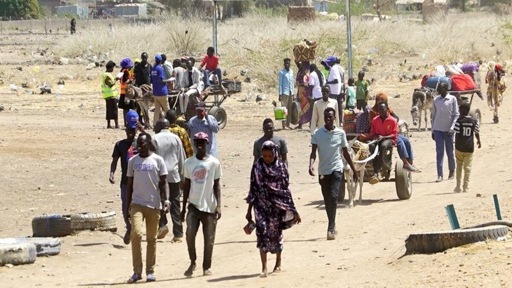
The death toll from the massacre in South Sudan’s Abiemnom County in the restive Ruweng Administrative Area rose to 178 on March 3 as nine more succumbed to their wounds in the hospital. A day earlier, 169 dead bodies were laid to rest in a mass grave.
90 of them were civilians, including women, children, and the elderly. The county’s commissioner and executive director were also killed, alongside 79 policemen and soldiers, according to the Ruweng Administrative Area’s Information Minister, James Mijok, who told AFP that the death toll “may increase further if more bodies are discovered.”
The United Nations Mission in South Sudan (UNMISS) said that “tensions in Abiemnom have been high since February 27, 2026. On February 28, some 1,000 civilians sought protection” outside its base.
At around 4:30 am the next morning, armed youth from the Mayom county in the neighboring Unity State stormed a village in the Abiemnom county while most residents were still asleep.
They massacred villagers and torched homes and markets, while the outnumbered government forces fought for three to four hours, taking heavy casualties before restoring control with backup.
Ruweng’s chief administrator, Stephano Mialek, said the attackers were affiliated with the Sudan People’s Liberation Movement-in-Opposition (SPLM-IO), led by former vice-president Riek Machar, who has been in a deadly power struggle with President Salva Kiir.
A bloody history of the world’s youngest republic
Both Kiir and Machar were senior commanders in the Sudan People’s Liberation Army (SPLA), the armed wing of the Sudan People’s Liberation Movement (SPLM), led by John Garang, which fought for decades to secede from Sudan.
Even then, the rivalry between the two was not muted. Exploiting the fissure, Sudan offered support for Machar, who then split from Garang’s SPLM in 1991 to form an opposition SPLM-Nasir faction.
The White Army, a militia affiliated with this faction, committed a massacre in the city of Bor that year, targeting the Dinka ethnic group from which both Garang and Kiir hailed. Retaliatory attacks followed on Machar’s Nuer ethnic community.
The ethnic fissure this caused in what was then the south of Sudan sowed divisions in the secessionist movement fighting for the independence of the Christian-majority south, speaking African languages, from the largely Muslim, Arabic-speaking population, who politically dominated undivided Sudan.
Nonetheless, Machar reunited with the SPLM in 2002, ahead of the peace deal in 2005, which stopped the guns after 22 years and two million deaths in the south due to violence, and the war-induced famine and disease.
Garang died soon after, leaving Kiir and Machar as the SPLM’s top leaders. They would respectively go on to become the president and vice president of South Sudan after it was established as an independent republic with Western support in 2011, following a referendum.
Civil war, again
However, the power struggle between Kiir and Machar continued. In mid-2013, Kiir sacked Machar. Following an attack on the military headquarters in the national capital, Juba, that December, Kiir accused Machar of plotting a coup. Denying the accusation, Machar split from the SPLM again, forming the Sudan People’s Liberation Movement-in-Opposition (SPLM-IO).
Barely two years old, the world’s youngest republic, emerging out of a civil war in Sudan, was hurled into another civil war, fought along ethnic lines, with the military loyal to Kiir targeting the Nuer, and the SPLM-IO, and its affiliate, the White Army, targeting the Dinka.
In the nearly five years of fighting, the war claimed 400,000 lives and displaced four million, over a third of its population, before Kiir and Machar reached a power-sharing agreement in 2018, forming a “unity government” in early 2020. Kiir retained the presidency, while Machar was appointed the First Vice President.
This government was to be transitional, tasked with integrating the armed opposition into the military to form a united armed force before holding an election in December 2022. However, little progress was made. The election was postponed, first to 2024, and then to December 2026.
Read more: Ethnic profiling and attacks on hospitals as South Sudan hurtles back into civil war
Peace agreement unravels
In this election year, the specter of a full-fledged civil war looms over the country again. The slide back toward civil war had already started in February 2025 after the White Army attacked the troops of the national army, redeployed to the military barracks in the city of Nasir in the Upper Nile, a stronghold of Machar. Early that March, the militia overran the military garrison.
Security forces arrested Machar, accusing him of ordering the attack. His SPLM-IO withdrew from the 2018 peace agreement. Its armed wing has since engaged the army in several clashes. The government, backed by Uganda’s military, has responded with airstrikes in seven of the country’s 10 states.
Fighting escalated in December, killing 189 civilians in just one month of January 2026. “We are at a dangerous point, when rising violence is combined with deepening uncertainty over South Sudan’s political trajectory, as the peace agreement comes under severe strain,” the UN high commissioner for Human Rights, Volker Türk, told the Human Rights Council in late February.
This was the ominous backdrop to the massacre in a village in Abiemnom County, near the border with Sudan, itself torn by civil war since April 2023.
The SPLM-IO has denied responsibility for the massacre. However, Kol Amal, Abiemnhom’s youth representative, told Radio Dabanga that the machine guns and heavy weapons used in the attack could not have been procured locally by the Mayom county youth without the SPLM-IO’s support.
156 people were killed on the spot while the rest succumbed to injuries in hospitals, he said, adding that several who fled to the UNMISS were shot outside its compound as peacekeepers refused to let them enter the premises.
About 80 injured people have been hospitalized in the Abyei Special Administrative Area, an oil-rich area disputed between Sudan and South Sudan. “Our triage area, emergency room, and wards were full of patients, so we expanded capacity by using tents and a meeting space, which also filled quickly,” Abraham Wek, a medic with the Doctors Without Borders (MSF) in Abyei, told the BBC.
Government chokes humanitarian access in opposition-held areas
The government, in the meantime, is also imposing a heavy toll on the civilian population, including by restricting humanitarian access in opposition-held areas in the Jonglei state since last December. This forced the MSF, the sole health provider for about 250,000 people in the towns of Lankien and Pieri, to curtail its operations “to emergency and lifesaving care only,” it added in a statement.
Then, on February 3, government forces hit the Lankien hospital with an airstrike, only hours after it was evacuated on receiving information that an attack was likely. “The hospital’s main warehouse was destroyed during the attack, and we lost most of our critical supplies for providing medical care,” the MSF said. The same day, its medical facility in Pieri was looted by unknown attackers, hours before it too was bombed.
“MSF has sought to confirm the whereabouts and safety of all of its staff, but 26 of 291 of our colleagues working in Lankien and Pieri remain unaccounted for. We have lost contact with them amid ongoing insecurity,” the medical charity added. Along with other residents in Lankien and Pieri, they too were forced to flee.
Over the last two months, over 280,000 residents have been forced to flee their homes in Jonglei state. Calling for an urgent UN arms embargo, the report by the UN’s Commission on Human Rights in South Sudan (CHRSS) in February warned that South Sudan is at risk of “a return to full-scale war”.
The post 178 killed in massacre as South Sudan slides back toward civil war appeared first on Peoples Dispatch.
From Peoples Dispatch via This RSS Feed.