

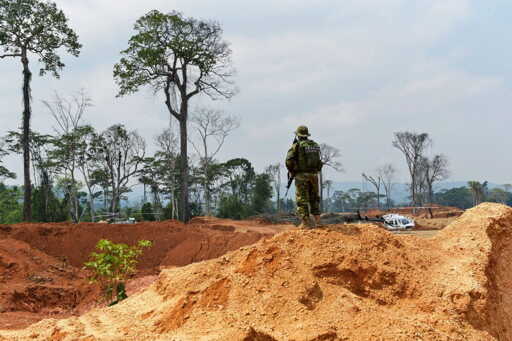
Leia em português. PARAUAPEBAS, Brazil — On a dirt road that cuts through the Rio Novo settlement in the southeast of Pará state, battered motorcycles carry small loads of organic food to sell in the city, while passing trucks loaded with minerals for export. Parauapebas, Brazil’s so-called “mining capital,” hosts numerous rural worker communities, including the 5,000 families of Terra e Liberdade, the largest landless encampment in Brazil. The city is also home to the largest open-pit iron ore mine in the world, in addition to other valuable deposits. The scene of historical land conflicts, such as the Eldorado dos Carajás massacre, in which 21 people died after being shot by military police during a protest in 1996, southeastern Pará is now witnessing a new front of dispute. Driven by the energy transition, mining companies are eyeing land in already established agrarian reform settlements, seeking deposits of three minerals essential to the arms and high-tech industries: copper, manganese and nickel. These elements are used in equipment such as chips, wind turbines, electric cars, military jets and warships. An exclusive survey by Repórter Brasil in partnership with Mongabay, based on data from the National Mining Agency (ANM), identified 676 mining processes for copper, manganese and nickel in Carajás since 1969. A quarter of them (166) were filed in the last five years (2021–25). Illegal copper mining area in the Carajás region, southeastern Pará. Image courtesy of Cícero Pedrosa/Repórter Brasil. Of the total number of requests, 292 (43%) relate to 82…This article was originally published on Mongabay
From Conservation news via This RSS Feed.