

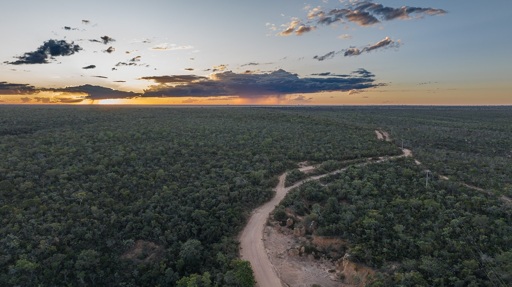
The Brazilian Cerrado, recognized as one of the world’s most species-diverse and threatened ecodomains on the planet, faces increasing pressure from large-scale agriculture and land conversion. “Ecodomains” are large areas where the predominant native vegetation is of a given general type, such as the Cerrado. These areas, officially termed “biomes” in Brazil since 2004 (a use of this term different from that in the ecological sciences), include both enclaves of native vegetation other than the predominant one and large areas that have been converted to agriculture and other uses. Although the Cerrado ecodomain sustains many of Brazil’s main river basins and occupies 24% of the national territory, our group’s review article in Nature Conservation shows that more than 55% of its native vegetation has already been lost, mostly over the last five decades. Often overshadowed by the Amazon in international debates, the Cerrado has lost more than 1 million square kilometers (more than 386,000 square miles) of its original vegetation, an area larger than France and Germany combined. Even when there are small fluctuations in annual rates of clearing, the historical trend continues to be one of increasing conversion driven by agricultural expansion, urban growth, mining and land speculation. The result is an increasingly fragmented and ecologically fragile landscape. Graphic showing carbon distribution in the Cerrado, revealing it as an “inverted forest” due to the predominance of biomass stored below ground, courtesy of Walisson Kenedy-Siqueira. The Cerrado’s inverted forest One of the most striking characteristics of the Cerrado is its…This article was originally published on Mongabay
From Conservation news via This RSS Feed.