

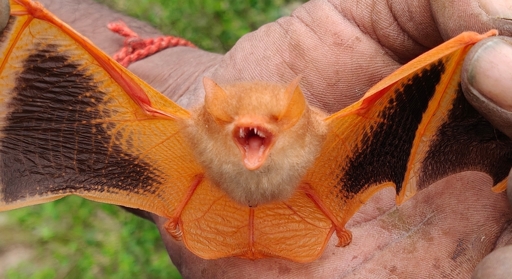
With hues of orange and black on its wings and a furry, fluffy face, the painted woolly bat is a stunner. But its beauty has become a deadly liability. People want to hang the bats — dead and stuffed — on their walls, display them as collectibles and even set them in jewelry. In recent years, taxidermied and framed bats have become popular as Halloween décor and, oddly, as Christmas tree decorations, sold to customers in the U.S., as well as Europe and Canada. This macabre trade first came to light in 2015 when scientists found dead bats, including painted woolly bats, for sale in Vietnam’s largest metropolis, Ho Chi Minh City. Then, nearly a decade later, scientists realized that it wasn’t just a few stores selling bats: There’s also a huge online market. In 2024, researchers from the Bat Specialist Group at the IUCN, the global wildlife conservation authority, documented nearly 800 bats for sale on Amazon.com, eBay and Etsy over a three-month period. Their “Dying for décor” study, published in the European Journal of Wildlife Research, suggests that the trade is global. A quarter of the bats sold online were from a single species: painted woolly bats (Kerivoula picta). After a successful awareness campaign by conservation organizations, eBay and Etsy banned the sale of bat products on their sites in 2025. Painted woolly bats are nocturnal and sparsely distributed in the landscape, roosting in small groups. Image by faridmuzaki via iNaturalist (CC BY-NC 4.0). Now, a new study…This article was originally published on Mongabay
From Conservation news via This RSS Feed.