

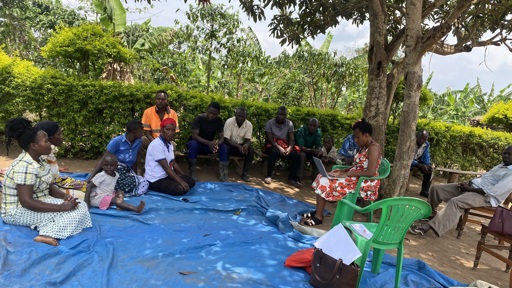
People whose land was acquired by the Ugandan government for the construction of the East African Crude Oil Pipeline (EACOP) say livelihood restoration programs offered by project developers have not changed their lives for the better, a new report says. The 1,443-kilometer (897-mile) crude oil pipeline — the longest heated crude oil pipeline in the world — will transport oil from Hoima in midwestern Uganda to the coastal port of Tanga in neighboring Tanzania for export. Ugandan officials say the pipeline is almost 80% complete, and the country expects oil exports to begin before the end of 2026. Almost a third of the 246 people surveyed in a report commissioned by the Uganda-based nonprofit Africa Institute for Energy Governance (AFIEGO) expressed dissatisfaction with how the project was being handled. Residents affected by the project said agricultural inputs were delivered late and that some of the seeds and seedlings were of poor quality with low germination rates. These included inputs like bean and maize seeds, coffee seedlings, banana shoots and fertilizers. For the report, AFIEGO interviewed affected people from 10 districts in Uganda, through which the pipeline traverses. According to official estimates, the pipeline project has affected 3,648 people in Uganda. Of these, 203 individuals were physically displaced and 177 chose to receive alternative housing. Participants take part in focus group discussions during data collection for the AFIEGO report in Uganda’s Lwengo district in October 2025. Image courtesy of AFIEGO. EACOP Ltd., the company constructing the pipeline, leads the process for…This article was originally published on Mongabay
From Conservation news via This RSS Feed.