

This article by Jaime Quintana Guerrero originally appeared in the March 8, 2026 edition of Desinformémonos.
A women-run health cooperative, which celebrates 19 years of providing medical care this March 12, promotes cooperativism and the solidarity economy as basic principles, and offers its services to the south of Mexico City.
It is a cooperatively planned and managed organization of healthcare professionals. Its specific area of focus is health promotion and disease prevention, and its objective is to promote the right to health. It currently consists of twelve collaborating members who serve approximately one hundred people monthly.
In the context of International Women’s Day, Andrea Ríos, a dental surgeon and president of the Panamédica Health Cooperative, explained in an interview with Desinformémonos: “Ninety percent of us are women.” She pointed out that one of the problems they’ve faced is the enforcement of internal agreements. She gave the example of rules that were established regarding roles and fines for not cleaning the cooperative’s initial physical spaces. “The men didn’t want to do it and preferred to pay the fine; the problem wasn’t whether you were a man or a woman, the problem was that you were a member, and that was an agreement you had to comply with,” she explained.
“The social and solidarity economy is a complex way of life and organization because everything is horizontal,” Ríos explains. “We all come from a background where we’re taught about bosses, employers, and employees; it’s hard for us to change our mindset. Cooperatives offer that: we’re people who are more aware or more empathetic towards others; we don’t seek profit, but we do seek to live well,” he explains.
Since 2007, the Panamédica Health Cooperative has maintained its autonomous structure, avoiding the influence of partisan organizations. It originated in the south of Mexico City through a loan agreement with the neighborhood administration of the Villa Panamericana Housing Unit’s Social Center, located near the National Autonomous University of Mexico (UNAM).
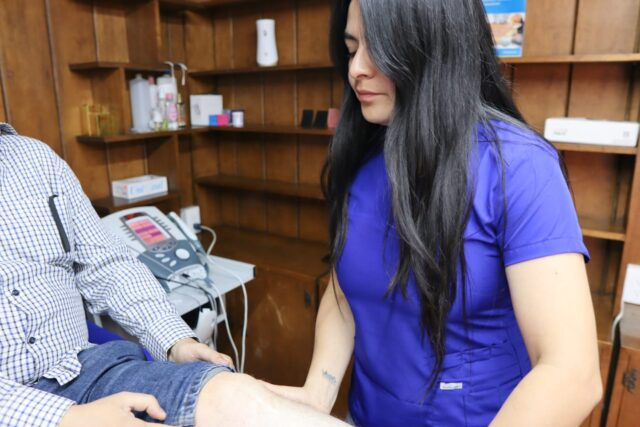
Photo: Panamédica Health Cooperative
However, explains Sofía Jiménez, who is currently the treasurer of the Board of Directors, “we had to change locations to have greater autonomy, since that space belongs to the residents of the Pan American Village and there was also a conflict of interest due to the political parties. There were internal conflicts where we were caught in the middle; we had to leave a place where we had many patients and seven years of work.”
In a second phase and in a different space, Sofía Jiménez recounts, the mutual scheme was initiated, based on the fair distribution of expenses and risks, with an advance payment for a service. This model was learned from schemes existing in Argentina, which the Mexican cooperative members visited. “It was weakened by the pandemic; however, the seed remained,” she explains.
Dr. Sofía Jiménez, who also served as president of the cooperative, recalls that “a group of students from health-related disciplines—doctors, dentists, and psychologists—organized the construction of a primary care clinic in a self-managed and autonomous manner to work on promotion and offer service to the community.”
“We have a vision,” says psychologist Sofia, “here the doctor is not placed above, as in this hierarchy, but is part of that process of taking care of your health.”
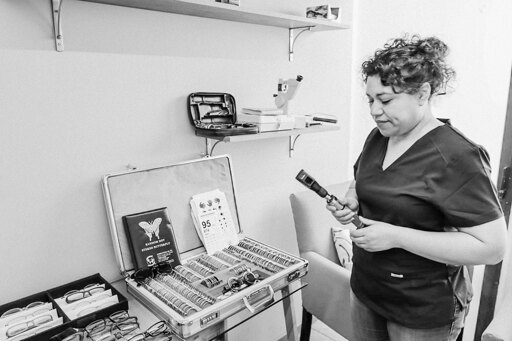
The cooperative offers services such as dental care, psychology, medicine, homeopathy, nutrition, optometry, physiotherapy, and some alternative therapies. “In each of our services, we try to take an interdisciplinary approach; that is, if a patient comes to the medical department and has an earache, they probably also need dental treatment,” explains Andrea Ríos, a dental surgeon and president. Or, for example, “if someone is clenching their teeth a lot, they might be stressed; so we try to refer them to the psychology department as well.”
Among some of the external situations in which they have provided support, recalls Sofía Jiménez, is the attention given to the parents of the 43 students from the Ayotzinapa rural teachers’ college, who were given medical attention in the first days, as well as the support given to victims of the housing units in Taxqueña after the earthquake.
In these 19 years of existence, women have acquired greater responsibility and leadership in the care of the space and the collective, an organic change within the cooperative.
“We went to big cooperative events, where there are large cooperatives, many men and very few women. We started to get involved there; despite many things, there is more awareness of being able to make that change, of being able to transform how we relate to each other, but sometimes we don’t realize it and we can fall into repeating the same patterns,” reflects Sofía Jiménez, treasurer of Panamédica.
One of the problems, the cooperative members believe, “is the issue of power and respect for agreements,” and another fundamental one, for a woman, mother and cooperative member, “is taking care of themselves.”
One of the important issues, the interviewees agree, is the care of the community and the patient. They point out that they are working on integrating this issue through training workshops for health promoters. “There are a lot of issues that affect us, both for the care of the caregiver and for the care of the people being cared for.”
“Now we want a school for caregivers and health promoters to be created from within the cooperative itself; that is the path we are on, taking care of those who take care of us,” concludes Andrea Ríos, president of the Panamédica Health Cooperative.
-
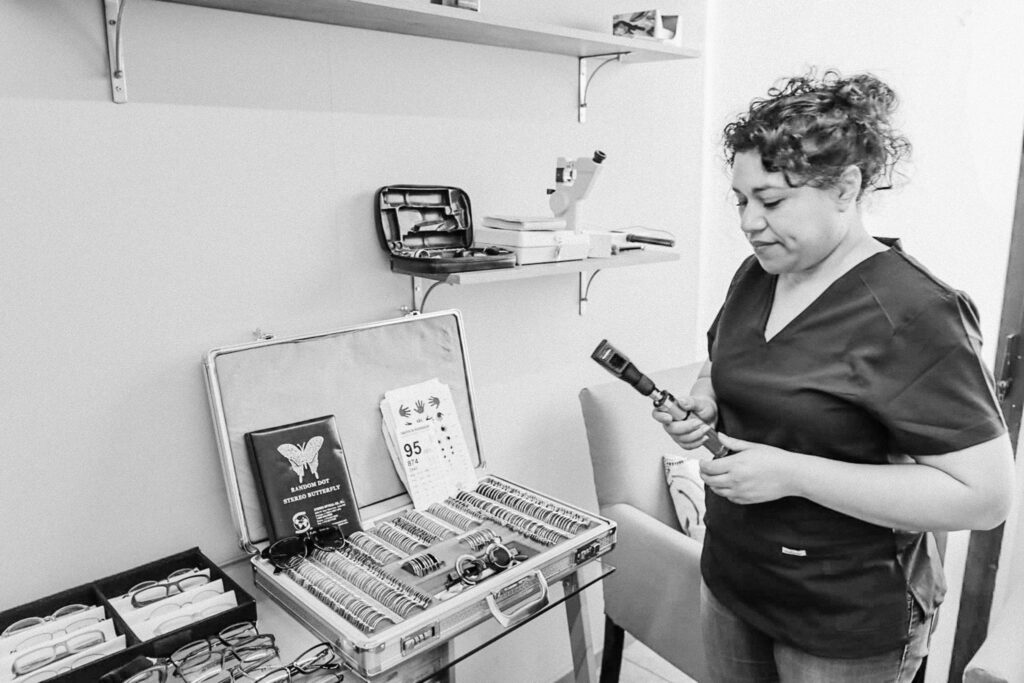
Mexico City’s Cooperativa de Salud Panamédica, Women-led Health Cooperative Celebrates 19 Years
March 8, 2026March 8, 2026
Serving the south of the city, the cooperative promotes the right to health, and serves approximately 100 people every month, honouring the principles of the social and solidarity economy.
-
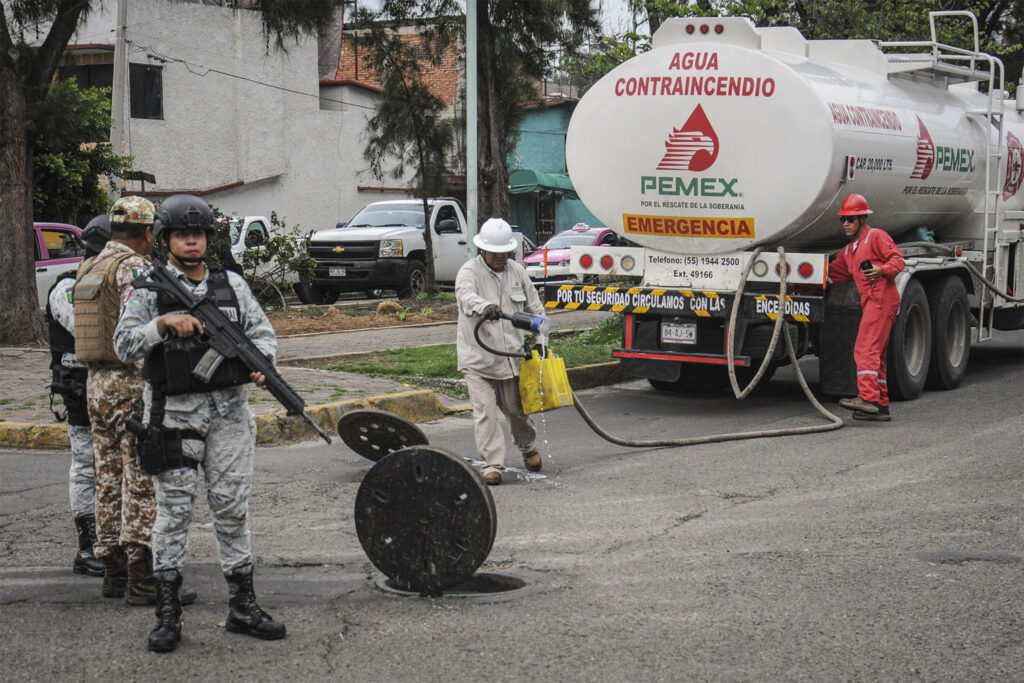
Anti-Fuel Theft Program Stalled
March 8, 2026March 8, 2026
Two months after Mexico’s requirement to carry a QR code & GPS came into effect, only 3,725 registrations have been issued for an estimated 1.2 million units that transport fuel.
-

Monopolies like Nestlé Used COVID to Discredit Breast Milk: Study
March 8, 2026
The infant formula industry in Mexico took advantage of the pandemic to promote itself over breastfeeding with false information & unethical practices.
The post Mexico City’s Cooperativa de Salud Panamédica, Women-led Health Cooperative Celebrates 19 Years appeared first on Mexico Solidarity Media.
From Mexico Solidarity Media via This RSS Feed.