

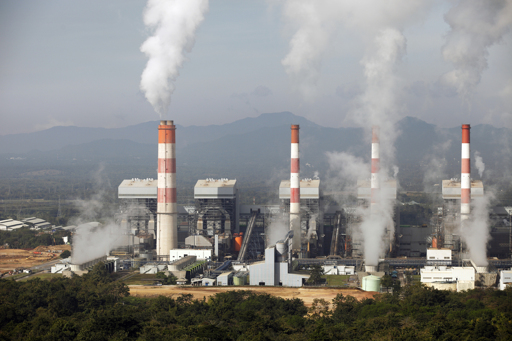
On March 4, Thailand’s government ordered the Ministry of Energy to secure new energy sources within a week to reduce the nation’s reliance on Middle Eastern oil. The directive follows the closure of the Strait of Hormuz, between the Persian Gulf and the Arabian Sea, after the Feb. 28 bombing of Iran by the U.S. and Israel. Iran closed the strategic waterway as a direct response to the military strikes, blocking a major chokepoint that handles roughly 20% of the world’s oil and liquefied natural gas (LNG). Approximately 30% of Thailand’s LNG and 50% of its crude oil passes through this strait. Officials initially said Thailand had a 61-day fuel reserve, but Deputy Prime Minister Phiphat Ratchakitprakarn clarified that total reserves can last 90 days when including supplies that don’t come via the strait. To bridge the immediate gap, the Energy Regulatory Commission (ERC) has approved an urgent purchase of three additional one-time LNG shipments for March and April. To manage the energy crisis, the government has also ordered coal-fired power plants to operate at full capacity. In addition, it has instructed PTT Exploration and Production Public Company Limited (PTTEP), a subsidiary of state-owned oil and gas company PTT, to maximize domestic gas production in the Gulf of Thailand. Experts warn these measures threaten Thailand’s updated emissions reduction pledge under the Paris climate agreement, which commits to a 47% reduction in net greenhouse gas emissions by 2035. “They can say that this is a temporary measure that’s [being used] for…This article was originally published on Mongabay
From Conservation news via This RSS Feed.