

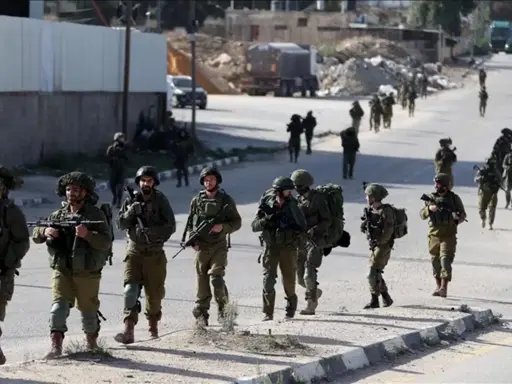

Israeli occupation forces (IOF) stormed the Old Askar Refugee Camp, East of Nablus, in the West Bank on 2 March. All entrances to the camp and surrounding areas were closed, and all movement into and out of the camp was prohibited. The raid, which started at dawn, lasted for two days. The military forcibly entered residents homes, and used the community youth centre for interrogation purposes. Some houses were also turned into army barracks for the duration of the raid.

According to Amjad Shoubaki, Askar Camp Officer, this was not a usual raid experienced by residents of the camp.
He says:
It’s not normal that the army comes here for days at a time. This is the first time there has been a big operation in the camp. Although there are many, the raids normally only last one or two hours, and then they leave.
Shoubaki believes that the occupation’s army was escaping from the nearby Elon Moreh settlement, and shielding themselves in the camp, away from Iran’s rockets. He says that during Israel’s 12-day war with Iran, in 2025, the same thing happened, with the IOF carrying out a three day raid in Nablus’ New Askar Refugee camp.
West Bank raid
Talking about the recent raid at the Old Askar Refugee Camp, he says:
They raided every house here, which is not usual. It’s Ramadan, and people are fasting. They all shop in the afternoon for food for their children, but families couldn’t go out shopping, and the health centre and schools were all closed. There were no services for the full two days. These raids affect every aspect of people’s lives.
One 63-year old woman, from the Jemaseen neighbourhood of the camp and who did not want to be named, lives with 10 family members in a house in the refugee camp. She told the Canary she could hear the raids on her neighbour’s homes, and their doors being broken down. Then they knocked loudly on her door, so she answered quickly so it would not get destroyed. The IOF stayed in her home for more than four hours. They sang, laughed and drank coffee in the living room, tipped all the contents of the house onto the floor, smashed windows and destroyed every door.
https://www.thecanary.co/wp-content/uploads/2026/03/WhatsApp-Video-2026-03-06-at-17.12.40.mp4
She says:
Almost every single night there are operations by the army. This time they came into the camp, early Monday morning, when families were preparing to pray, entering house after house. They didn’t arrest anyone, but destroyed everything. Around 15 soldiers forced their way into my home, and woke the young children up to search their room. They cried continuously, and were extremely traumatised by what happened, and wet themselves. The girls and women were kept in one room, while my two sons were kept in a corner of the sitting room.
Desecrating the inside of houses
The woman claims the army defaced the photo of her dead husband, and blindfolded and handcuffed her two sons. They are in their thirties. They tipped cold water over them. Every time she told the occupation that the two men had nothing of interest for them, the army beat her sons. And their children could hear their father’s screams of pain. The men were detained for several hours, but eventually released.
She continues:
There was no food to break our fast in the evenings, and no milk for our 40-day baby to drink either. We are constantly worried that the army will return, so we are ready all the time, and sleep in our clothes. The occupation is attacking the refugee camp, to make us forget our rights — our houses and land that were taken from us before. They are trying to make us emigrate, and steal our land. But we are going nowhere. Even if the situation is stressful and difficult for us, we will remain.
Old Askar Refugee Camp is home to 17,000 Palestinians. The residents here originate from Haifa, Lod, and Yaffa. They were forcibly displaced from their homes and dispossessed of their land by ‘Israel’ during the Nakba in 1948. Which displaced more than 700,000 Palestinians.
The majority of Palestinian refugees, in 1948, believed their displacement was temporary, and they would be returning home in a matter of days or weeks. Many families still have the ownership papers and keys to their homes, but more than 70 years later they are still in refugee camps, prohibited from returning by the occupation — yet another of the zionist regimes countless violations of international law.

Featured image via Anadolo Agency
By Charlie Jaay
From Canary via This RSS Feed.