

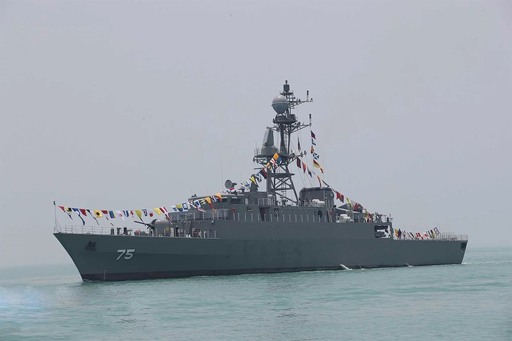
GALLE, Sri Lanka — On March 4, an Iranian Navy frigate IRIS Dena sank some 40-50 nautical miles off the southern coast of Galle, an important maritime route in Sri Lanka. According to the Sri Lanka Navy, at least 180 personnel were initially on board the ship and it was returning from the International Fleet Review 2026, a maritime exercise held in Visakhapatnam, India, when it sent out a distress signal. Following the incident, U.S. Defense Secretary Pete Hegseth confirmed that a U.S. submarine sank the Iranian warship in international waters, describing it as the first such sinking of an enemy ship by a U.S. submarine since World War II. For Sri Lanka, a strategic location at the confluence of important maritime routes, it is both a politically and environmentally distressing moment. Speaking to media in Colombo, Buddhika Sampath, spokesman for the Sri Lanka Navy, said search and rescue troops were deployed as soon as the Maritime Rescue Coordination Centre received the distress call. “We didn’t see a ship except for some oil patches and life rafts,” Sampath told local journalists at a media briefing. “The Navy rescued 32 individuals aboard the ship, but by the time we reached the frigate, several bodies were floating near the vessel,” he said. Map shows Sri Lanka’s exclusive economic zone. Image courtesy of the Maritime Boundaries Geodatabase, Flanders Marine Institute. No oil spill yet Speaking to Mongabay, Sampath confirmed that an oil spill has not been detected yet. A total of 90 bodies…This article was originally published on Mongabay
From Conservation news via This RSS Feed.